Wider Fits, Plush Cushioning: The Best Nike Shoes Not Just for Pro Runners
Brownie points if you knew the waffle iron and Swoosh go a long way back. It was the early 1960s when University of Oregon track coach Bill Bowerman cofounded Blue Ribbon Sports (BRS) with one of his runners, Phil Knight. BRS was a proprietor of Onitsuka Tiger’s athletic shoes before manufacturing its own product. Depending on who you believe, Bowerman customized running shoes using a waffle iron either in the early 1960s, when he gave pairs to his athletes to compete in, or in 1971, the same year BRS was renamed Nike, after the Greek goddess of victory. And that’s how legends are born (and shoe awards are given).
You can read Knight’s side of the story by reading Shoe Dog, or watch Prefontaine or Without Limits for a more dramatic tale about one of University of Oregon’s star athletes with Nike’s origin story in the background (the 1997 movie is the superior of the two, IMHO). Since the dawn of the Swoosh, the brand has rocked the running industry boat with its innovations. In the past 10 years, for instance, the Vaporfly 4% appeared on the scene, creating mass ripples of new World Athletics guidelines, academic studies on super shoes and running economy, and world records like the late Kelvin Kiptum’s superhuman 2:00:35 at the 2023 Chicago Marathon.
Back in my early days at Runner’s World in 2018, the first Nike shoe I tested—and ran in—was the inimitable Vaporfly. The shoe left an impression, causing me to never turn back racing marathons in carbon-fiber-plated trainers. But one thing that made me move on to other brands’ super shoe iterations was the narrow fit and unstable ride of Nike’s racers. All the more to show the brand’s ever-continuing evolution into being the best as well as more inclusive.
Best Nike Running Shoes
- Best Overall: Nike Vomero 18
- Best Value and Stability: Nike Structure 26
- Best Value Trail Shoe: Nike ACG Pegasus Trail
- Best Daily Trainer: Nike Pegasus 42
- Best Super Stability Trainer: Nike Structure Plus
- Best Cushioning: Nike Vomero Plus
- Best for Marathon Racing: Nike Alphafly 3
- Best for Groomed Trail: Nike ACG Zegama Trail
Battle of the Brands: The Best Brooks Running Shoes ● The Best Adidas Running Shoes ● The Best Mizuno Running Shoes
How We Selected
I’ve run and raced in several of the shoes on this list. As a Nike newb when I was hired at RW, I was schooled in the Swoosh’s indelible influence on the running industry—our magazine’s first issue came out six years after Nike’s renaming—and witnessed the dawn of the super shoe. All of the shoes on this list were tested by members of our 300-and-counting test team of local runners. They come from all walks of life, varying by gait pattern, arch height, and footstrike.
Full Reviews
Pros
- Wider fit than other Nike shoes
- Soft, responsive cushioning ideal for long runs and daily training

Cons
- Heavy and bulky for some testers


Features at a Glance
| Weight | 10.5 oz (M), 8.5 oz (W) |
| Drop | 10 mm |
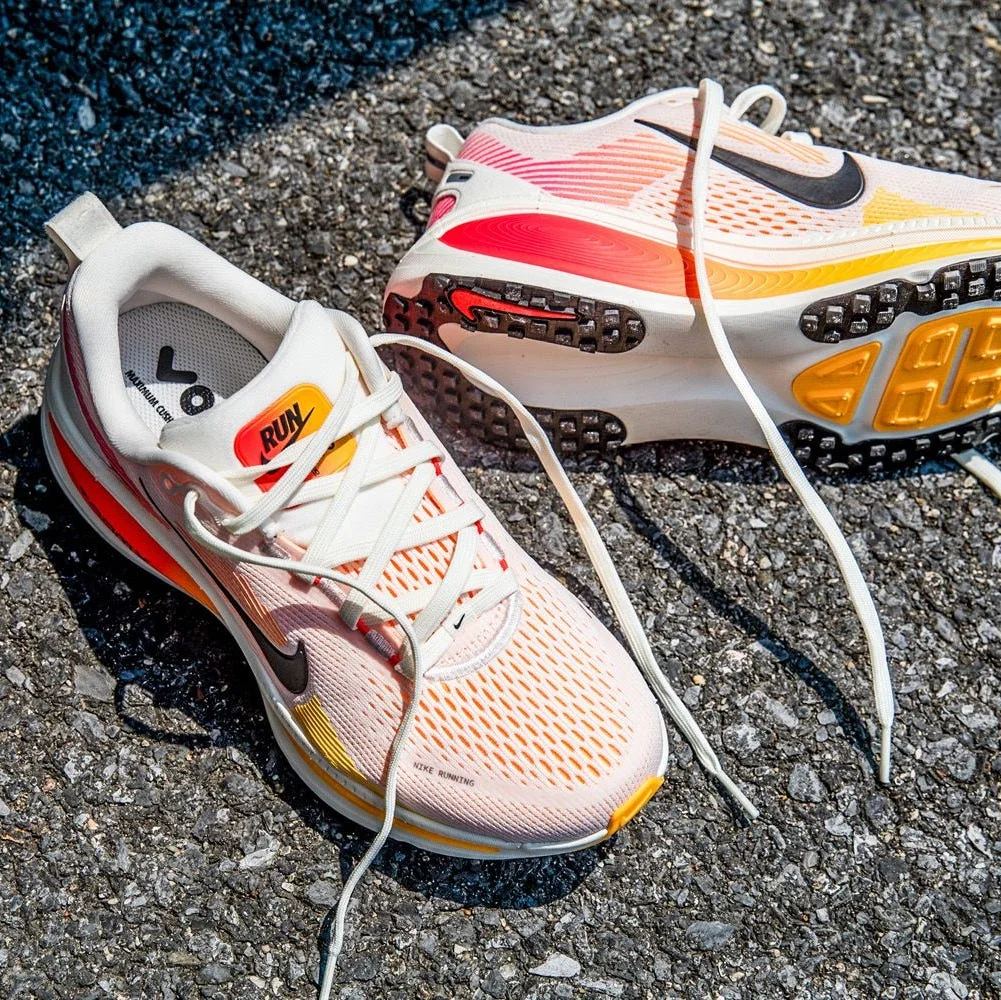
The Vomero 18 is the first Nike shoe I ran that didn’t initially feel like a Nike trainer. The shoes fit wide. Its midfoot is broader than the narrow lasts I associate with the Swoosh. Running in the Vomero 18 for the first time, I noticed two things: this shoe is über-soft and doesn’t cause my ankles to turn inward.
This Vomero is the starting point of the brand’s other cushioned shoes, which also include this list’s Vomero Plus and soon-to-be-released Vomero Premium. The story behind this new fit is that Nike shoe development listened to women, applying their fit preferences to both the women’s and men’s versions. Turns out men like the new last too, according to a Nike rep I spoke with recently on the phone.
The Vomero 18 serves as a long-run trainer, daily trainer, and recovery shoe. The cushioning reminds me of Brooks’s Glycerin Max; it’s marshmallowy but responsive. The energy return is still there instead of being zapped like a sponge turning your runs into a slog.
“Hands down these are the best shoes I’ve tested!” said shoe tester Casey Green, a 7:00 pacer who previously tested the Pegasus Plus. “Despite all the extra cushioning the ride was incredibly smooth, responsive, and the shoe never felt weighed down despite the added padding. Every mile I ran in them felt great and slight accelerations or faster average paces were no problem.”
Shop Men’s at nike.com | Shop Women’s at nike.com
Nike Structure 26
Pros
- Softer upper, more padding on tongue and heel collar
- Responsive Nike ReactX foam
Cons
- Thick upper locks in heat
Features at a Glance
| Weight | 11.3 oz (M10), 9.2 oz (W8) |
| Drop | 10 mm |
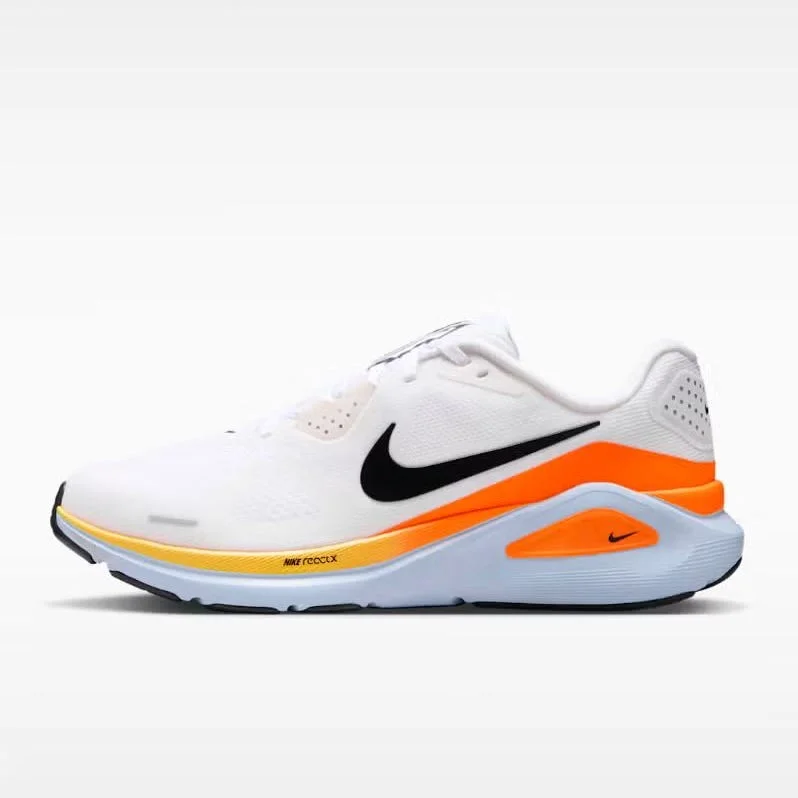
The Structure 26 has a few key updates that make it the stability shoe you shouldn’t sleep on. It’s me: I’m the one who slept on it. This is because Nike isn’t at the forefront of my mind when I recommend stability trainers. Lesson learned: the Structure 26 isn’t a shoe to forget. It provides reliable but subtle support for overpronators and neutral runners looking for more guidance, as well as a responsive ride. And it’s relatively cheap for a premium trainer.
The shoe now has ReactX foam, the same foam in the Pegasus 41 and Vomero 18. The foam delivers more rebound compared to the Structure 25’s Cushlon 3.0. An internal midfoot fit band—the triangular structure you can see on either side of the shoe—along with overlays brushed on the sides provides support. The Air Zoom bag was removed in the forefoot and replaced with blown rubber on the outsole to encourage smoother heel-toe transitions. Finally, the upper is cozier too. Nike padded up the collar and tongue for more cushioned touch points and a more secure fit.
Testers liked the shoe for its versatility, and used it as their daily trainer for all kinds of workouts. “The shoe is an absolute do-it-all workhorse,” said tester Justin Brown. “I wore it for easy runs, and even progressed up to tempo paces and used it for some strides where I was close to sprinting and I feel like the shoe stood up to all of these really well. At the same time the stability nature of the shoe was honestly nailed, and I felt very secure in the shoe at all times even on wet pavement. The ride was smooth and felt cushioned, but there was enough energy return that I didn’t feel like I couldn’t go faster in it.”
Tester Rich Maier also highlighted the shoe’s support. “I was really impressed by the stability that I felt in both my feet and my legs,” he said. “I usually only experience that level of comfort and support with heavier shoes, but these managed to combine stability with a lighter weight shoe.”
Shop Men’s at nike.com | Shop Women’s at nike.com
Pros
- Good traction
- Lightweight
- Secure lacing system
- Wide forefoot and toebox allows toes to splay
Cons
- Less cushioning in forefoot area
Key Specs
| Weight | 10.8 oz (M10), 8.7 oz (W8) |
| Drop | 8 mm |
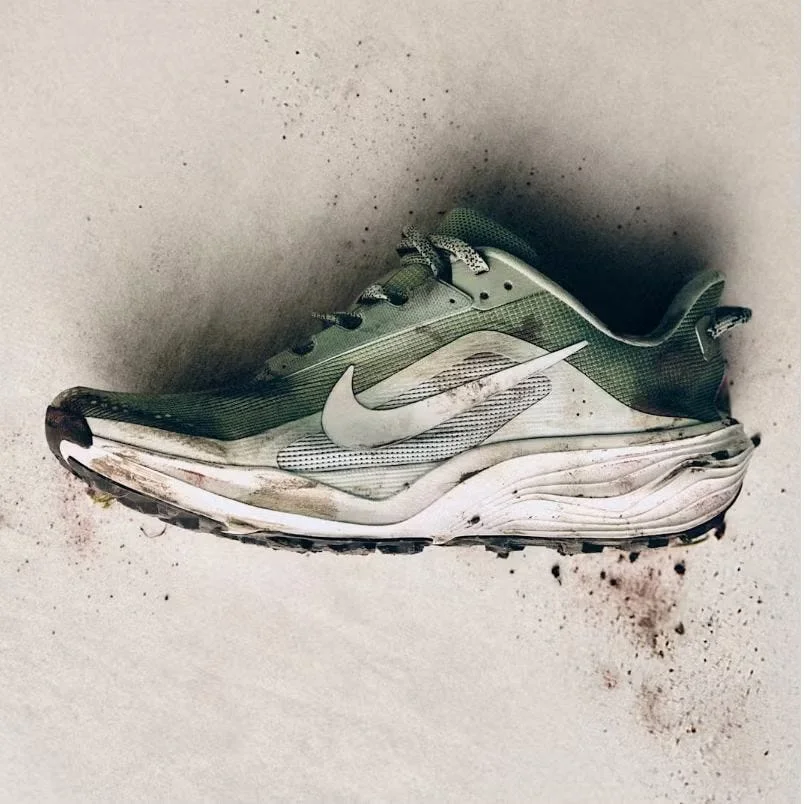
Even though the ACG Peg Trail isn’t intended for technical trails—that’s what the ACG Zegama Trail is for—our testers still praised the shoe for its capabilities on the unbeaten path.
“What I liked most about the shoe was its low-profile design that really hugged your foot on all the twists and turns out on the trail,” said tester Jeff Kilian. “Traction was exceptional as well. I feel this shoe is in a league all of its own. I would say the closest thing I can compare this Pegasus to is the Altra Timp, they’re both a lightweight shoe with not much cushioning in the sole.”
The lack of cushioning was a low point for some testers who wanted more support in the forefoot.
Despite the desire for more cushioning, they did appreciate the wider fit in the forefoot and toebox, which helped with stability on the trail.
“The fit has vastly improved,” said shoe tester Jessica Huber. “The width is perfect. There is plenty of space in the toes without feeling bulky.”
Shop Men’s at nike.com | Shop Women’s at nike.com
Nike
Pegasus 42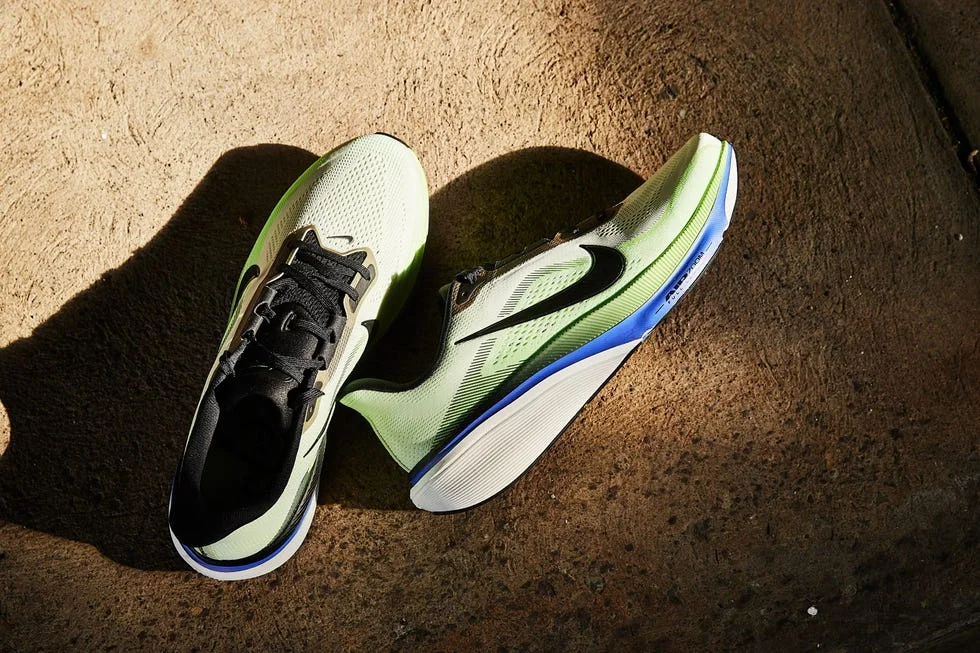
Pros
- Smooth ride
- Full-length Air Zoom unit lends more energy return
- Wide toebox provides ample toe room
Cons
- Thick upper
| Weight | 10.6 oz (M), 8.6 oz (W) |
| Drop | 10 mm |
The Nike shoe team wanted to make sure the next Pegasus was snappier and springier than the 41. The team added a full-length Air Zoom unit in the midsole, instead of separate units in previous models. This provides better compression throughout the shoe and improved energy return.
“What I like most is that it feels smooth, with a great rolling ride, but also supportive underfoot,” said tester Molly Sunderlin. “It feels easy to run quickly in, but also like I can do a two-hour long run without getting sore underfoot. I am not sure if this has to do with the shape of the heel which has sort of a ‘roll’ feature. It also wraps my foot so well, almost sock-like with cushion in the right spots. I like putting them on.”
Sunderlin is referring to the slightly curved toe of the shoe, which encourages smooth turnover. The shoe has a slightly modified foot shape to create a more accommodating fit in the midfoot and toe area. Still too tight for you? Not to worry; the Pegasus 42 is also available in extra wide.
Shop Men’s at nike.com | Shop Women’s at nike.com
Nike Structure Plus

Nike Structure Plus
Pros
- Support and stability despite tall stack height
- Max-cushioned ride
Cons
- Some found running in the shoe cumbersome
Key Specs
| Weight | 10.8 oz (M10), 8.7 oz (W8) |
| Drop | 10 mm |
Update, April 9, 2026: I wore the Structure Plus on a couple of long runs, including my 20-miler during my marathon buildup. Unlike the Vomero Plus, which had my feet roll inward on an 18-miler, the Structure Plus kept my form stable despite the growing fatigue in my weary, long-run legs.
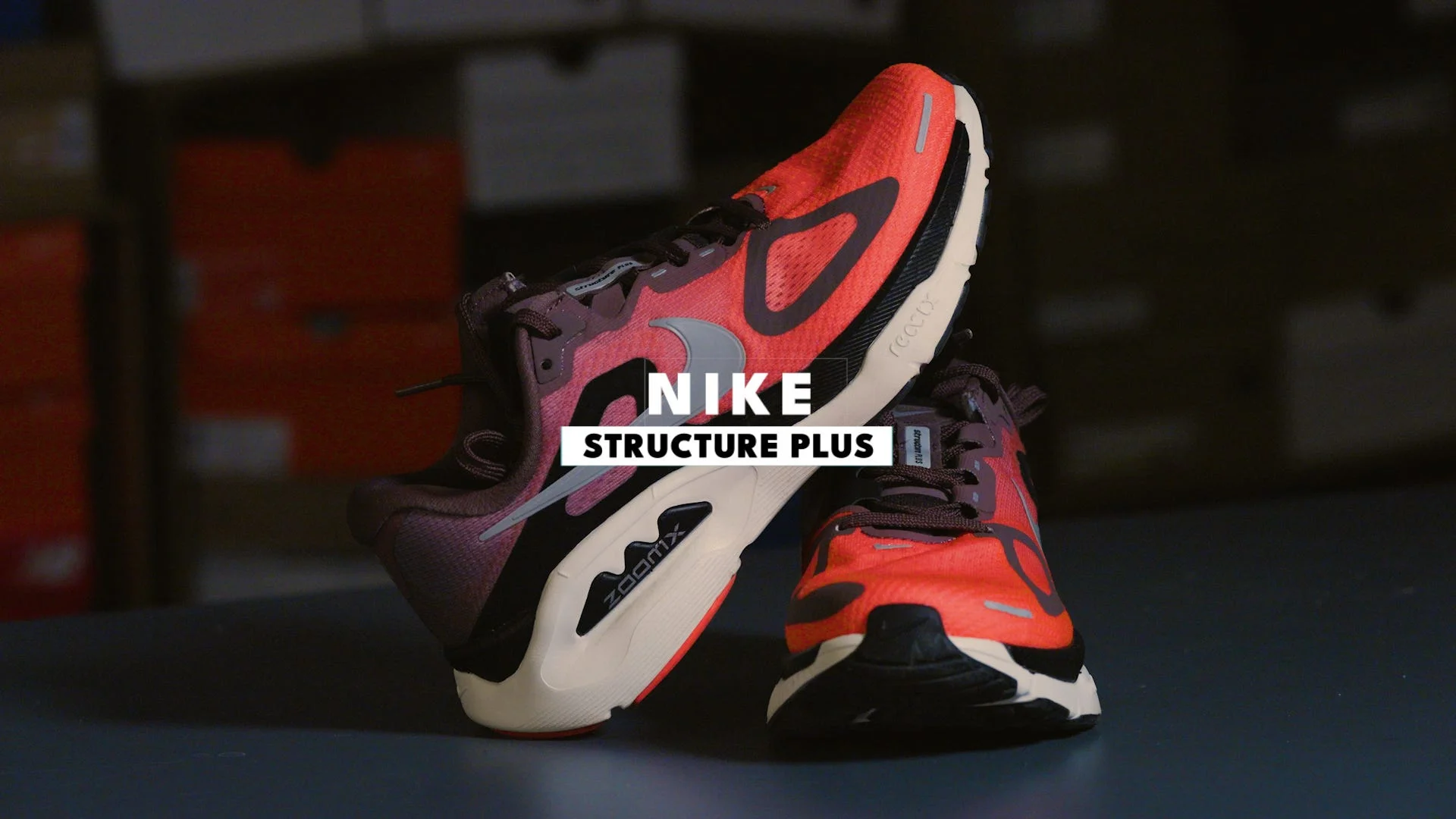
Nike’s mission with the Structure Plus was to change our perception of the stability trainer. Instead of a rigid, firm shoe, the brand wanted to make stability more palatable for all. The Structure Plus is lighter than its cousin, the Structure 26, and is more dynamic; instead of a full ReactX midsole, the Plus is dual-foamed with ReactX on the bottom and soft, energetic ZoomX PEBA foam on the top.
All this is housed in a 42mm stack height, which is 4mm taller than the Structure 26. Such a tall height would cause some to doubt the shoe’s support, but Nike widened the platform and implemented a convex flat sidewall with dense cushioning underneath the arch. The result: support for overpronators and neutral runners who want a little more pep in their stability trainer.
“What I liked most about the Nike Structure Plus was the strong sense of support it delivered on every run,” said tester Julian Caiazzo, an overpronator who averages 7:45 training pace. “The shoe felt stable and dependable without ever coming across as stiff or restrictive. It gave me the confidence to settle into my stride, and even with all that structure, the ride still felt smooth and enjoyable. It struck a great balance between guidance and comfort, which is exactly what I look for in a daily trainer.”
Alternatively, runners who want a more grounded feel—and want to save—can opt for the Structure 26 ($145).
Shop Men’s at nike.com | Shop Women’s at nike.com
Nike Vomero Plus
Pros
- Responsive PEBA midsole foam provides cushy ride
- ZoomX midsole makes the shoe slightly bouncier and lighter than the Vomero 18
Cons
- Similar feel in ride to Vomero 18 for some testers
- Towering stack height at 43mm (just a millimeter less than the Vomero 18)
Features at a Glance
| Weight | 9.9 oz (M), 7.9 oz (W) |
| Drop | 10 mm |
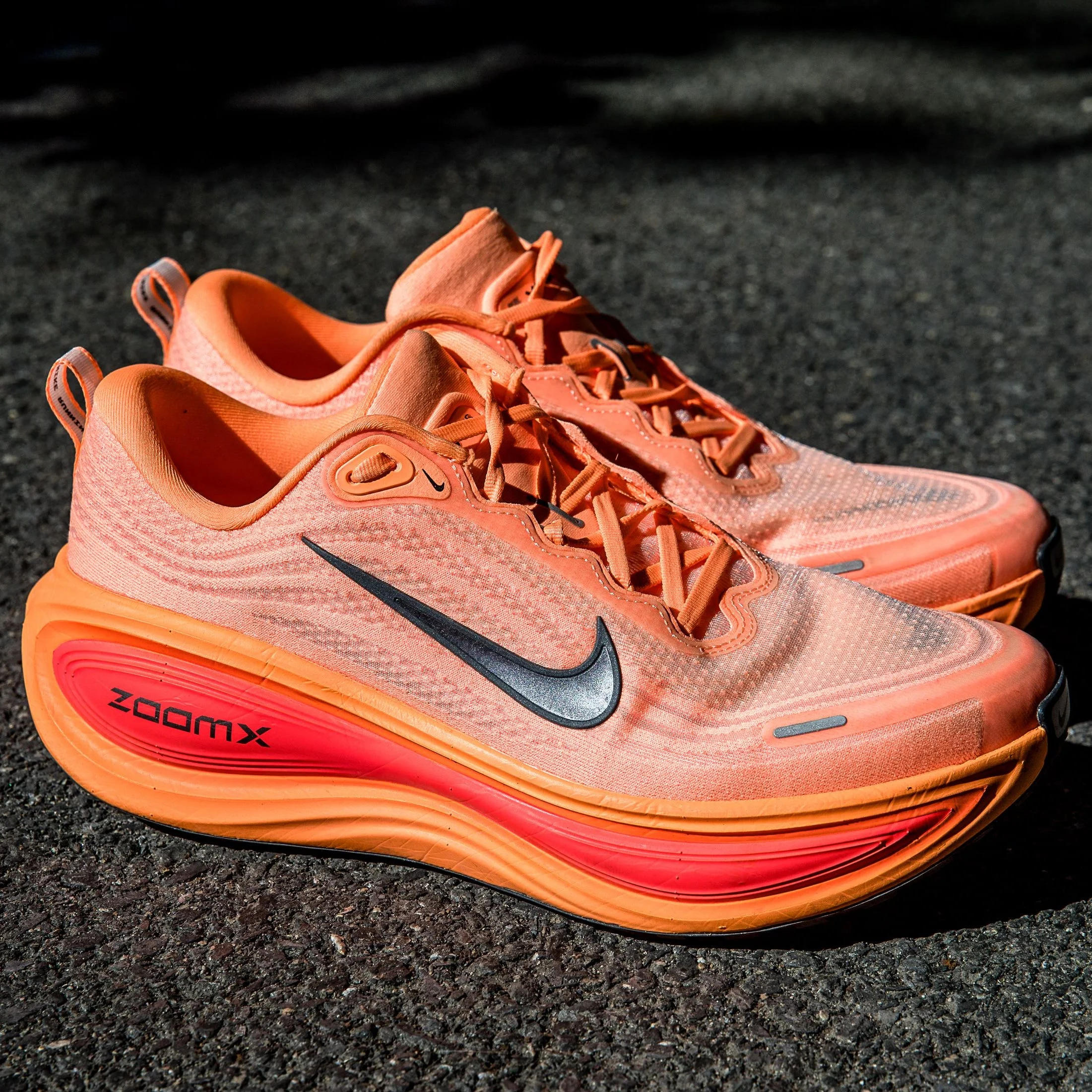
This super trainer has next-level softness, from its thick—but breathable—cozy upper to its 43mm (heel) of plush, responsive foam underfoot. Its older sibling, the Vomero 18, has a dual-foam midsole with a top layer of ZoomX and bottom layer of ReactX. With the Vomero Plus, Nike went full PEBA, with the midsole using 100 percent ZoomX.
The shoe is lighter than the Vomero 18 and a smidge shorter (the heel on the Vomero 18 hits 44mm), but I honestly couldn’t detect a major difference in the ride. The Vomero Plus is a bouncier, yet if you want to save $25, you could stick with the Vomero 18 (your legs will be none the wiser). But if you want to experience the powers of PEBA and can drop some extra cash, just listen to our testers who gave the Vomero Plus top marks. Our very own editorial assistant Michael McDonough will convince you that of the two Vomeros the Plus is the superior.
“The Nike Vomero Plus is one of, if not my favorite shoe that I’ve tested so far,” said McDonough. “The shoe lives up to the ‘plus’ in its name—I tested the Vomero 18s over the winter, and while I thought those were great as well, the Vomero Plus is an upgrade in several ways. Although they have the exact same amount of cushion, the switch from a mix of ReactX and ZoomX foam to purely ZoomX foam is an absolute game changer. The shoes feel lighter, cushier, and faster—and the fact that the shoe was able to improve all three factors at the same time was pretty remarkable.”
Shop Men’s at nike.com | Shop Women’s at nike.com
Nike Alphafly 3
Pros
- Wider base for a roomier fit and more stability
- Even lighter than previous model
Cons
- Loud footfalls— good luck on sneaking up behind your competitor
Features at a Glance
| Weight | 7.8 oz (M10), 6.2 oz (W8) |
| Drop | 8 mm |
It’s the shoe the late Kelvin Kiptum raced in during the 2023 Chicago Marathon, just 35 seconds short of officially breaking two hours. You could also say it’s structurally the most inclusive Nike racing shoe since the conception of the Vaporfly 4%.
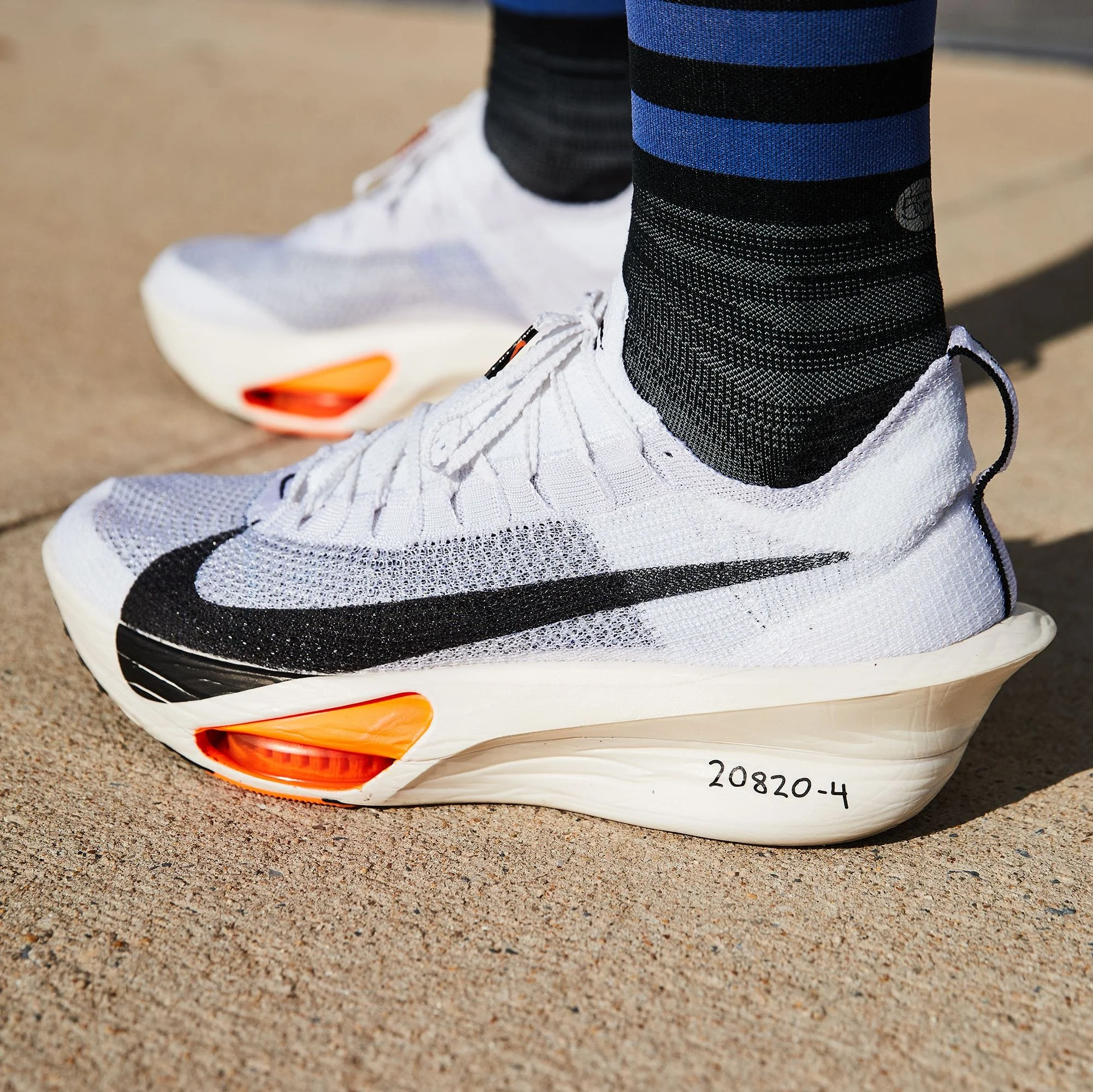
Nike’s team made adjustments so the shoe would no longer feel catered to one type of runner (i.e., that guy who does laps around your block in short shorts, and the elites). The shoe has what you’d expect as a super shoe by Nike: a full-length carbon-fiber plate called a Flyplate, PEBA-based ZoomX foam, dual Zoom Air units, and a stack height just under the World Athletics limit of 40mm.
The changes made begin with a smoother transition. The heel is no longer decoupled; the midfoot and forefoot are now connected by foam. The midfoot has a wider fit with no rise in the sockliner, like there was in the previous version. This provides more stability in the hours when your form gets sloppy on a race course. Thirdly, Nike reduced the weight of the shoe, which is usually the goal when it comes to racing shoes: the lighter, the better—as long as the shoe maintains energy return, which our own testing confirms.
“Wow!” exclaimed overpronator and tester Helen Capparell. “This sneaker is a game changer! I usually wear Brooks but this shoe was significantly lighter, hugged my foot better, had an insane absorption of every stride and propelled me into a faster pace all while staying underfoot with a stable ride.”
As for my own personal story with the Alphafly 3: I raced in it in the 2024 Boston Marathon and bloodied up my toes. I don’t know what happened. Maybe the sizing was off; usually I need to size up in a Nike shoe, but I stuck with my usual size, which likely resulted in blister hell. There’s a lesson here, and it’s logging more dress rehearsals in a shoe before deciding to race in it the day before a ’thon. Rookie mistake.
Compare my experience to the rest of our testers: anomaly, here.
Shop Men’s at nike.com | Shop Women’s at nike.com

Pros
- Protective ankle cuff
- Grippy Vibram Megagrip outsole wit protruding lugs
- Responsive ZoomX and supportive, lightweight Cushlon 3.0 foams
Cons
- A little heavy
- Sole flares out
Key Specs
| Weight | 11.9 oz (M10), 9.6 oz (W8) |
| Drop | 4 mm |
Nike’s All Conditions Gear (ACG) has been around since 1989. This year, the brand introduced a new era of trail shoes under the ACG name. One of them is the ACG Zegama Trail, a shoe meant for tough all-terrain.
The shoe’s exterior makes it look unquestionably built for technical terrain. The ACG Zegama Trail has a durable cool mesh upper and an ankle cuff that functions as a gaiter, keeping debris out of your shoes. It was a favorite feature for our tester, Chris Fisher, who tested the ACG Zegama Trail last winter.
“Best thing about the Nike Zegama’s was getting into them,” he said. “They’ve got a modified gaiter collar design with a more traditional tongue that allows for easily slipping your feet in. The stretch collar does well at keeping debris out of the shoe which was nice with all the snow I was running in.”
A secure lacing system helps with stability on uneven, twisty trails, as does a broader base. The shoe has a wide forefoot and toebox to allow your toes to splay and lend support.
Shop Men’s at nike.com | Shop Women’s at nike.com
What to Consider
Nike Running Shoes FAQ

Cat Bowen, senior editor of commerce; reviews, is a seasoned runner with more than 20 years of distance running experience, including dozens of marathons, half marathons, and even a few ultra marathons. For over a decade, she has tested parenting, fitness, home, and running gear and written in-depth guides to help readers with their next purchase. Holding multiple advanced degrees and currently studying kinesiology, Cat Bowen brings research-backed insight to all of her guides. Passionate about women’s health and neurodivergent inclusion, she advocates for closing research gaps and helping others—especially AudHD people—find joy in running and fitness.

Amanda Furrer, Editor, Running Reviews, studied journalism at NYU and writing at Emerson College. She has reviewed gear and covered other topics in the running space for almost 10 years. Since 2013, she has consecutively run the Boston Marathon. She also has a master’s degree in gastronomy from Boston University and was formerly a professional baker for two years before hanging up her apron.