The Best Sports Bras Under $100 (and Many for Much Less), According to Real Runners
If you’ve ever swapped complaints midrun about your gear—“Who actually wants removable bra pads?”; “Why don’t these shorts have more pockets?”—you know the most common gripe of all: Why is it so difficult to find a comfortable sports bra? As runners, you already know there’s no such thing as “one size fits all,” there’s no “best” running shoe (but there is a shoe out there for every kind of runner), and there’s definitely not one bra that can support all of your different shapes and sizes. And here’s the good news: The right bra for your body doesn’t have to be the most expensive one on the rack. sports bras span a wide range of prices, and a bigger number on the tag doesn’t guarantee a better fit—what matters is finding the support and comfort you need for your build and your mileage.
That’s where we come in. The RW staff tests tons of sports bras throughout the year—from budget-friendly picks to premium options—so you can find the most comfy and supportive bra for your body, at whatever price works for you.
Best Sports Bras for Runners
- Most Adjustable Sports Bra: lululemon Run Times Bra
- Best Value Adjustable Bra: Old Navy PowerSoft
- Best High-Impact Pullover Bra: lululemon Go Further
- Best Value Pullover Bra: Fittin Pullover Bra
- Best Value Pocket Bra: Queenieke Bareflow Pocket Bra
How We Selected
Our testers span all experience levels, paces, ages, and body types, with sizes ranging from 28 to 40 bands and A to F cups. We wore these bras for running plus low- to high-intensity workouts like yoga and HIIT, evaluating each for comfort, breathability, mobility, and—of course—support.
We sorted our picks into three categories: adjustable bras (hook-and-eye closures, zip fronts, Velcro, or adjustable straps), pullover bras (no adjusting required, though maybe some contorting), and pocket bras, which we also rank on storage space and how packing affects mobility and support.
We update this roundup regularly, but inventory changes fast—some colors and sizes may run low.
Full Reviews
Best Adjustable Bras
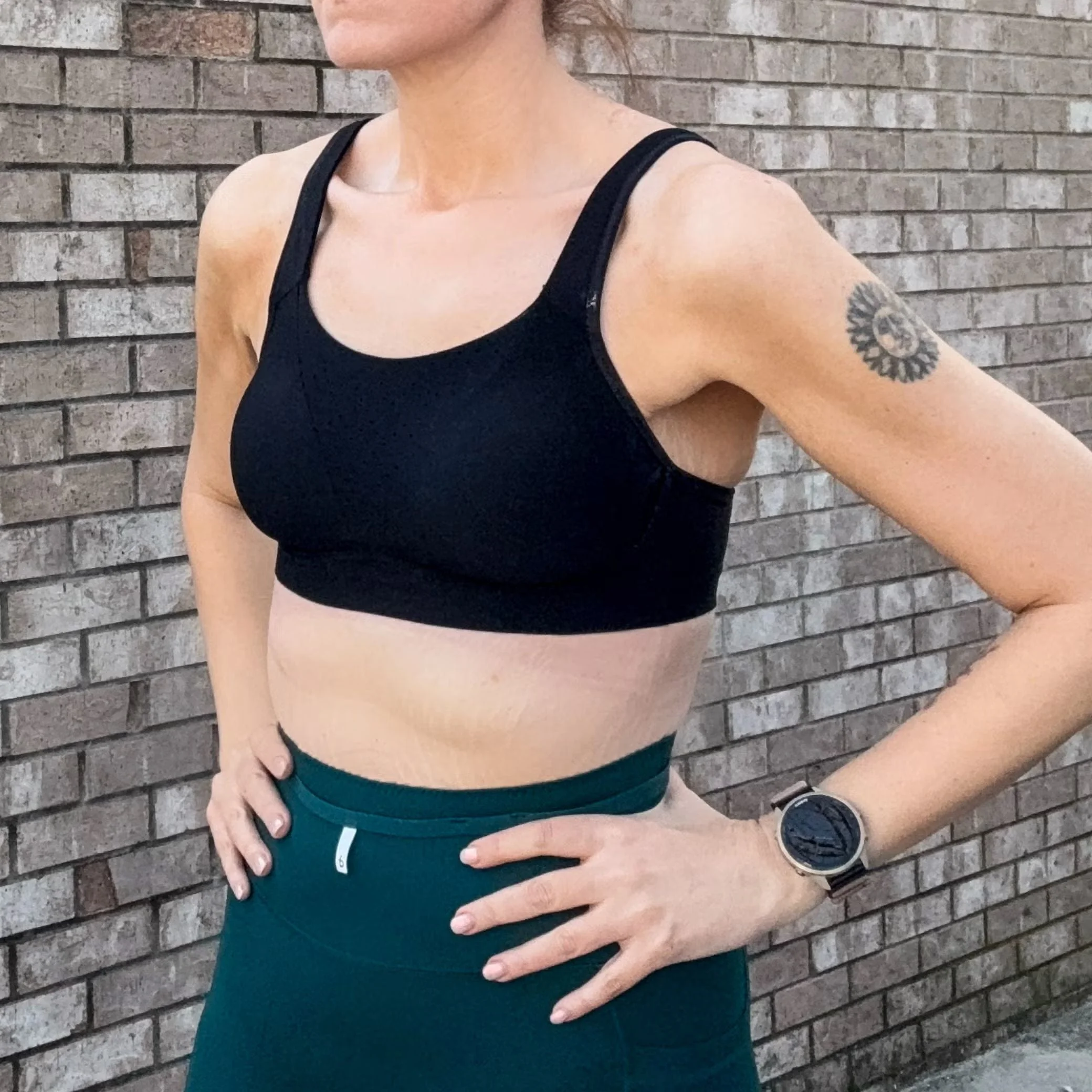
lululemon Run Times Bra
Pros
- Maximum support with compression
- Breathable
- Band doesn’t cut into sternum

Cons
- Sizing is wild—up to G cup for some band sizes, DDD for others

Key Specs
| Material | Nylon, Elastane, Polyurethane (different percentages in different parts of the bra) |
| Support | Maximum support |
| Size range | 32C-42DDD (32 and 34 up to G cup) |
There are few bras that you try on and feel comfortable straight out of the bag, but the Run Times Bra manages. It’s a comfortably compressive, encapsulated, adjustable bra that is designed to take you for long miles. It has sweat-wicking fabric that prevents pooling under the breasts, and the mesh panel at the top allows for additional breathability. On a long run, that extra breeze makes a huge difference in comfort and chafing prevention.
Our tester took this out on a 35-mile climbing trail run through the Adirondack Mountains and through the heat and the rain. The bra performed beautifully, even under a long-sleeve tee and tech jacket. It didn’t get swampy, nor did the shirt start to stick to it, as can happen when sweat and water soak a T-shirt.
It’s especially great for women who have lost a significant amount of breast volume due to weight loss or breastfeeding because of how the additional Lycra material encapsulates and hugs each breast. Where some bras may make these breasts feel almost “folded,” the Run Times Bra simply supports and cradles your breasts in an anatomically comfortable way.
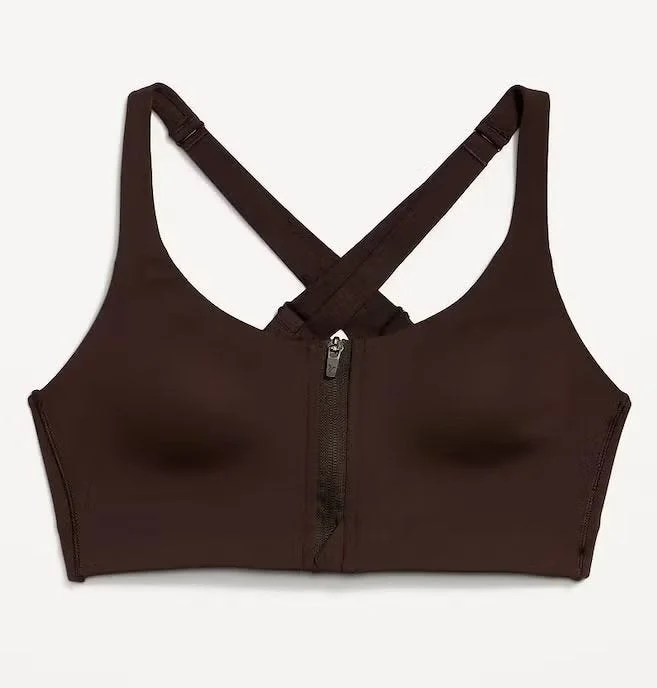
Old Navy High Support Power Soft Bra
Pros
- Huge size range
- Easy to adjust
- ZIp-front closure is easy even when you're sweaty
Cons
- Pills pretty fast
Key Specs
| Material | 77% recycled polyester, 23% spandex |
| Support | High |
| Size Range | 32C-42DDD, 44DD, 46D |
Old Navy has long been a favorite of ours for its inexpensive athletic wear, and now, that also includes sports bras. The PowerSoft bra hits well outside of its weight class in both features and performance, starting with a front zipper that spares you the post-run wrestle of a sweaty pullover. Adjustable cross-back straps let you fix the fit through your shoulders and torso, and the brand’s namesake PowerSoft fabric is buttery soft with moisture-wicking that holds up when you’re hitting those hot runs.
The size range is where Old Navy really shows up the competition: broader than what many premium brands offer. At $40 full price—and often marked down below $25—it’s impossible to overlook.
And not for anything, this is one of the bras we tested with a zipper that isn’t a sensory nightmare for our autistic testers.
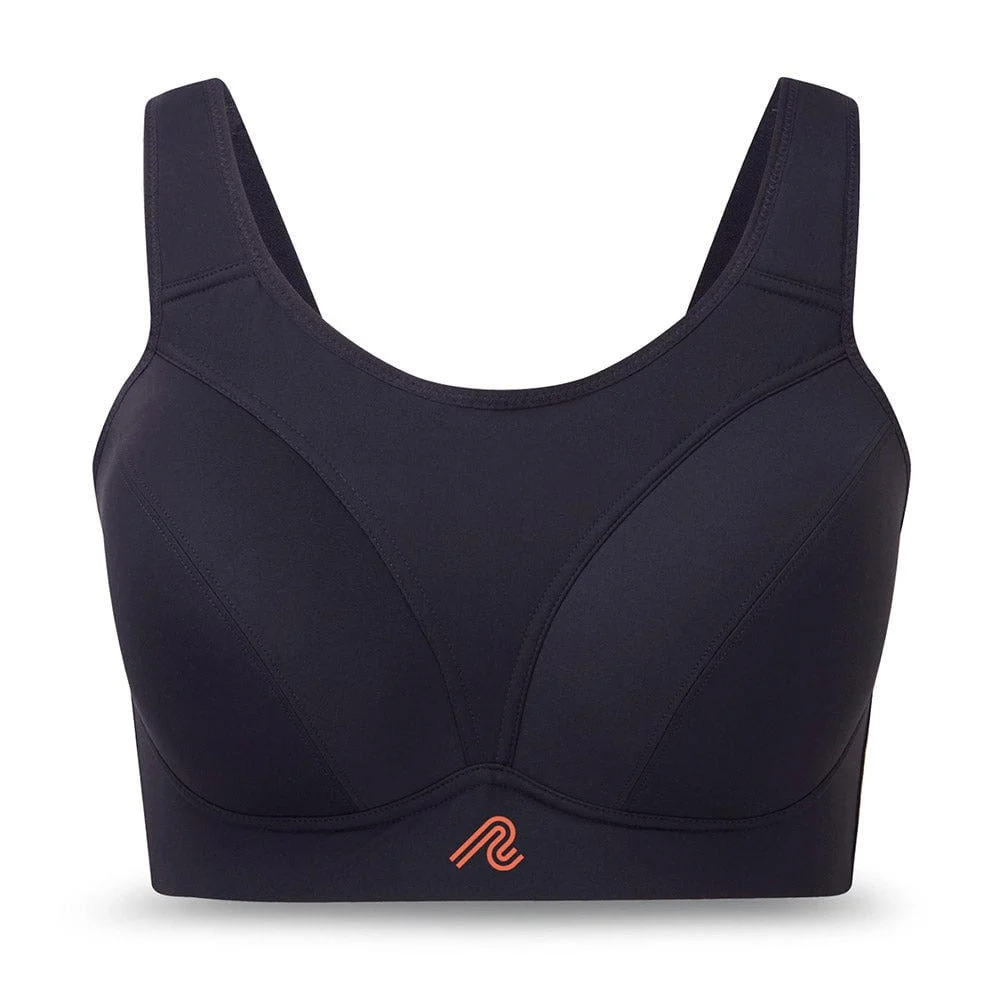
Runderwear Power Running Bra
Runderwear Power Running Bra
Pros
- Dual adjustable band allows for maximum adjustment
- Breathable even on long runs
- Durable
Cons
- Higher neckline may bug some runners
Key Specs
| Material | 76% recycled polyamide, 24% elastane |
| Support | High Support |
| Size range | 32C-42F |
Cat Bowen described this bra in her review as “among the best sports bras I’ve tested this year because of its construction.” The uniqueness of that construction? A dual adjustable strap in the back that allows you to dial in your fit. If you need more support up top, you can clasp it closer together. Need a bit more band space? The lower hooks are there for you. This is a bra designed for women who may have volume in different spots across their ribs and chest. And it works beautifully.
The construction also makes for a more comfortable experience. Bowen herself has a pretty severe rib flare thanks to pregnancy and a short waist, and the ability to tighten the bra more up on top and less on the bottom makes it comfier than most other bras she tested.
However, she notes that if you have pronounced lat muscles, you may notice a bit of rubbing during pull-ups because of where the shoulder straps fall. But that nitpicky aspect doesn’t take away from it being an all-around winner.
Runderwear Power Running Bra Review
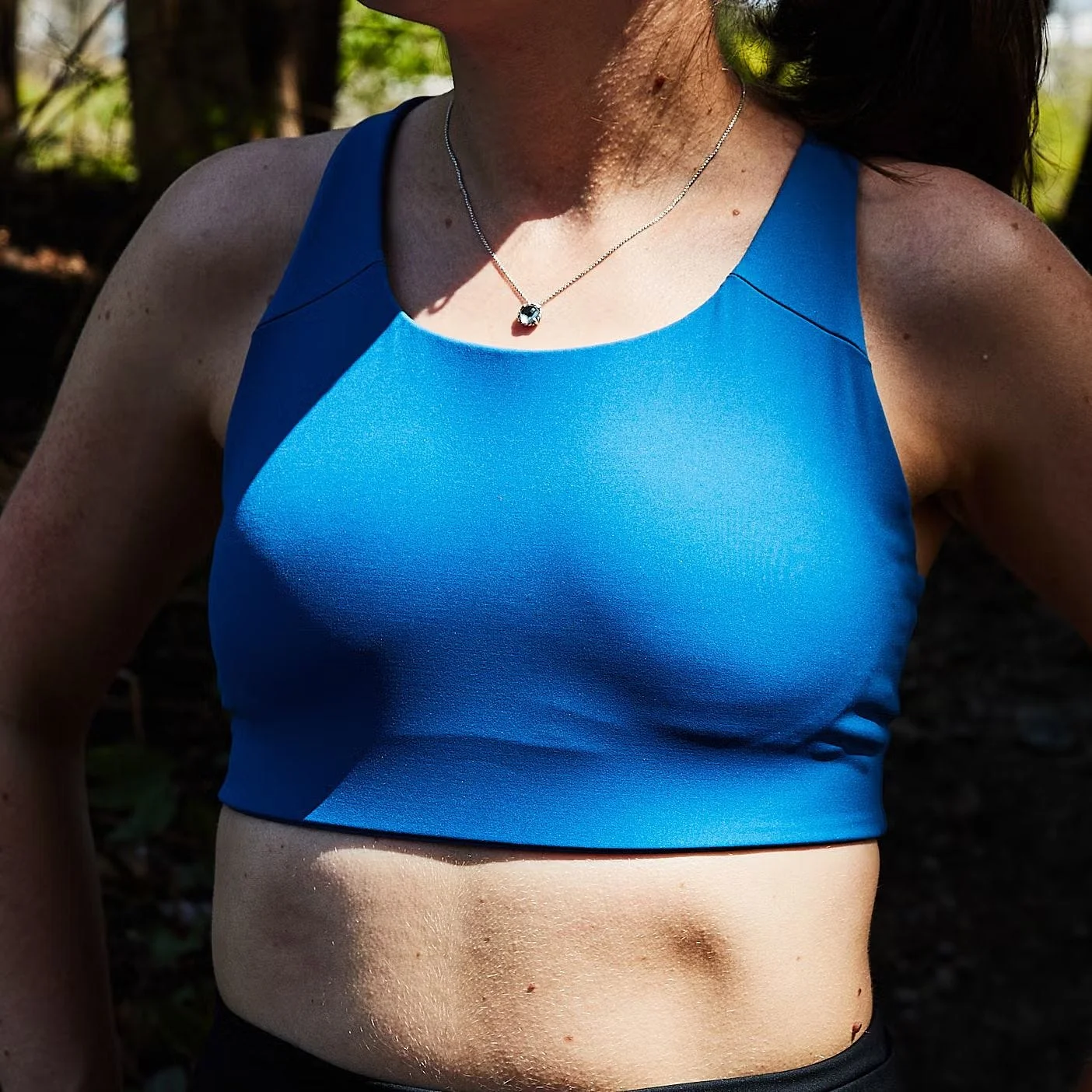
Patagonia Shadowlite High-Impact Adjustable Bra
Patagonia Shadowlite High-Impact Adjustable Bra
Pros
- Seams are virtually unnoticeable
- Breathable and light
- Interesting support style
Cons
- Limited sizing
Key Specs
| Material | 74% recycled nylon 26% spandex |
| Support | High Support |
| Size range | XXS-XXL |
The Shadowlite is very sensory friendly. The flat-locked seams are coated and stitched in a way that they don’t rub or interfere with your run. It’s also not a traditional encapsulation bra, nor is it a traditional pullover compression bra. Instead, it’s a combination of the two. Instead of the sewn-in lifting panel squeezing the breasts together and in, it lifts them together without the squish.
“The bra gave me a very secure feeling without restricting my breathing—I forgot I was wearing it, which is always the best possible outcome,” said Senior Features Editor Pavlína Černá. “The band has ribbing on the inside that I found helpful in keeping the bra in place—no feeling of rotation on the run. I usually try to get two runs out of a bra, if I can, before washing. I was able to do three with this bra.”
Champion Spot Comfort High-Impact Sports Bra
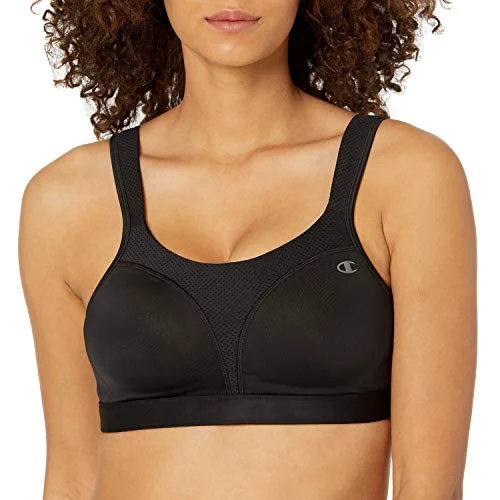
Champion Spot Comfort High-Impact Sports Bra
Pros
- Made with moisture-wicking material
- Supports C to DDD sizes
Cons
- H-back-only; straps don’t cross over
- Band size runs small
Key Specs
| Material | 76% nylon, 24% elastane |
| Support | High |
| Size Range | 34C-42DDD |
The gel-cushioned straps on this sports bra ensure you won’t get raw markings from all-day wear and intense activities. The Spot Comfort is also extremely breathable and moisture-wicking—mesh on the adjustable straps and front panel promotes ventilation.
The bra is lined with molded cups for non-underwire support, and the back hook-and-eye closure makes it easy to take the bra off. One thing to consider: size up. We found the fit a little too snug, even on the loosest hook-and-eye setting. It’s also H-back-only, which may not be everyone’s preference when wearing a sports bra. This one launders like a dream—seriously. For the price, it doesn’t pill, it doesn’t stretch out, and we don’t always follow our own laundering advice and just throw it in with everything and call it good.
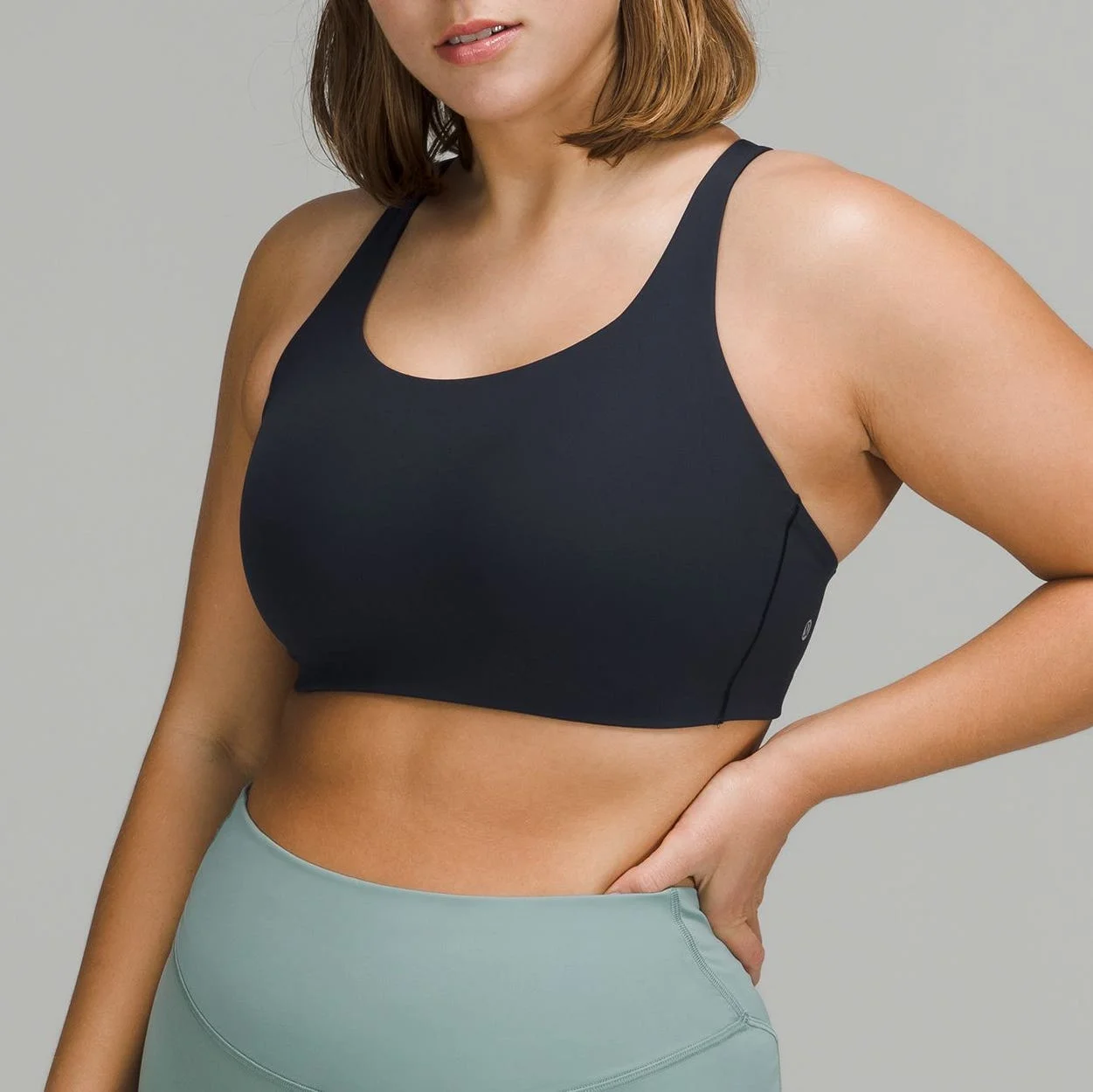
Pros
- Mid-chest neckline provides good coverage and support
- Holds up to high-impact activities
- Adjustable straps with a cute double-crossback design
Cons
- Only for B to DDD cups
- Sizing can be tricky, runs small
Key Specs
| Material | 78% nylon, 22% elastane |
| Support | High |
| Size Range | 32B-36DDD |
The Energy’s foam cups, which go up to size DDD, offer comfortable and secure support while also providing a flattering fit that doesn’t squish the chest down. In the back, we appreciate the crisscross straps’ fun design as well as their functionality—once adjusted, the straps stay in place for a no-budge run.
Some of our testers reported that the Energy runs small, so it may be best to order a size up to ensure the bra is a good fit or try it on in person. This bra also has three points of adjustment: the chest band as well as both sets of cross straps.
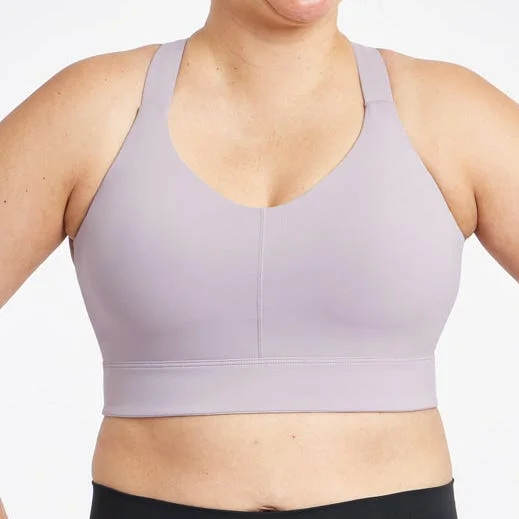
Pros
- Adjustable straps can be worn X-back or H-back
- Sewn-in molded cups
Cons
- Band sizing runs tight; consider sizing up
Key Specs
| Material | 78% polyester, 22% spandex |
| Support | High |
| Size range | 32C-40DD |
Deputy Health & Fitness Editor Mallory Creveling, CPT, lamented she couldn’t find a bra that makes her breasts virtually immovable. Oiselle’s Queen Bra was Creveling’s answer. The Queen provides full coverage with a longline underband to support your chest from the bottom. Thick straps won’t dig into your skin and are adjustable and convertible; you can wear them crisscross or H-back style.
The band has four sets of hook-and-eye closures and three positions to tighten and loosen. You may want to size up your band, however. When testing the Queen, I felt my usual band size was just a little too snug around my torso. Once you have the right sizing, it’s smooth sailing from there.
“It was so comfortable to run in,” said new runner and tester Bridget Hughes. “I felt really supported and it kept everything in place without being overbearing by squeezing the living air out of me, which a lot of sports bras do. I feel like I usually have to give up support or lung space but with this bra I did not have to compromise at all.”
Best Pullover Bras
lululemon Go Further Bra
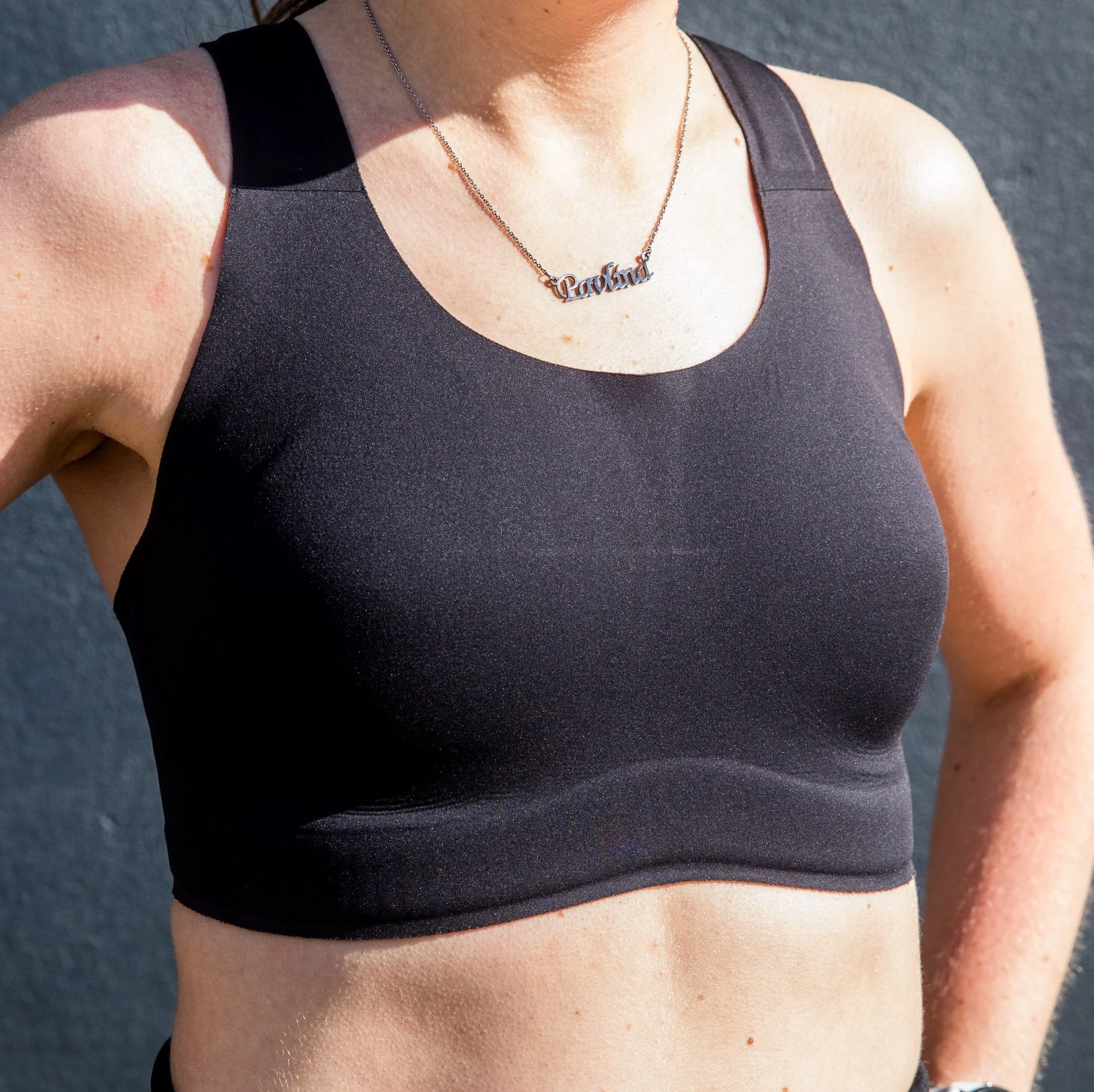
Pros
- High-impact bra with no plastic and no underwire
- Seamless construction
- Memory foam padding
Cons
- Limited to C and D cup support
- Non-adjustability a double-edged sword for larger breasts
Key Specs
| Material | 56% nylon, 44% lycra elastane, liner: 63% nylon, 37% lycra elastane |
| Support | High |
| Size range | XXS-XL |
The bra that underwent 2,000-plus miles of ultrarunning is buttery soft and has plenty of lift. Tested during lululemon’s Further campaign, in which 10 women runners ran an ultra over the course of six days, the Go Further Bra is a high-impact pullover that can carry you through thousands of miles—and it doesn’t have to be in one go.
The bra is made of lululemon’s Ultralu fabric, which feels yoga legging smooth. Support Code technology in the cups changes the stiffness of the cups to prevent your breasts from bouncing as you run. You can see the tech when the bra is on a flat surface; instead of the conical domes you see on an encapsulation bra, the cups pucker and look slightly sunken in.
Our tester, who wears a 32B and tested the Go Further in a small, had her doubts when she saw the bra lying flat on her desk. She changed her mind after running in the Go Further. “From the look of her, I was convinced that she would never fit, and that she’s made for much bigger boobs than mine,” she says. “And was I wrong! She fits like a glove and is easy to put on and take off. She doesn’t deprive me of air but is completely supportive on my runs.”
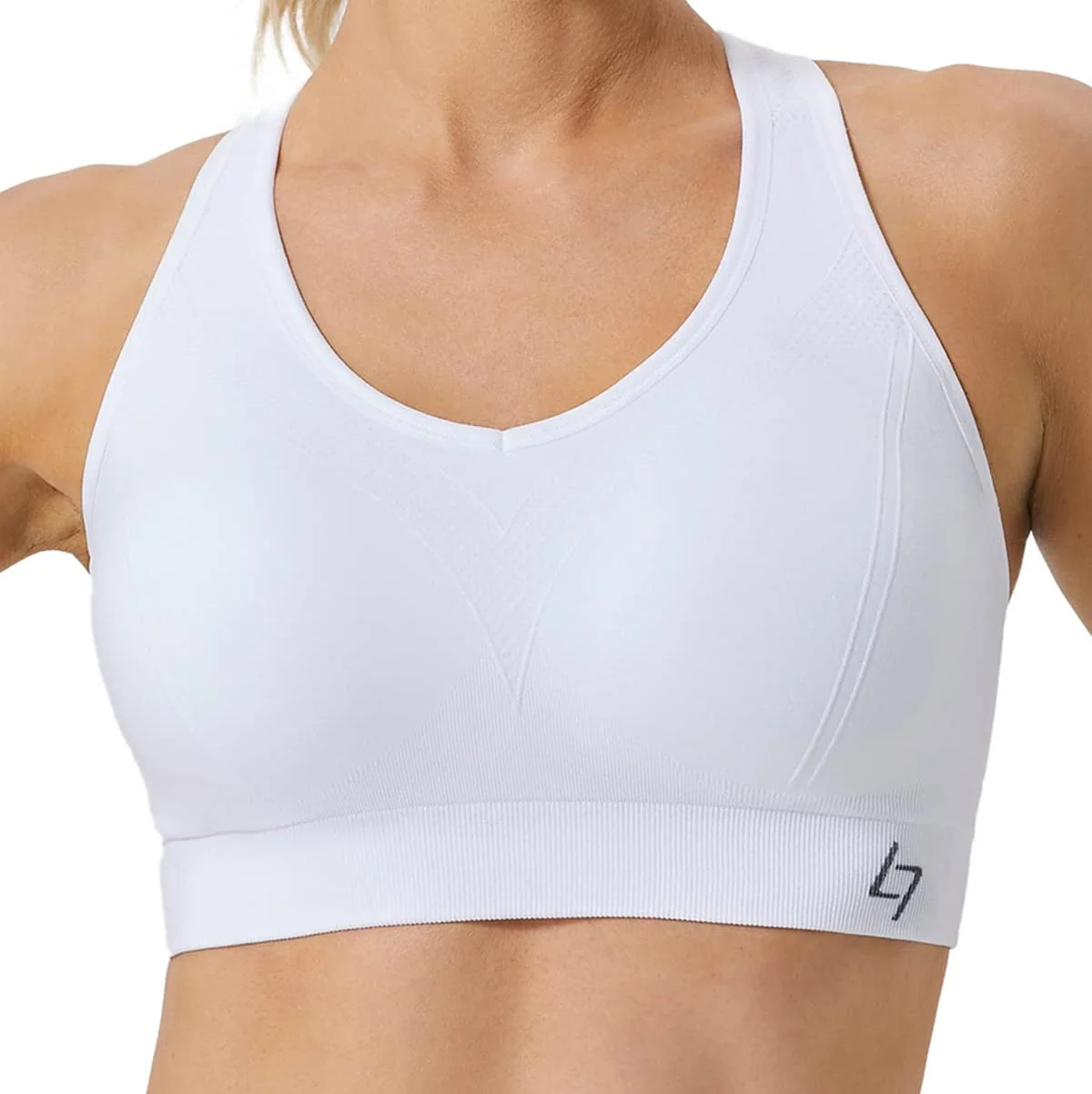
Pros
- Bargain price but maintains shape well
- Soft material for all-day wear
Cons
- Low impact for DD+
Key Specs
| Material | 60% nylon, 28% polyester, 12% elastane |
| Support | Medium |
| Size Range | S-3XL |
A bra that costs less than a standard pair of running socks? Yes, please. This ultra-comfy Fittin bra is a simple, soft pullover that we keep reaching for pre-run and all-day lounging. It has a “butter-soft feel” (yes, we can confirm the product description) and is made with a four-way-stretch material that surprised us with its supportiveness. In short, the Fittin won’t have runners holding their boobs in the late stages of a workout.
Just be aware that you won’t want to do any high-intensity workouts in a bra with such a low percentage of supportive elastane. But if you want all-day comfort, this bra is definitely worth considering.
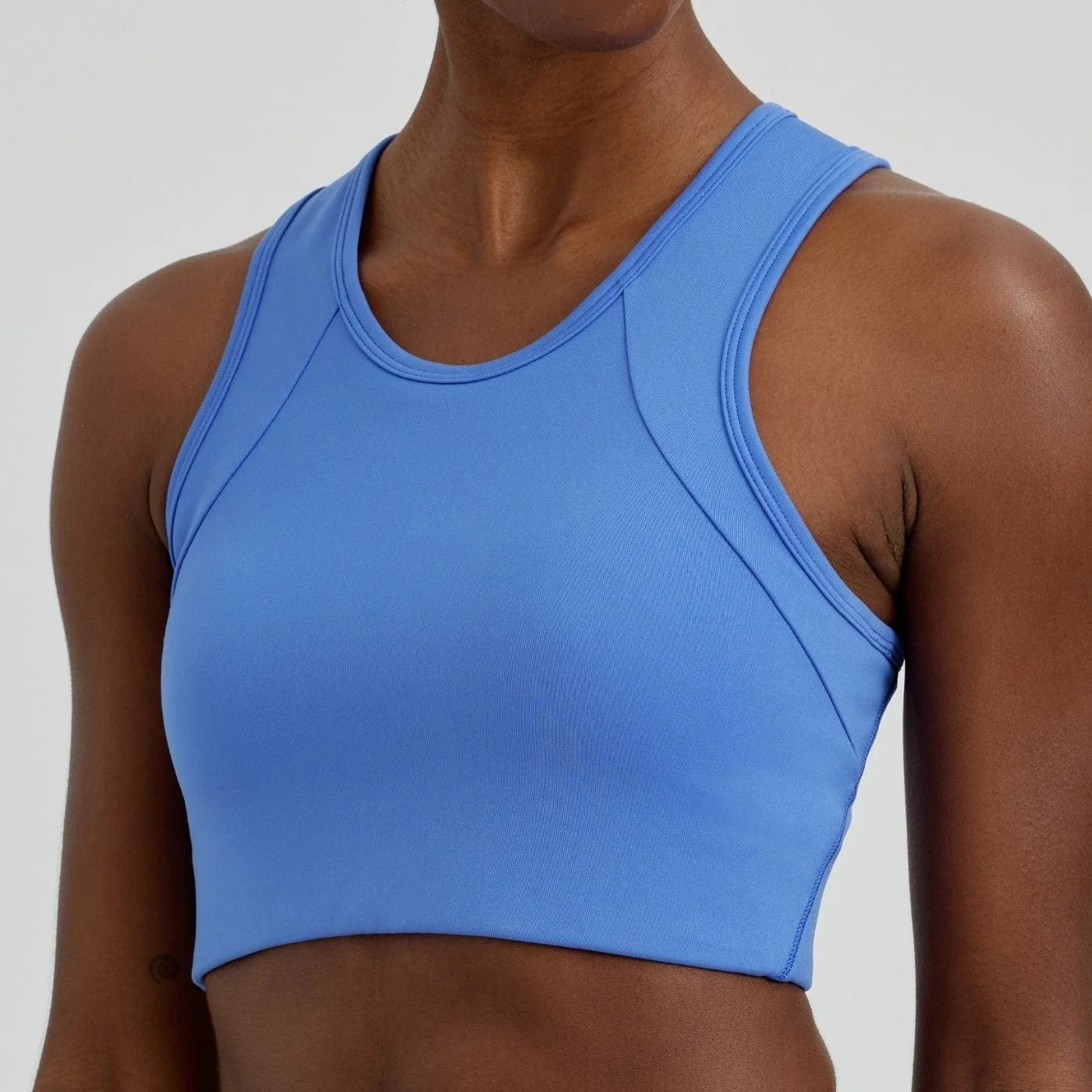
Pros
- Great for bibs
- Breathable
Cons
- Dumb detachable pads
Key Specs
| Material | Compression Knit: 79% Nylon, 21% Spandex, Airlight: 78% Nylon 66, 14% Spandex, 8% PES, Power Mesh: 82% Nylon, 18% Spandex |
| Support | High |
| Size range | XS-XL |
Pruzan is gaining traction as a little running brand for its apparel’s flattering silhouettes and comfy threads. London-based and women-owned, Pruzan’s Speed Was a Goddess First campaign is the kind of energy we love right now with women in running. Co-founder Jesse Hyman told Runner’s World that the brand is right now working on a pocketed bra for next year’s release, but our testers are head-over-heels for the Hourglass Marathon Bra (just wear shorts with pockets if you need storage).
The Hourglass is a long bra with a high scoop cut, making it ideal for maximum support and race bib real estate (why do they make them so big?). Compression supports, and soft, knit material draws away sweat. Exposed wide band elastic on the back provides comfort and a place to hang your top after delayering. Only hindrance: those removable cups that Editor Amanda Furrer immediately tossed out before sporting the bra for speedwork at the track.
Best Pocket Bras
Queenieke Medium Support Back Pocket Energy Sport Bra
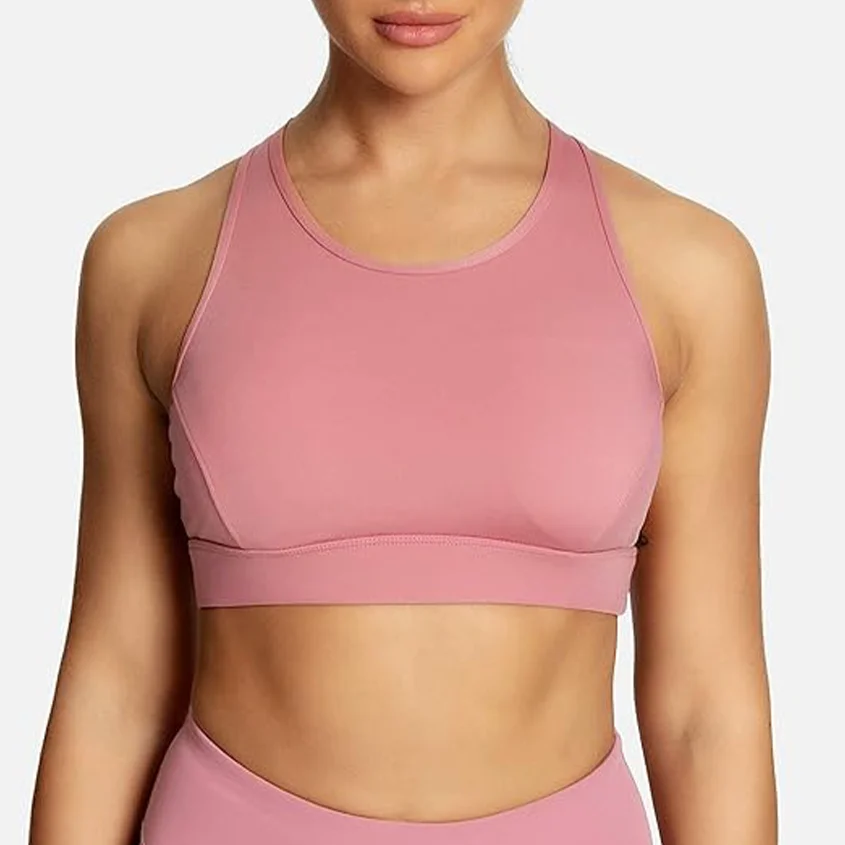
Queenieke Medium Support Back Pocket Energy Sport Bra
Pros
- Secure drop-in back pocket
- Good support for most cup sizes
Cons
- Back pocket is shallower than similar pocket bras
Key Specs
| Material | 75% nylon, 25% spandex |
| Support | Medium |
| Size range | XS-XXL |
This extremely reasonably priced back-pocket bra is one of my top picks from my sports bras with pocket testing. The phone pocket is easy to reach, and, unlike other pocket bras, there isn’t an overload of material along the back strap design. That does mean the pocket is shallower than similar models, and I find myself reaching back to make sure my phone is still there (I haven’t lost it yet, but it’s something to keep in mind).
This bra is available in a ridiculous array of fun colors, has an easy-to-wear shape, and features a well-fitted design with good coverage and comfort for most cup sizes. For those of us wearing wired headphones, you can thread the cords through a bonded eyelet above the pocket, and the bra stays quite odor resistant even after sweaty workout sessions.
Tracksmith Allston Bra
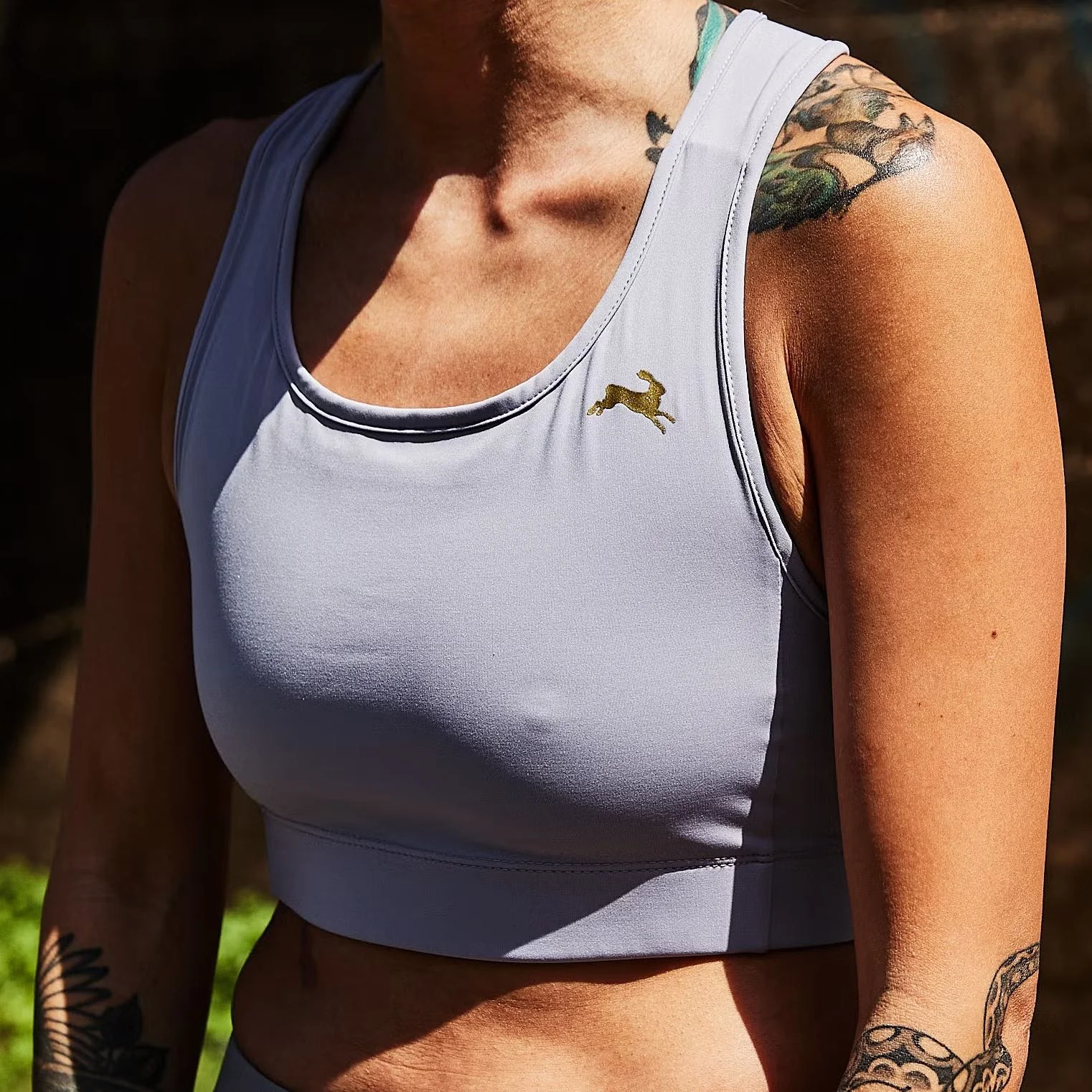
Pros
- Comfortable all around--no hot spots
- Wicks moisture well
- Great phone pocket
Cons
- Limited sizing
- Two-pocket bra goes in and out of stock
Key Specs
| Material | Body Fabric: 57% Nylon / 43% Elastane Liner Fabric: 80% Nylon / 20% Elastane |
| Support | High Support |
| Size range | XS-XL |
This bra is absurdly comfortable, according to editor Amanda Furrer. It’s comfortable in a way that she can forget about all the issues she’s had with bras previously. It’s a pocket bra (or two-pocket, when it comes back in stock) that not only holds you up, but also holds your phone without having it hit your spine over and over or fall out.
It has a wider racerback and back strap, which, on its face, would seem like a bad thing, but, in reality, makes for a more secure feel on your runs. The chest band itself, where the bulk of the elastic lives, is wider than on many bras, and also thinner. Now, if you have a rib flare, that might not be great, because it can lead to rolling, but if you are lucky enough to not have a flare, then it sits beautifully without constriction or discomfort in your stomach. It distributes the security of the band over a wider area. Your long runs have never been more secure or comfortable.
Tracksmith Allston Pocket Bra Review
What to Consider
Fit
To determine your sports bra size, Lawson uses this system of measuring:
- Using measuring tape, wrap the tape across your midback and under your breasts. Round up to the nearest whole number in inches. This is your CHEST measurement.
- Next, wrap the measuring tape securely across your midback and across the fullest part of your breasts. Round up to the nearest whole number in inches. This is your BUST measurement.
- Subtract your CHEST measurement from your BUST measurement. The difference determines your CUP size, beginning with 1 inch as an A cup, 2 inches B cup, and so on.
- Next, wrap the tape across your upper back, snug under your armpits, and across the upper border of your breasts. If the measurement is odd, round up to an even number. This is your BAND size.
But this equation isn’t doctrine. There is no industry standard for bra sizing; not every brand follows the same conventions of measurement. Some brands, for instance, instruct customers to add 4 or 5 inches to the band measurement to determine band size.
Sports Bra Sizing:
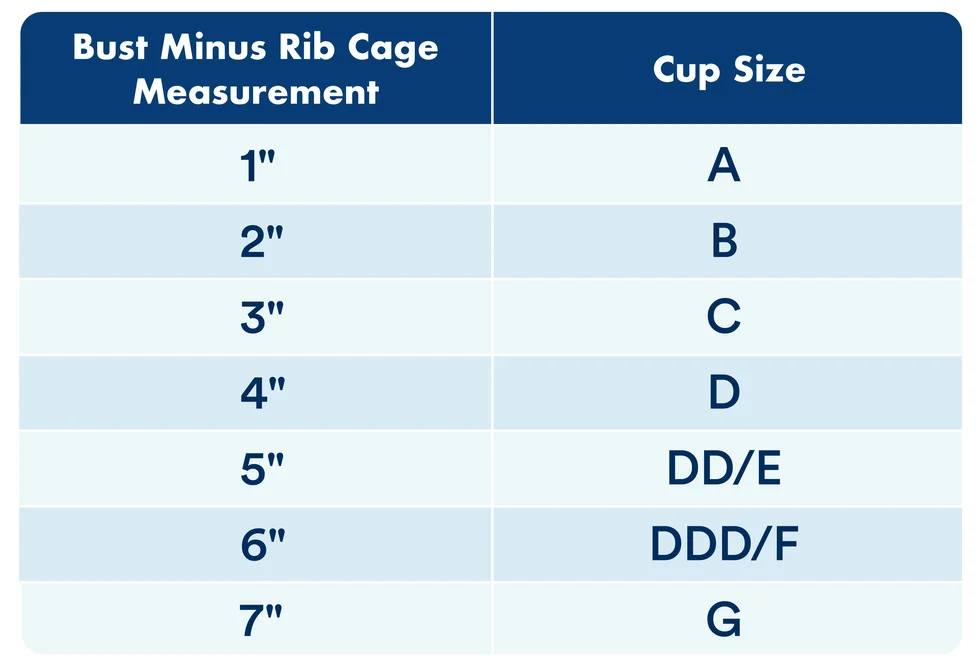
“I’ve been creating, evaluating, revising, critiquing sports bra fit charts for decades for brands large and small,” Lawson says. “Because our bodies and breasts are so diverse, it’s virtually impossible for any brand to create the perfect sizing scheme and fit chart that works for 100 percent of women.” But Lawson calls this “a blessing,” comparing sports bras to jeans. Imagine if every size 10 jean had a standardized fit. That would alienate curvier, thinner, shorter, or taller individuals. “It can take trial and error to find your perfect jeans fit match, but once you do it can be a life-changer.” And the same goes for sports bras.
She offers some tips to navigate the wild west of bra sizing.
- If brands use “alpha sizing” (small, medium, and large, instead of band/cup), refer to their fit chart for the corresponding size.
- If you have small, “perky” breasts you can get away with measuring braless. If you have bigger breasts, you’ll get more accurate numbers wearing a padless, noncompressive separate cup bra when doing measurements.
- Beware of online bra size calculators, Lawson warned. “They can be accurate or way out of whack!” It’s better to do your own calculations.
- It pays to read product reviews, like this RW guide, to read real runner assessments on fit and comfort.
Compression Versus Encapsulation
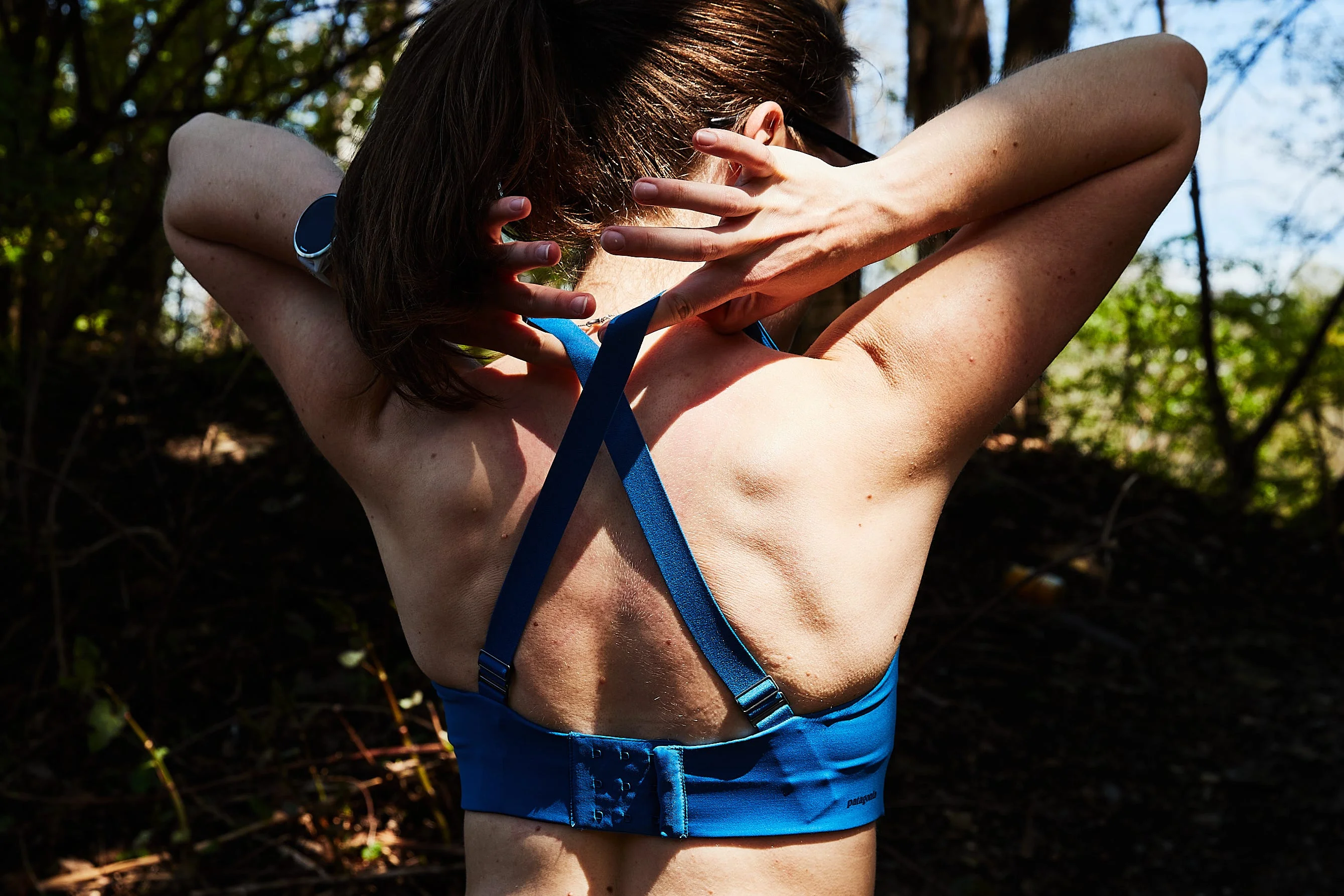
When it comes to support, there are two basic sports bra designs: compression and encapsulation. Compression is when strong elastic materials are used to compress your chest. Encapsulation is when each breast is supported separately in its own cup. According to Lawson, many women with larger breasts prefer encapsulation because they find it more comfortable. “It’s not smooshing everything together, trapping moisture between the breasts,” she says. That being said, some encapsulation bras, such as the SheFit, Janji, and lululemon Run Times, also offer degrees of compression inside the encapsulation, which serve as both impact protection and an additional layer of support and protection for larger-busted people or those who have lost volume.
Adjustability
Regardless of the type of chest design, an adjustable waistband and shoulder straps help improve overall support when you have larger breasts. More padded straps won’t necessarily translate to a more comfortable fit, Lawson says. Putting in more foam may initially feel more comfortable, but it won’t decrease pressure. “The one thing that will decrease strap pressure is a wider strap. If you make the strap twice as wide, it doesn’t quite cut the shoulder pressure in half, but it’ll take it almost down to half.”
Pockets
Some of my favorite racing shorts are pocketless, which isn’t a big deal—when your sports bra has pockets. Some brands offer bras with side pockets and front pockets for housing keys or gels. There are bras with back pockets for storing your smartphone as well. A thing to note with bra storage is that you could be sacrificing support if you weigh down your bra with items.
Some people believe that storing your phone in your bra can increase your breast cancer risk. “There is no conclusive data to suggest that cell phones are linked to cancer,” says Diana Medgyesy, MD, a medical oncologist at UCHealth. However, she adds that “this is an evolving field since cell phone technology and the use of cell phones are changing rapidly,” so use your own discretion on whether or not to run with your phone in your bra.
Testing
When it comes to finding the best sports bra for you, patience and some trial and error are key. “Be prepared to become a sleuth,” Lawson says. “Be prepared to do a little work to understand your own body/breasts and then a lot of work to sleuth out brands whose fit philosophies and metrics match your needs and preferences.
“Most of us are willing to try a dozen or more running shoe brands/styles/sizes to get the best product match for our feet and workouts—give your sports bra quest the same effort and attention to detail.”
For Those Who Have Had or Will Have Breast Surgery
One population of runners we don’t want to leave out are those who have had lumpectomies, mastectomies, or other breast surgeries. That’s why we spoke with breast surgeon and runner Deborah M. Capko, MD, FACS, from Memorial Sloan Kettering in New York City. She says that “it’s all about compression” for women who have had breast surgery. For up to a year after surgery, you could be dealing with swelling and discomfort during your runs. Having a compressive bra like a SheFit or lululemon Run Times bra can help.
Capko says underwires are a no-go, but keeping your post-op breasts “stable and highly supported” can cut down on that swelling and pain. We also spoke with a few runners who have run postmastectomy and lumpectomy, and they agree. When it comes to preferred bra design, they suggested clasp or zip over pullover because a pullover is harder to deal with and far less comfortable.
The Problems With Size Inclusivity
Bra manufacturers have a real issue creating a full range of sizes for high-impact sports bras. It is rare to find a bra that goes above a 42DDD. SheFit manages, and a few select other brands, but in general, bras with band sizes above 42 and cup sizes above DDD are hard to come by. This is an error in the industry that makes it difficult for people in larger bodies to achieve their running and fitness goals comfortably. Plus-size runners are wildly underrepresented across the span of gear. Running and running gear should be accessible for all, no matter the size of body you live in.
Why Trust Us
Runner’s World began covering all things running in 1966, but the first sports bra, the Jogbra, wasn’t invented until a decade later. Sports bras are as necessary as a pair of running shoes. Since their invention, they continue to undergo changes in design and tech.
We researched the history of the sports bra and combed through the products available on the market today. We spoke with designers, brand representatives, and experts in the field, including LaJean Lawson, PhD.
Known as Dr. Sports Bra in her field, Lawson has two graduate degrees in sports bra science and is the principal at Creative Fitness Solutions in Portland, Oregon.
Additional interviewing and research was done by Senior Features Editor Pavlína Černá, Deputy Health & Fitness Editor Mallory Creveling, and Director of Hype Aly Ellis.
FAQs
How many times should I wash my sports bra?
You can wear your bra several times before washing, but be sure to wash it at least every couple of runs. Because you’re sweating in the sports bra during running, which is a high-intensity activity, your bra can develop bacteria buildup (gross).
Most sports bras can be tossed into the washing machine, but read the garment label just in case. Refrain from adding in fabric softener, since that can degrade the material and interfere with its breathability and moisture-wicking properties.
Air-drying is strongly recommended, although you can put the bra in the dryer on a tumble setting. Heat from your machine can degrade the bra’s structure as well.
How long does a sports bra last?
Like a running shoe, sports bra shelf life is dependent on the wearer. While it’s recommended you retire your sports bra once or twice’ a year, we get it—you’ve formed an attachment. But there are telltale signs that it’s time to say goodbye. If the straps are overstretched, the band is loose or causes friction when it never used to, the cups have lost shape, or there’s a hole in the fabric, time for a new bra.
Another sign to go shopping: your body has changed and the bra doesn’t fit like it used to. It’s worth buying a new sports bra that gives you proper support instead of willing an old bra to give you support it can no longer provide.
More on Sports Bras
The Most Influential Piece of Running Gear Ever Made
Here’s your ultimate guide to getting the most out of this game-changing MVP.
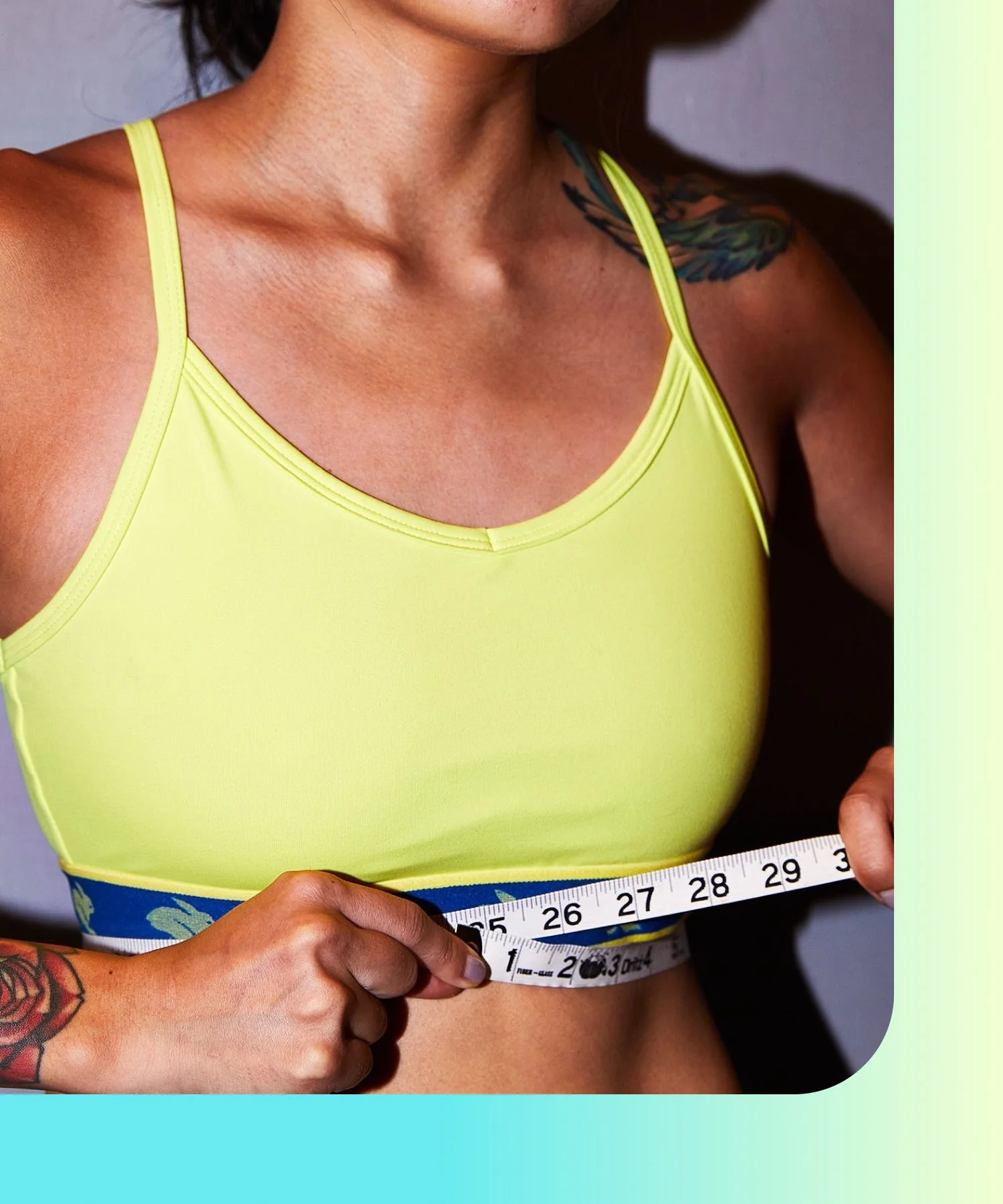
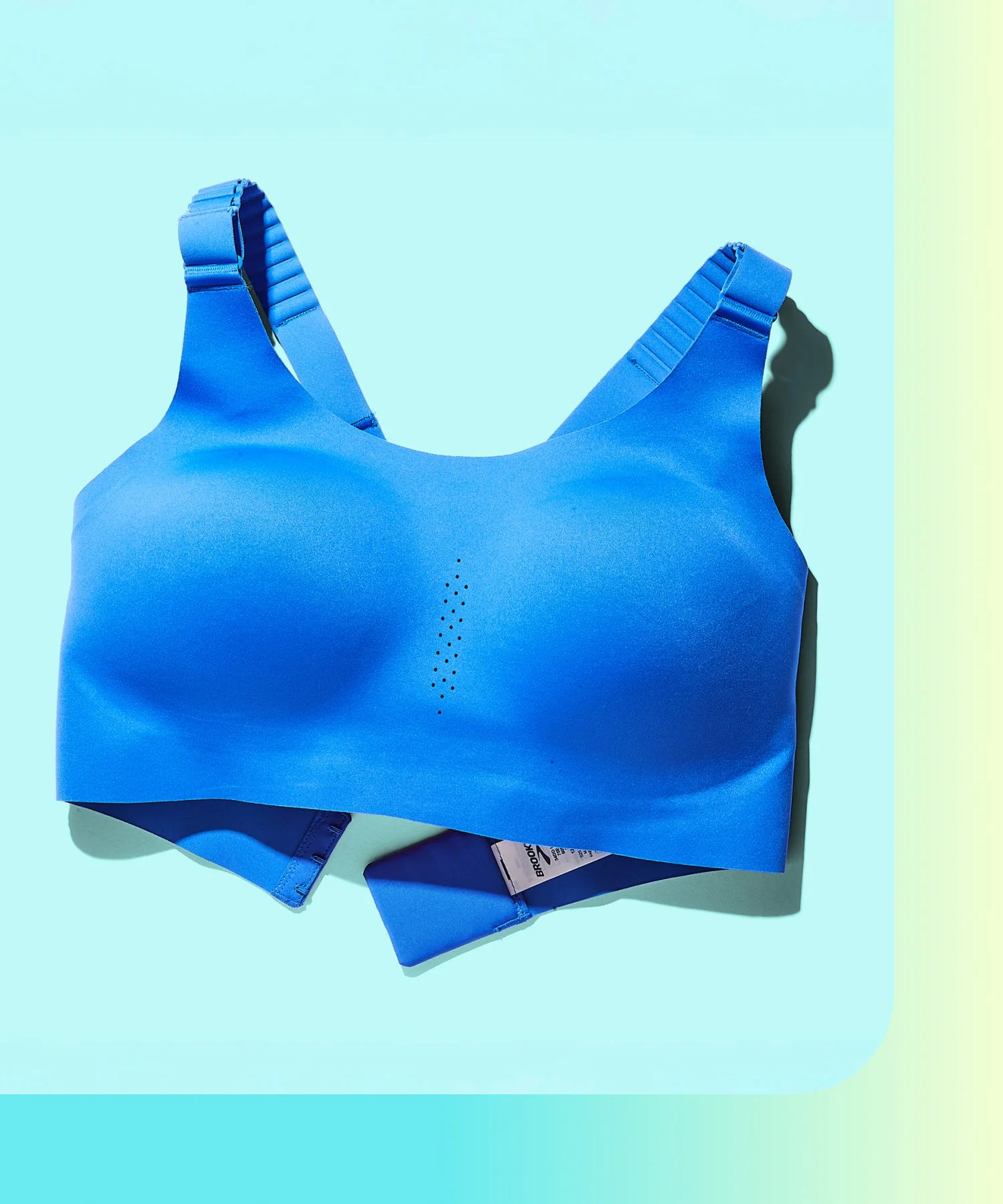
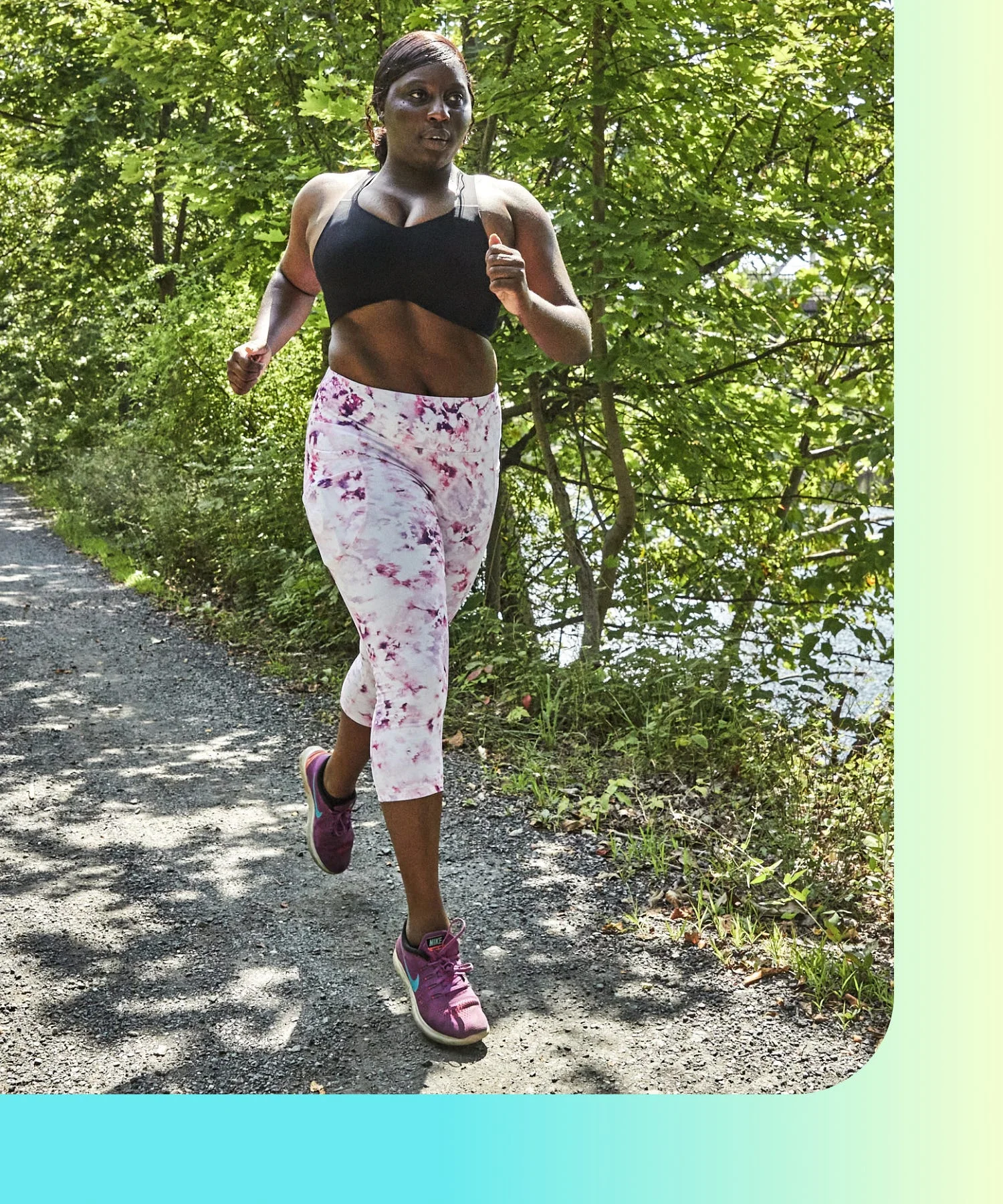
What Makes a Sports Bra Best for You?
A detailed breakdown of the architecture of various running bras.
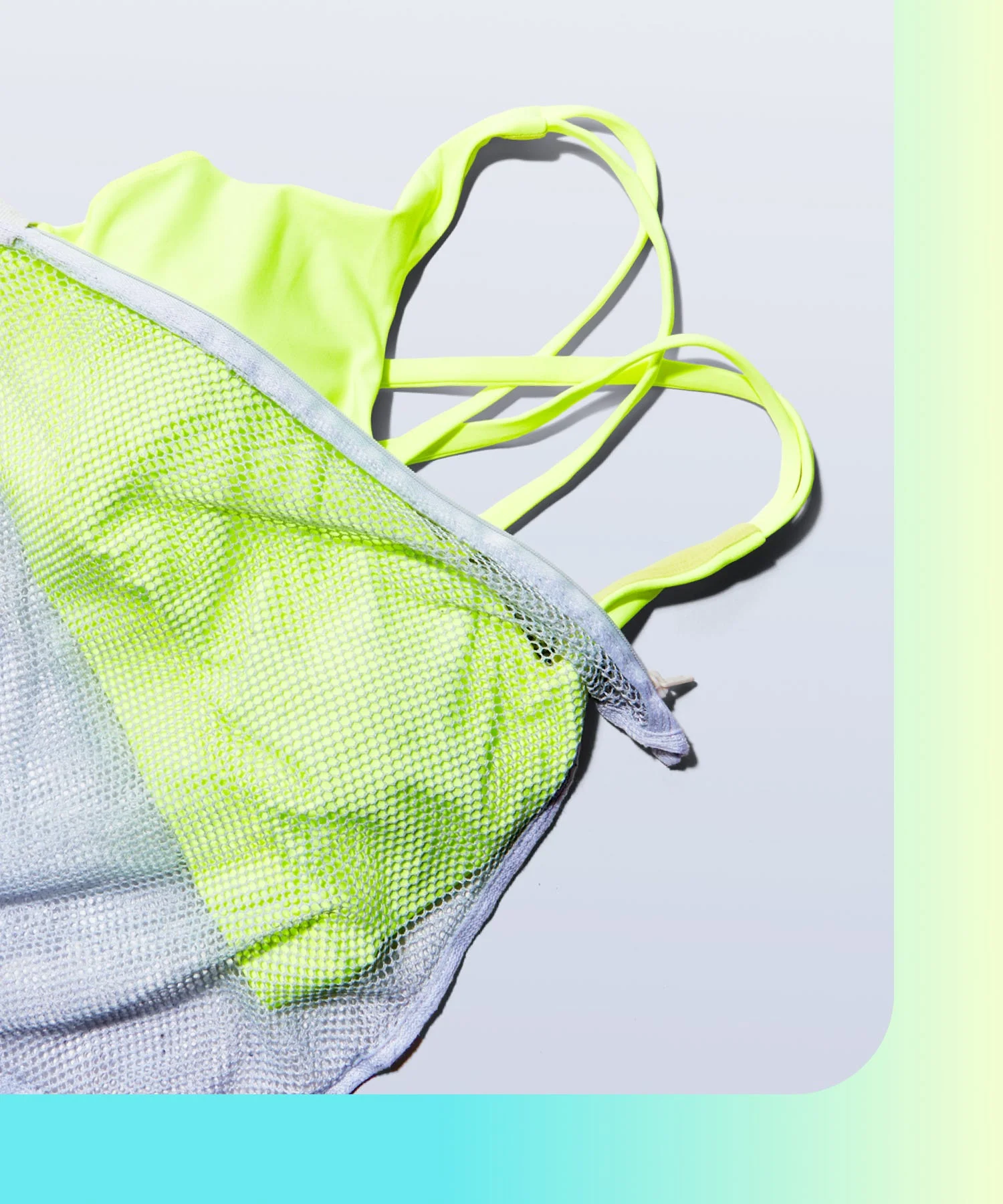
Make Your Bra Last Longer
Tips on how to properly wash and dry your sports bra to maximize longevity.

Cat Bowen, senior editor of commerce; reviews, is a seasoned runner with more than 20 years of distance running experience, including dozens of marathons, half marathons, and even a few ultra marathons. For over a decade, she has tested parenting, fitness, home, and running gear and written in-depth guides to help readers with their next purchase. Holding multiple advanced degrees and currently studying kinesiology, Cat Bowen brings research-backed insight to all of her guides. Passionate about women’s health and neurodivergent inclusion, she advocates for closing research gaps and helping others—especially AudHD people—find joy in running and fitness.

Amanda Furrer, Editor, Running Reviews, studied journalism at NYU and writing at Emerson College. She has reviewed gear and covered other topics in the running space for almost 10 years. Since 2013, she has consecutively run the Boston Marathon. She also has a master’s degree in gastronomy from Boston University and was formerly a professional baker for two years before hanging up her apron.

Maggie Slepian is a full-time freelance writer in the outdoor industry and has tested gear professionally for almost ten years—she is an avid backpacker, trail runner, bikepacker, and horseback rider and has thru-hiked thousands of miles on the Appalachian, Colorado, and Ouachita trails, along with backcountry travel on terrain including coastal trails, the desert, and high alpine peaks. Maggie has written for New York Magazine, Huffington Post, REI, and Outside. She is a columnist with Backpacker Magazine and is the co-founder of BackpackingRoutes.com. Contact her at MaggieSlepian.com.