The Best Running Playlists to Power Every Pace and Distance
Find Your Fave Playlist:
Runners create playlists for a variety of reasons and with a variety of goals. A marathoner-in-training may select songs and artists to last the distance of their weekly long run. Someone hoping to improve their pace may use faster songs to help them nail 400-meter repeats.
Whatever the inspiration behind your personal soundtrack, a playlist only works if you like—or love—the actual tunes, and if the tempo helps set the pace at which you want to run.
Runner’s World has been crafting playlists to help you reach both of these goals. Try our selections to run faster or longer, and maybe you’ll find the perfect song to add to your personal playlist.
Speaking of the perfect song, the research shows (see below) that your perfect song (or songs) can improve your run performance, so give each playlist a try. You’ll still probably discover some new favorite tunes.
Type of Run
Some Runner’s World editors have one exceedingly long playlist that they shuffle through during every run, leaving it to chance whether a tune matches their run pace and mood. Others create new playlists for every specific run, such as zone 2s or intervals. If you want music to match a scheduled run, we have playlists for every type on your training plan.

27 songs | 1 hr 32 min
Feat: The Ballad of Me and My Brain by The 1975; Lucky Strike by Troye Sivan; the end by MisterWives

27 songs | 1 hr 35 min
Feat: The Spins by Mac Miller, Empire of the Sun; Something About U by Kim Petras; Tell Me You Love Me by Galantis, Throttle

50 songs | 2 hr 52 min
Feat: Shy Girl by Haute & Freddy; I Wanna Get Better by Bleachers, Tinashe; Slip Away by Perfume Genius

26 songs | 1 hr 36 min
Feat: Take me back by HAIM; Everywhere by Fleetwood Mac; Free Yourself by Jessie Ware
Beats Per Minute
In music, bpm refers to the tempo of a song. According to research, listening to fast music while you run can help you pick up your pace, and it can also help you run slower and with a steady cadence when you want to stay in zone 2.
By the way, standard military cadence—you know, the call-and-response drills soldiers do—are typically 120 bpm, which matches songs such as “Dreams” by Fleetwood Mac and “Come As You Are” by Nirvana—not very fast!

27 songs | 1 hr 34 min
Feat: Good Vibrations by Marky Mark and the Funky Bunch; Manic Monday by The Bangles; New Rules by Dua Lipa

30 songs | 1 hr 36 min
Feat: yes baby by Madison Beer; Blame Brett by The Beaches; Go by The Chemical Brothers

28 songs | 1 hr 37 min
Feat: Green Light by John Legend; Hey Ya! by Outkast; Feel It Still by Portugal. The Man

28 songs | 1 hr 30 min
Feat: What Is Love by Klaas, Haddaway; Club Classics by Charli xcx; IT girl by JADE
Celebrity Runners’ Playlists
Pro runners—and Harry Styles—are just like you: They use music to get moving. They love sharing music, too.

25 songs | 1 hr 36 min
Feat: Cinderella Man by Eminem; F1 by Hans Zimmer; Firestone by Kygo

50 songs | 2 hr 57 min
Feat: Aperture by Harry Styles; Late Night Talking by Harry Styles; What Makes You Beautiful by One Direction
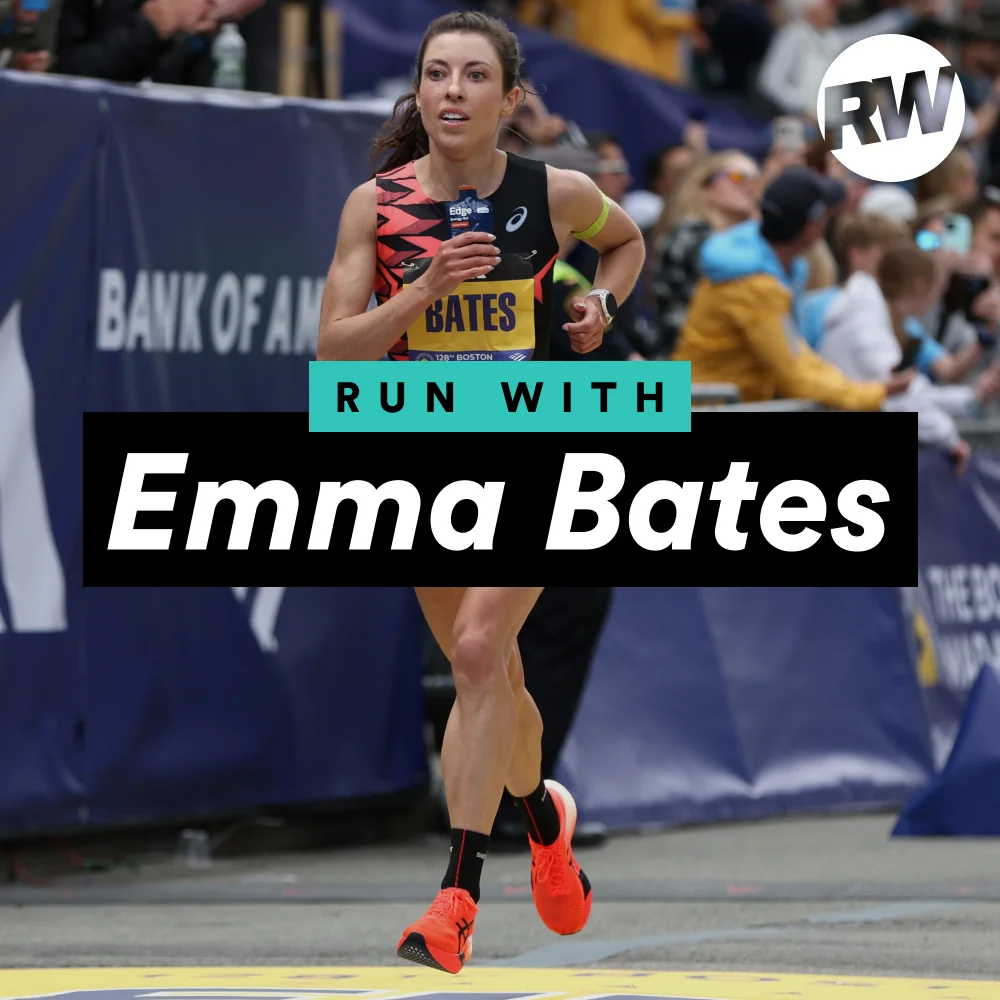
31 songs | 1 hr 30 min
Feat: Purple Hat by SOFI TUKKER; Bizcochito by ROSALÍA; Beast Unleashed by Vin Jay

30 songs | 1 hr 43 min
Feat: Check Yes Juliet by We The Kings; Feel the Love by Rudimental; The Wire by HAIM
Genres
No matter how old you are, whatever music you listened to as a teenager has probably remained deep in your heart. At least that’s what research has shown. Those emotional times—and the songs that created the soundtrack of those big feelings—stay with us throughout our lives. Giving new music a chance is an easy way to encourage your brain to create new neural pathways and tap into different brain states while running. You may even reach a new runner’s high.

29 songs | 1 hr 32 min
Feat: Flowers by Miley Cyrus; Tití Me Preguntó by Bad Bunny; Cruel Summer by Taylor Swift

28 songs | 1 hr 39 min
Feat: Lemon by N.E.R.D, Rihanna, Drake; Sprinter by Dave, Central Cee; Workout by J. Cole

29 songs | 1 hr 35 min
Feat: Power by EXO; Burning Up (Fire) by BTS; As If It’s Your Last by BLACKPINK

26 songs | 1 hr 31 min
Feat: This Will Be by Natalie Cole; Anywhere With You by Maggie Rogers; Maps by The Fray

24 songs | 1 hr 37 min
Feat: Keeping The Light On by Jay Oladokun; Out of My Head by First Aid Kit; All Of The Time by Jungle
🎧 Discover and save even more to listen to: Find More Running Playlists
FAQ
Is there an ideal beats per minute (bpm) to run to?
No! Just like there is no ideal pace or race time, you should run to music that inspires you. Science actually backs this up. A 2026 study found that when 29 fit adults cycled at a high intensity to music they picked themselves versus cycling in silence, they were able to ride six minutes longer. Most of the songs were within the 120 to 140 bpm range. Many runners seem to prefer a higher bpm range, around 170 to 180, particularly during faster running, although it can vary based on height, pace, and running experience, says Xin Xiao, a product manager at Shokz.
Does the bpm of a song need to exactly match my cadence?
No. Just listen for tempos that feel more natural and inspirational, and that matching music to your running goal makes your pace more intuitive.
Can music make me faster?
Yes! Listening to the right music—songs you like and with the right beats per minute—can help you physiologically and psychologically. Listening to music can improve endurance, speed, and strength, according to research. It can also energize you and make you so happy that you won’t fatigue as quickly.
Is one particular type of headphone better than another?
This is another matter of preference. You have a few technological options: play music on your phone and listen through the speaker, use wired or wireless headphones, or use bone-conduction headphones. There are benefits and drawbacks to each. The No. 1 choice of the Runner’s World gear and testing team is Shokz OpenRun Pro 2.
“One of the core advantages of open-ear listening is that it allows users to enjoy audio while remaining aware of their surroundings,” Joe Zhou, marketing manager, ShokzHear, a Shokz division that specializes in bone-conduction hearing aid technology, explains.
In-ear devices may lead to heat and moisture buildup, while open-ear designs avoid blocking the ear canal and may help reduce these issues. Of course, for many music aficionados nothing is better than in-ear headphones. In fact, Runner’s World says Beats Powerbeats Pro 2 provides the best sound experience.
The most important thing to know, regardless of which headphone type you prefer, is that you should prioritize protecting your hearing. “Prolonged listening at high volumes is one of the primary risk factors for noise-induced hearing loss,” says Zhou.
Whatever system you choose, be sure the volume is moderate, that you don’t listen too long, and that you take regular listening breaks, Zhou recommends.
Are there benefits to running in silence or listening to ambient noise (white, brown, or pink)?
There can be, but, again, it is really a personal preference. “Running in silence allows runners to focus on breathing, body awareness, pacing, and the surrounding environment,” explains Xiao. “Many experienced runners choose silence during easy runs or mindfulness-focused training.”
White noise and brown noise, Xiao explains, are primarily used for relaxation, concentration, or masking distracting background sounds. While some runners find these sounds calming during low-intensity exercise or recovery walks, there is currently limited scientific evidence that they directly improve running performance.

Donna Raskin has had a long career as a health and fitness writer and editor of books and magazine articles. A certified run coach who has practiced yoga for many years, she also loves to lift weights, dance, and go for long walks with her hound dog, Dolly.