The Runner’s World Guide to Running Form: Masters Runner
You probably recognize that longevity matters. Running improves your health, your energy, and your mood, so you want to keep chasing miles.
But as runners get older, the priorities often shift a little. Many runners notice issues like stiffness or small aches become more noticeable with age, and recovery time can increase. While many factors can come into play, you might wonder whether your form could use an upgrade.
In The Runner’s World Guide to Running Form, clinical exercise physiologist Heather Milton will help us look at runners over 40, highlight a few common patterns we often see in masters runners, and talk about the adjustments that can support strong, sustainable running in the long term.
What You’ll Learn
In The Runner’s World Guide to Running Form: Masters Runner, we’ll teach you:
- The common ways form may change as you get older
- How to set realistic run goals to build confidence over time
- Why running slower, as people do when they get older, changes your form and what to do about it
- How to make sure injuries don’t stop you from running
- Why it’s important to strength train and do mobility work as you get older
Watch Video

Go Deeper
When breaking down running form in older runners, remember there are those who have been running for many years and those who have recently begun. If you are new to running, also look at our New Runners chapter.
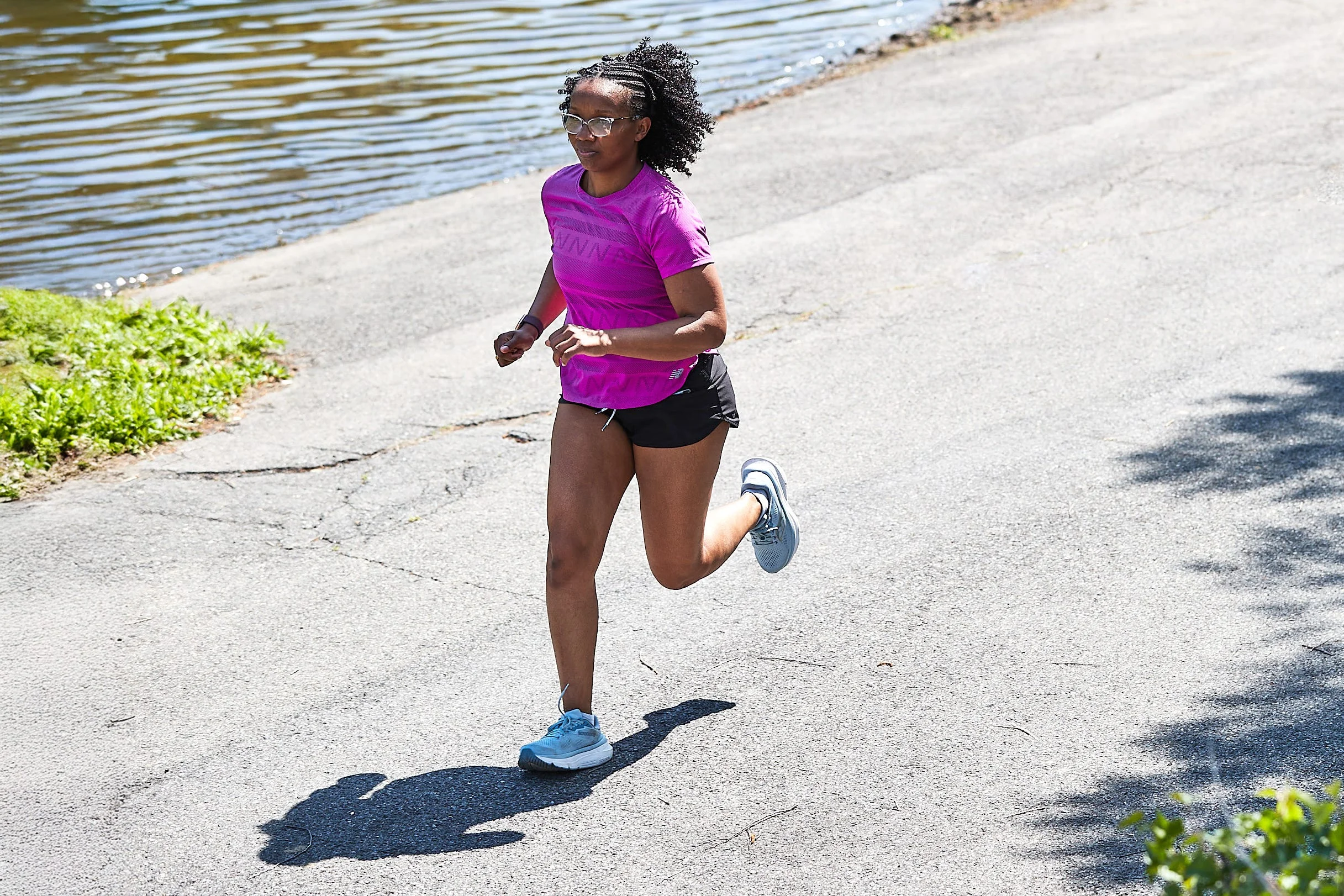
When looking at masters runners, there are a few common patterns for this age group.
What We Notice
🚩 Reduced hip extension
This may show up in older runners because of a reduction in fast-twitch muscle fibers and potentially some reduced hip and big toe flexibility.
🚩 Overstriding
Sometimes, in an attempt to cover more ground, a runner will extend their front leg too far and land too far away from the body, which means you don’t have a fast enough cadence and aren’t using your muscles and strength efficiently.
🚩 Breathing
Breathing issues, due to lower aerobic capacity or having allergies, can be bothersome for many runners. Cross-training for better aerobic ability may help, and you can consider being tested for exercise-induced asthma if it causes you to stop your runs early.
🚩 Reduced Ground Time
As muscle fibers age, they lose power, and so they can’t push off as strongly as they used to. It’s not technique that fades, but ground contact time, especially compared to flight time. This means you have more moments of impact, which also affects your joints.
🚩 Arm abduction at faster speeds
Make sure your elbows aren’t too far from your body. Your arms should have a nice bend and sway back with ease. Your elbows should remain close to your body throughout the arm swing.
🚩 Asymmetrical Gait and Past Injuries
Life is full of accidents and injuries, and older runners are more likely to have injuries. If you have had an injury or have hardware in your body from a bone injury, it’s likely there are subtle differences between the sides of your body. You probably can’t change this except to do some physical therapy or strength work to better support your weaker side.


What We Can Correct
💡 Adapt the Running Schedule
- Because it is more important to strength train, cross-train, and do flexibility and mobility work as an older runner, you will need to make adjustments to your running schedule and expectations as you get older. It’s not that you can’t run fast or often or challenge yourself. It’s just that you need to be realistic about the ways in which your body handles that schedule and those challenges.
- What you definitely shouldn’t do is stop running, even if your knees hurt, even if you get breathless, even if you walk sometimes during those runs. Running is always good for you and it does not cause bad knees or any other health problem.
💡 Strength Train, Even Your Toes
- Strength training can help you optimize those great running techniques you have had over the years, or that you want to build as a masters runner. It will also help you maintain consistency in your abilities as you get older. Strength, mobility, and flexibility work is just as important as consistency.
- Make sure you do great toe flexion exercises, which will help your hip extension when you push off. Also, daily hip stretches for the flexors like a standing step up and lean forward are great for masters runners. Single-leg exercises are also important, and you can do them before a run to activate the muscles.
💡 Check Your Cadence
To optimize flight time and have less time absorbing forces on the ground, do a cadence drill. Measure how many steps you take in one minute, then try to add about 5 percent to that number. Focus on that small increase until it becomes natural. It can take some time to change this habit.
💡 Pay attention to form cues
For longer runs, a glute max push-off cue is always helpful. This means thinking about pushing the ground behind you as your foot lands, which optimizes that push-off force.


Brian has spent more than a decade focused on creating compelling news, health, and fitness content—with a particular interest on enthusiast activities like running and cycling. He’s coordinated coverage of major events like the Paris Olympics, Boston Marathon, New York City Marathon, and Tour de France, with an eye toward both the professional race and the engaging stories readers love.