The 8 Best Balance Boards for Better Balance, Stronger Ankles, and More Stable Runs
After years of testing workout tech, running shoes, and all sorts of home fitness equipment, balance boards (and stair steppers) surprised and challenged me the most. They’re affordable fitness devices, and they actually do what the brands claim. The best part is, they don’t just target one area of your body or one problem you may have. Each step on the road requires stabilizing through the foot, ankle, knee, and hip. And balance boards challenge your core, boost your stability through your legs, ankles, and feet, and even sharpen coordination in sessions only a few minutes long.
Adding balance board work to my running routine has strengthened small muscles I never thought needed work, which hopefully means fewer injuries for me. As Michele Olson, PhD, FACSM, states, “Research shows that falls and many injuries are directly related to balance. This system (the neuromuscular system) is challenged and improved via ‘tools’ that create instability.” Balance boards “push the body to act as a stabilizer,” leading to overall improvement.
For runners specifically, Olson highlights that “balance training, and improved balance, hands-down, helps runners to achieve their primary goal: faster running times,” by improving “postural control—which comes from a well-trained core that is responsive to cues about the terrain and how the body should tackle that.” Balance training makes runners “more efficient with less movement errors so there is not wasted movement which slows running times.” She also told me that the upper body workouts that you can do on these boards work alongside lower body workouts to improve efficiency and race times.
For me, the results showed up on long runs—my hips aren’t getting achy as quickly, and my gait feels a little bit more even, but my ankles are where I’m seeing the biggest gains. I have long dealt with ankles that like to roll and loll, but since I’ve been consistent on the Gibbon SlackBoard, they feel more stable and secure. Runners often deal with repetitive stress injuries, and adding in balance work is a fun way of shock-proofing your lower body. Instead of just piling on more mileage, these boards I recommend let you build that foundational core and muscle control that keeps you healthy enough to enjoy the mileage you’re putting in.
Best Balance Boards
- Best Overall: Gibbon SlackBoard
- Best Value: Yes4All Wooden Wobble Board
- Best for Full Body Workouts: Whirly Board
- Best for Low-Impact Balance Training: ProsourceFit Balance Disc
- Best for Ankle Stability: StrongTek Professional Wobble Board
- High Weight Limit: Revbalance Swell
- Best for Strength Training: Fitlaya Board Trainer
- Best for Single-Leg Training: OPTP Dynamic Duo
How We Tested and Selected
I’ve covered fitness gear for nearly a decade, writing about running tech, training tools, and at-home workout equipment for Runner’s World. I logged weeks of testing balance boards, slotting in short sessions before and after runs, while working at my desk at home, and even during prehab for ultra training.
The process was straightforward: I researched the most recommended balance boards across retailers and then, after speaking with therapists and users, got samples of the most promising. While I was able to get on all of these, the one I have in my home and chose to keep was the Gibbon SlackBoard, but, after further research and testing in gyms, therapist offices, and my own home, I chose the best. The Fitlaya board is the only one I haven’t tested, but I was impressed by the materials and weight limit, so I’m confident recommending it based on research alone. I considered durability, comfort, learning curve, and value. I excluded boards that felt flimsy or had poor traction (one roller board slid too aggressively on hardwood floors). What made this list are the ones I would keep reaching for in my actual daily training.
Full Reviews
Pros
- Softer, springy slack line reduces joint stress better than many others
- Unique design offers the most playful balance options on this list
- Approachable, good for families and beginners

Cons
- Less challenge for people with athletic experience
- Bulky base takes more storage space

Key Specs
| Dimensions | 42 in. x 11 in. deck (approximate, varies by model) |
| Weight Limit | 400 lb |
| Balance Style | Slack line (springy resistance, soft platform) |
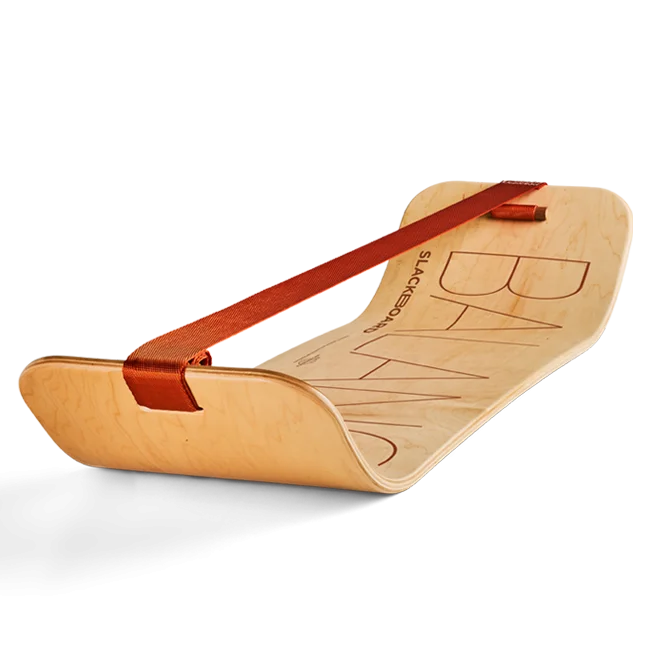
The Gibbon SlackBoard (a.k.a. the Gib) looks like a devilish combination of a surfboard and skateboard with a slackline added just for fun. It is a lot different from typical board and roller or board and cushion styles, and at first, that really intimidated me. However, once you get used to the movement, it becomes second nature, but still quite challenging.
It’s a soft, springy sensation that’s less about flailing violently about and more about finding your core. I particularly appreciated that it moved with a fairly gentle sway, rather than making me feel like I was trying to stand in the back of a moving pickup, all while still effectively engaging my ankle and hip stabilizers.
It felt so accessible, even for beginners who might otherwise be convinced they’re destined for an ER visit. Plus, the clever design means you can practice barefoot without fear of slipping, though I did wear grippy socks. It’s playful, it’s effective, and it won’t make you question your life choices.
Pros
- Quality feel and build for the price
- Low height, lower fall risk
- Multi-directional tilt ideal for basic balance training
Cons
- Traction medium, can get slick when wet
- Low progression capacity

Features at a Glance
| Dimensions | 15.75-in. diameter |
| Weight Limit | 300 lb |
| Balance Style | Wobble (circular base, 360° range of tilt) |
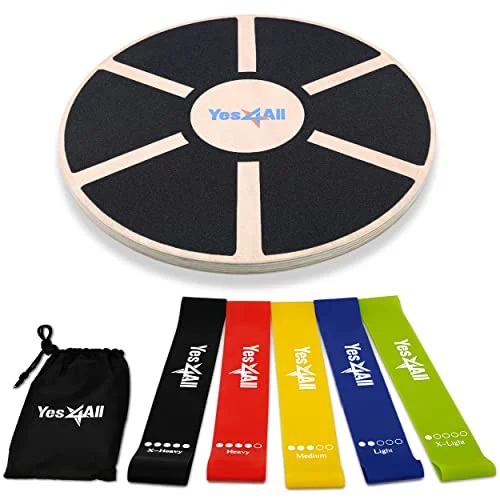
This balance board is a great entry point into the world of assisted balance training. Users I spoke with were consistently impressed by its quality, especially considering its sub-$30 price tag—it doesn’t feel flimsy or cheap. It allows you to focus on developing both side-to-side and front-to-back balance without feeling overwhelmed. Several even mentioned how invaluable it was during their rehab sessions, providing the controlled movements they needed without any added instability or chaos.
Whirly Board Wide Standing Desk Balance Board & Half-Ball Balance Trainer
Whirly Board Wide Standing Desk Balance Board & Half-Ball Balance Trainer
Pros
- The style of balance is different from others on this list, and feels unique
- Wide and substantial board
- Comfortable but grippy surface
Cons
- Can sometimes feel more primed for learning tricks than balance
Features at a Glance
| Dimensions | 28 in. x 10 in. |
| Weight Limit | 400 lbs. |
| Balance Style | attached half moons |
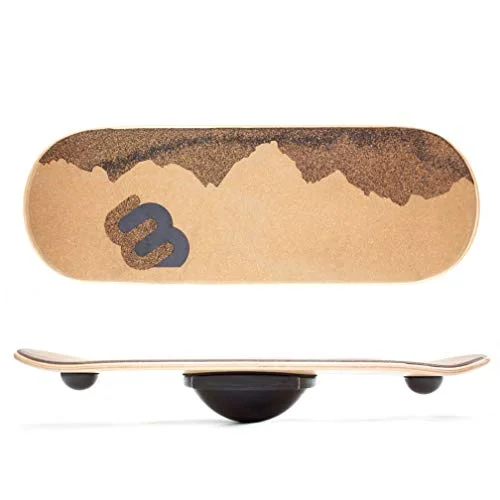
The Whirly Board takes the concept of balance training and gives it a distinctly skater’s heart. Built on a real-deal skateboard deck, it swaps out the usual flat roller setup for a tri-ball design—one big center sphere and two smaller ones at either end—so you can twist, turn, and spin with full 360° control. It’s every bit as fun as it looks, but it’s also deceptively effective: improving agility, strengthening your core, and dialing into your posture while you try to balance.
For runners, it almost feels like a toy from childhood. Adding the Whirly Board to lunges, planks, or push-ups sends stabilizing muscles into overdrive, increasing the cardio work and nipping off any ideas of slacking. It feeds that part of all runners that just wants to have a little bit more fun with training. At $150, it’s a small investment that delivers a big spin on strength.
ProsourceFit Core Balance Disc Trainer, 14” Diameter with Pump S
ProsourceFit Core Balance Disc Trainer, 14” Diameter with Pump S
Pros
- Simplicity at its best
- Easy to use
- Good for beginners
Cons
- Smaller surface area
Features at a Glance
| Dimensions | 14-in. diameter |
| Weight Limit | 300 lb |
| Balance Style | Inflatable/wobble |
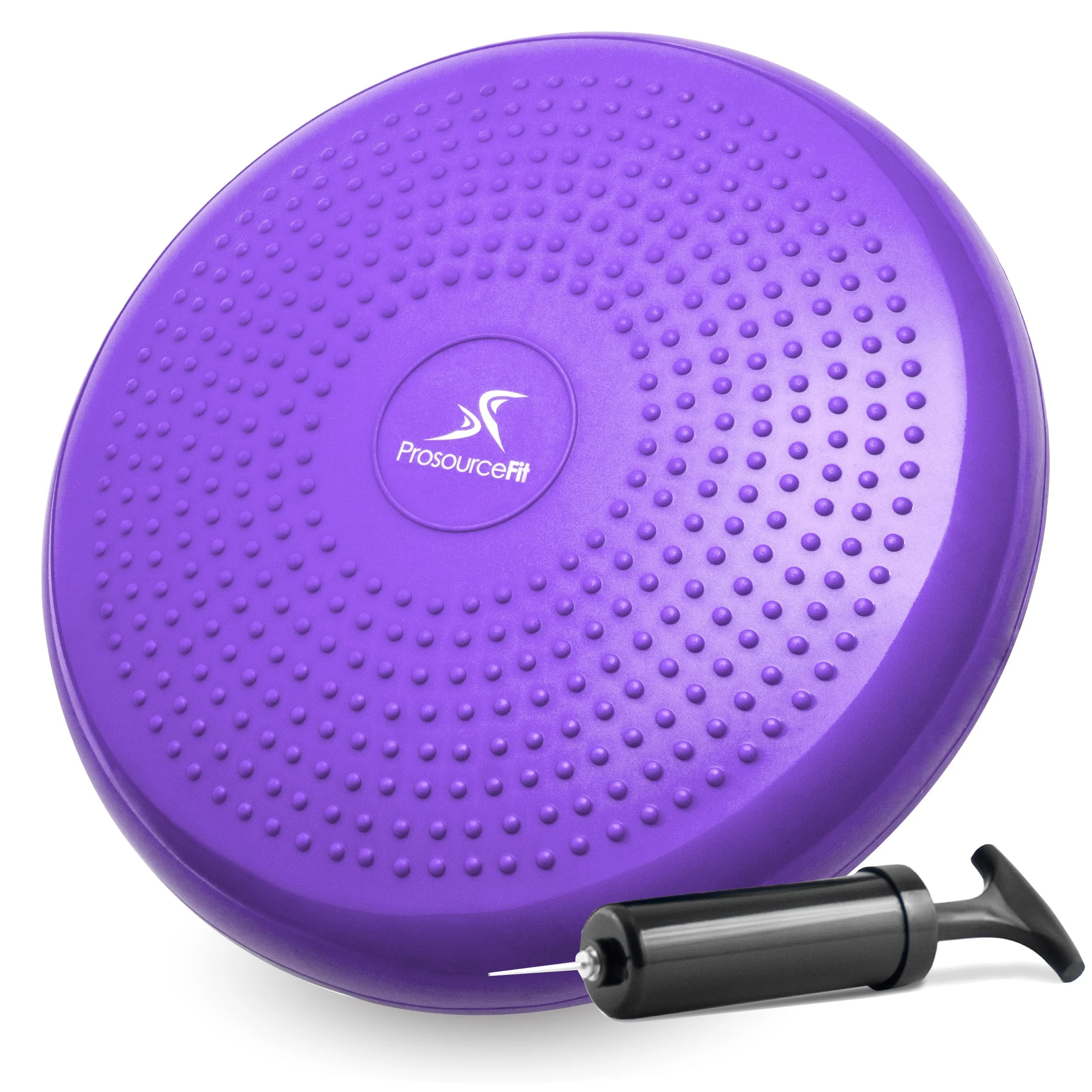
An inflatable wobble disc like this is the definition of simplicity, and that’s the best part. You’ve seen them in physical therapists’ offices, you’ve probably seen them at the gym. They’re easy to use, durable, and inexpensive. Personally, I’m a big fan because they don’t just help you balance, the little nubs on the disc itself also feel wonderful underfoot when used in socks or barefoot.
This type of balance board is great for core work, obviously, but it’s also wonderful for ankle and foot stability and mobility. And, if we’re being honest, it’s easy to store. This thing is barely larger than a foot across, and just about six inches tall. It fits perfectly under a sofa, so you can pull it out and use it as you watch the latest A24 movie like I do. However, that’s also its limitation. It’s pretty small, so you’re limited on the types of workouts you can do, and you’re limited on how far apart you can place your feet. It’s convenience at a bit of a cost.
StrongTek Wobble Board Wooden
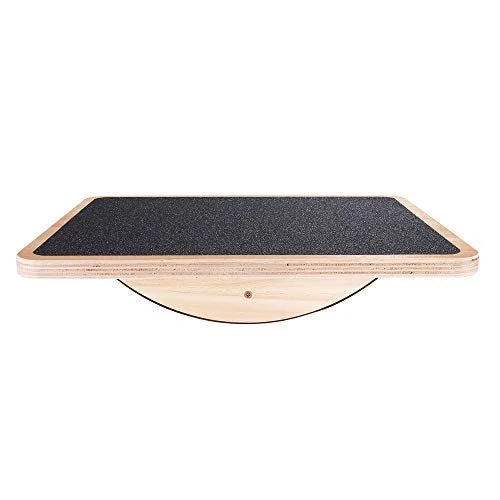
StrongTek Wobble Board Wooden
Pros
- Compact size fits under desk or in home gym
- Stable feel for targeted rehab and lower body work
- Textured surface good for barefoot grip
Cons
- Not suitable for tricks or dynamic movement
- The board is so light that it may slide on certain floors like carpet
Key Specs
| Dimensions | 16-in. diameter |
| Weight Limit | 350 lb |
| Balance Style | Wobble (flat top, round bottom) |
This particular balance board is great for runners given its exceptional benefits for stability and injury prevention. Throughout marathon training, you can integrate this board into your routine, hopping on it for several minutes after easy runs. The focus is primarily on single-leg balance exercises, which prove remarkably effective in strengthening hip and ankle control. It’s far more beneficial than traditional exercises like clamshells for developing the nuanced stability required for running. I like the way it felt for both upper and lower body small muscle activation. Because it's a slighter movement compared to a full roller, you really get to dial in and feel all the articulations of your muscle groups.
Its design is a significant advantage; it's compact, making it easy to store in even the smallest spaces, yet incredibly sturdy, providing a reliable and safe platform for balance work. This combination of portability, durability, and effectiveness makes it an invaluable tool for any runner looking to enhance their proprioception and overall lower body strength.
Revolution Balance Boards Swell 2.0 - Surf & Paddle Balance Board Trainer
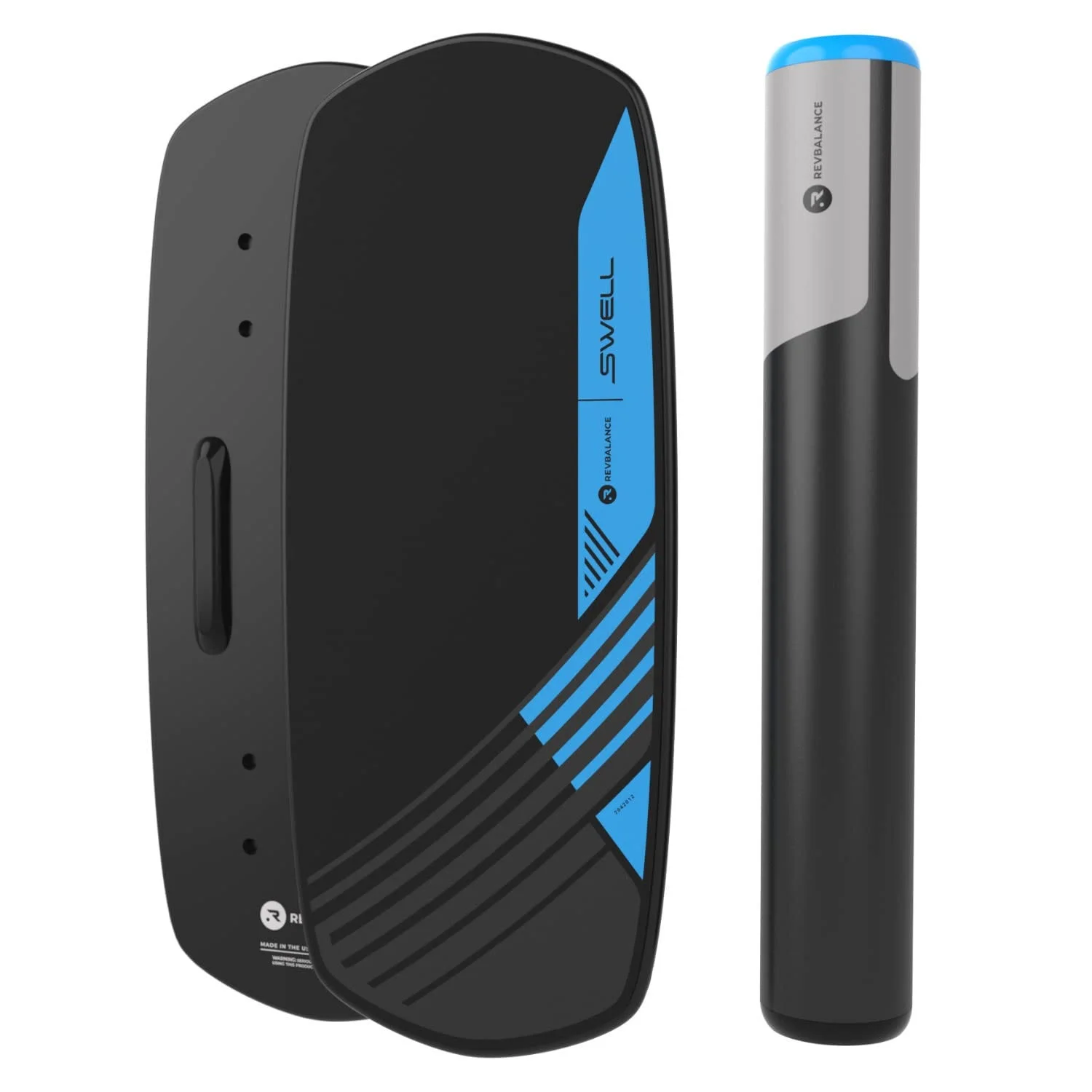
Revolution Balance Boards Swell 2.0 - Surf & Paddle Balance Board Trainer
Pros
- Very challenging
- High weight limit
- Can be done barefoot without discomfort
Cons
- Not for beginners at all
Features at a Glance
| Dimensions | 31 in. x 14.5 in. deck; 4.5-in. diameter roller |
| Weight Limit | 450 lb |
| Balance Style | Roller |
For runners seeking an advanced challenge beyond a simple core workout, the Revbalance offers an engaging solution. Its unique roller system introduces a calibrated level of unpredictability, forcing continuous, subtle, and rapid adjustments to maintain equilibrium. This engages core and stabilizer muscles while improving proprioception, mirroring the dynamic experience of real-world activities like paddleboarding or snowboarding. Personally, I liked how you really feel unstable when you step on, and how easy it is to see your progress every time you step on.
It’s a fun challenge, but it is definitely a challenge. It has serious training potential and entertaining casual use, even while watching television (though it's advisable not to stand too close to the screen).
Fitlaya Fitness Balance Board Trainer
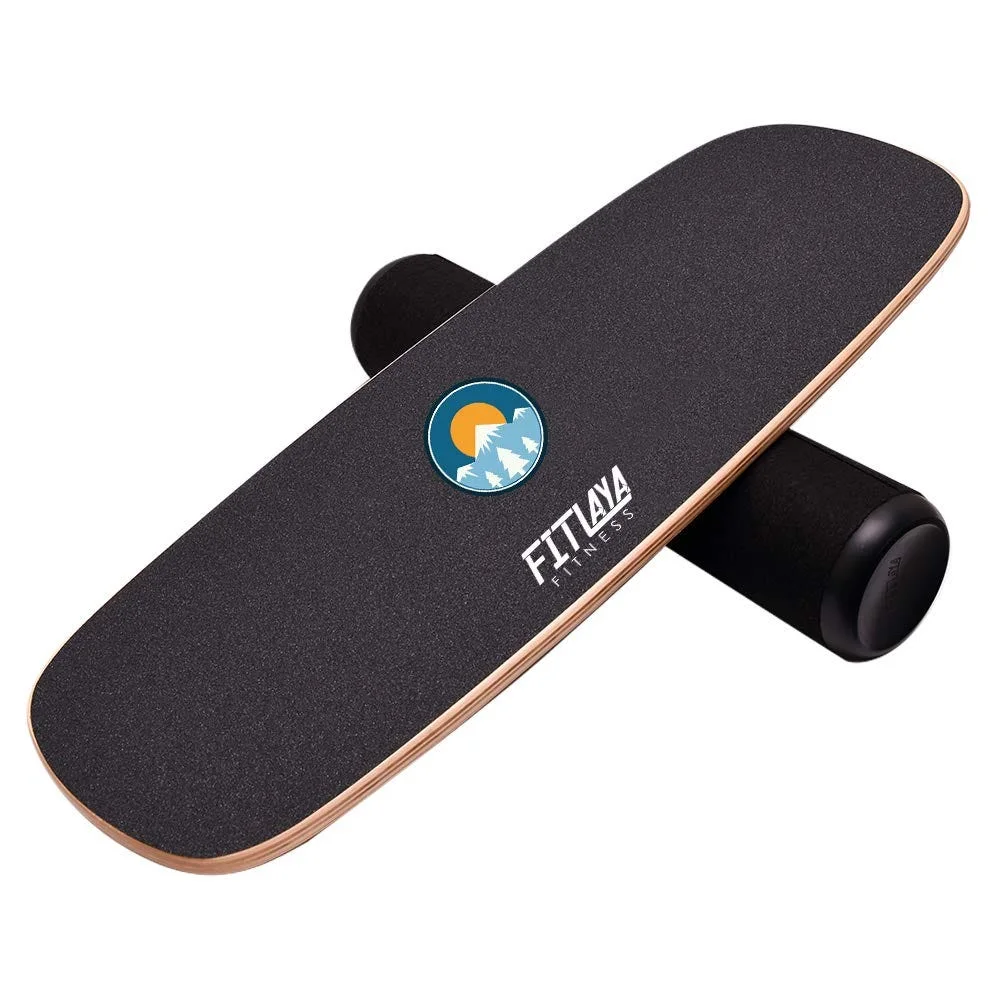
Fitlaya Fitness Balance Board Trainer
Pros
- Solid wood base gives a high weight limit
- Rocker great for advanced moves
- Extra durable grip won’t wear quickly
Cons
- Grip can be a bit rough on the hands and bare feet
Key Specs
| Dimensions | 29 in. x 11 in. |
| Weight Limit | 350 lb |
| Balance Style | Roller |
The Fitlaya Balance Board is a high-quality, handcrafted balance board made from Canadian maple. It supports up to 350 pounds and features a smooth, curved surface requiring constant micro-adjustments, making it highly effective for workouts targeting legs, abdominals, and core muscles.
In their reviews, customers praised the Fitlaya for its sturdy construction, portability, and versatility. They also appreciate how capable it is while being affordable and durable. Though some had minor concerns with the roller fabric, overall, this is a reliable and enjoyable balance training device suitable for various fitness levels.
OPTP Dynamic Duo Balance & Stability Trainers
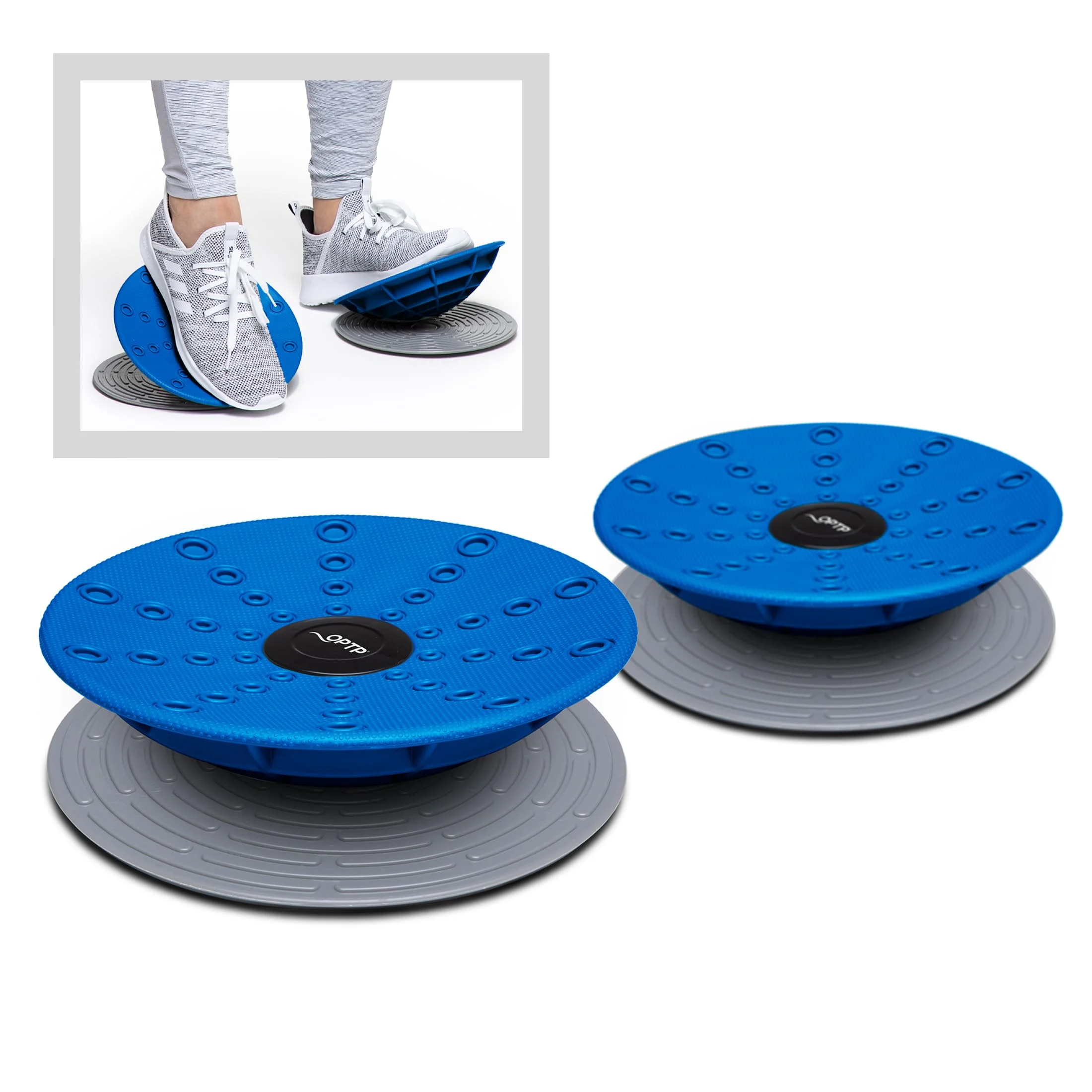
OPTP Dynamic Duo Balance & Stability Trainers
Pros
- Can be used with hands or feet
- Very challenging
- Great for many modalities
Cons
- Not for beginners
- Not super comfy for long workouts
Features at a Glance
| Dimensions | 8.25-in diameter, 2-in high |
| Weight Limit | 440 lb each |
| Balance Style | Multi-directional wobble |
If you suffer from ankle stiffness or core issues, and they just won’t quit, the “Dynamic Duo” balance boards let you zero in on it by giving you the option to balance different muscles on different sides of your body, because they’re separate pieces. They rock independently and can be used with your hands or your feet together or separately.
I hate these with every fiber of my being, but damn, do they ever work. In the lead up to my last ultra (which was 109 kilometers), I was dealing with some gnarly ankle stiffness and core issues that were seriously messing with my balance on the scramble. As someone who was not going to DNS my race, I headed to my PT. That sadist put me on these over and over again. With weights, without weights, on one foot, and on both feet. I am an athlete, I work out hard every week with both weights and typically 90-plus miles of running. These darn nearly made me cry. But do you know what else they did? They worked. My ankles got looser, my core got so much stronger, and my balance felt right again. Perimenopause was trying to cost me my hard races, and these gave it back. Freaking hormones have nothing on evil rocking discs.
What to Consider
Stability: Match the board to your skill level.
Choosing the right balance board depends on your current skill level and what you aim to achieve. Different boards offer varying levels of challenge and cater to specific training goals.
What Type of Balance Board Is Best for Runners?
A wobble board is the best balance board for most runners. It trains ankle stability, foot strength, and proprioception (your body's sense of where your joints are), and it’s easy to progress as you get better. Trail runners who want a bigger challenge should look at a slackline board.
Wobble Boards: Best Overall
A wobble board tilts in every direction on a rounded dome. That mimics the small ankle adjustments you make with every stride, and it’s a staple of physical therapy after ankle sprains.
Best for: new runners, ankle sprain recovery, pre-run activation
Rocker Boards: Best for Rehab
Rocker boards move in one direction only (front to back or side to side), so they’re predictable and less intimidating. They’re great for ankle mobility and calf strength.
Best for: beginners, rehab, learning balance mechanics
Slackline Boards: Best for Trail Runners
Boards like the Gibbon SlackBoard use a flexible strap instead of a rigid pivot. The surface keeps moving under you, much like uneven trails, so your feet, ankles, hips, and core make constant micro-adjustments. They’re also easier on the joints than roller boards.
Best for: trail runners, coordination, dynamic warm-ups
Roller Boards: Best for Advanced Athletes
The board sits on a free-moving cylinder, so you have to keep it from rolling out from under you. It’s effective but unforgiving, and not where I’d start.
Best for: experienced athletes, cross-training
Balance Cushions: Best for Low-Impact Work
These inflatable pads give you an unstable surface without the learning curve, and you can adjust the air to change the difficulty. They work well for quick pre-run activation or desk-day movement breaks.
Best for: beginners, gentle training, foot and ankle activation
Size and Surface: Comfort matters.
Larger balance boards provide a wider base, giving you more room to find a comfortable stance and better control over your center of gravity, which is especially helpful for beginners and those with longer legs. When it comes to the board's surface, gritty textures like the non-slip polyurethane top on the StrongTek Anti-Fatigue Balance Board offer great grip and durability, especially when you’re wearing shoes or get sweaty. On the other hand, softer, rubberized surfaces such as on the Gibbon provide excellent comfort and grounding when using the board barefoot, allowing for a more connected and stable feel during use.
Price: More isn’t always better.
Balance boards are surprisingly affordable compared to other fitness gear. The trick is finding one that won’t splinter (yes, I tested one that did) or feel like a toy under your feet. I found that $50 to $200 gets you something durable and useful.
FAQs With Michele Olson, PhD
Become a Stronger Runner With These Exclusive Training Programs




Cat Bowen, senior editor of commerce; reviews, is a seasoned runner with more than 20 years of distance running experience, including dozens of marathons, half marathons, and even a few ultra marathons. For over a decade, she has tested parenting, fitness, home, and running gear and written in-depth guides to help readers with their next purchase. Holding multiple advanced degrees and currently studying kinesiology, Cat Bowen brings research-backed insight to all of her guides. Passionate about women’s health and neurodivergent inclusion, she advocates for closing research gaps and helping others—especially AudHD people—find joy in running and fitness.