No Past, No Future: Atlanta’s Chris Sale Strategy, Examined
When I’m trying to ground myself in the present, I like to repeat a mantra: No past, no future. I don’t want to dictate personal philosophy to you, but it works great for me. It’s a reminder to focus on the now, that experiencing what’s happening right this instant is more important than whatever mental baggage I’m carrying or whatever I’m worried might take place next week. I wholeheartedly suggest some variation of this phrase when you’re feeling overwhelmed by things that aren’t happening to you in the moment.
Having said that, let me be clear: You can’t ignore the past and future when you’re managing postseason pitching assignments, Walt Weiss. The Braves are five games into the playoffs, and they’ve been living the “no past, no future” life the entire time. Now, I actually think that has some useful consequences. The present really does matter quite a bit in playoff baseball – more than the future, and certainly more than the past. But it’s also caused them plenty of problems. The clearest example is also the most notable move Weiss has made so far. The Braves deployed bullpen games in each of the first two games of the NLDS over the weekend. The first was unavoidable, a consequence of their injury-depleted rotation, but the second was the direct consequence of Weiss’ earlier actions.
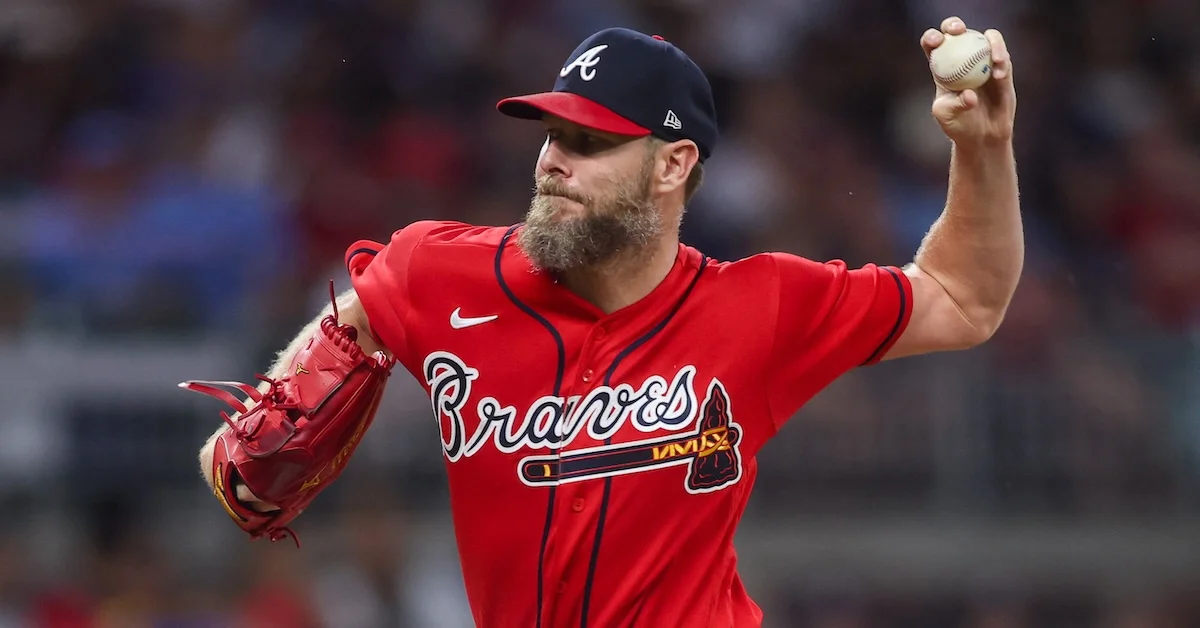
I’m talking about Chris Sale, of course. Sale started the Wild Card opener against the Phillies last Tuesday and worked into the seventh, throwing 95 pitches before departing with two on, one out, and the bottom of the Philly lineup coming to the plate. After a little turbulence (Didier Fuentes allowed both inherited runners to score, giving the Phillies the lead), the Braves pulled it out. But after Philadelphia won the second game of the series, Weiss called on Sale to cover the final four outs of the decisive Game 3.
During the regular season, the Braves handled Sale with kid gloves. He made only three starts all of September. He started on five or more days of rest 25 times this year, and he only made 27 starts total. His two regular-rest starts were his second and third of the season; after that, he had five-plus days between outings the rest of the way.
Obviously, Sale has more in the tank than that. It seems very likely that this load management was informed by his 2024 season, when Sale won the Cy Young but was unavailable in the playoffs thanks to a September back injury. He’s 37 and has some scary injuries in his past. I think that the Braves took a very prudent approach to both reaching the postseason and having a full-strength Sale to deploy there. Then, in the third game, they no-past, no-future’d that right out the window.
Sale entered against Bryce Harper with two outs and no one on, and closed it out with no problem. The downside came later, and the knock-on effects were significant. He had been slated to appear in yesterday’s NLDS Game 2 against the Dodgers on four days of rest. Like I mentioned, he hasn’t done that frequently this season, but I think that’s okay. It seems likely that his regular season rest plan was more about prudence than actual availability. But after throwing 21 pitches on one day of rest, Sale instead missed Game 2. That relief appearance came on what would have been his throw day (though given his unique rest schedule this year, it’s hard to say for sure), but in any case, it was clearly costly from a recovery standpoint, shifting his start to Game 3 on what will be four days of rest since coming out of the ‘pen.
Missing Game 2 was worse than just flip-flopping the Braves’ Game 2 and Game 3 plans, though. If Sale hadn’t appeared in relief against the Phillies and instead threw Game 2 on regular rest as initially planned, he would also be available on regular rest for a potential clinching Game 5. And thanks to the way the off days stack this October, appearing in Game 5 would also allow him to appear twice in a potential NLCS, both times on regular rest, and then twice again in the World Series, at least one time on extra rest. Here are the two plans laid out against each other:
| Playoff Start | Baseline Plan (Game, Days Rest) | Weiss Plan (Game, Days Rest) |
|---|---|---|
| 1 | WC G1 | WC G1 |
| 2 | NLDS G2, 4 | WC G3, 1 (Relief) |
| 3 | NLDS G5, 4 | NLDS G3, 4 |
| 4 | NLCS G3, 4 | NLCS G1, 4 |
| 5 | NLCS G7, 4 | NLCS G5, 4 |
| 6 | WS G2. 4 | WS G1, 6 |
| 7 | WS G6, 5 | WS G5, 4 |
In other words, Weiss traded one Chris Sale start for four Chris Sale outs in relief. The Braves undoubtedly knew this when they made the move. It’s not hard to do the math. Perhaps they held out a bit of hope that Sale might bounce back to make his NLDS Game 2 start anyway, but surely it wasn’t that much hope. He’s old, they’ve been managing his workload all year, and making a regular-rest start with a high-intensity relief appearance on one of your “rest” days would be tough for anyone, throw day or no.
How good of a trade is four outs for one start? In the regular season, it’s clearly terrible. It gets worse if I remind you that the Braves were up by four runs, with two outs and no one on, when Sale made his relief appearance. I’m not going to bore you with the exact math here, but if the Braves had deployed a ham sandwich as a closer instead of Sale, they’d still usually win the game. Teams that are up four with only four outs left to get and the bases empty win almost every time. Sure, the Braves didn’t have their closer available, but four runs! Four outs! This is not a spot you need peak Mariano Rivera for. I chucked Brent Suter and Sale into a run simulator to see how much this matters; the Braves won 98.6% of the time with Suter and 99.3% of the time with Sale. Sale’s a lot better! But that doesn’t mean as much when all you have to do is stop the other team from scoring a run per out the rest of the way.
On its face, this is a bad trade. The Braves got a point of win probability, at most, by deploying Sale in a game they were already exceedingly likely to win. They cost themselves an entire Chris Sale start in the NLDS by doing so (if you’ll notice, he gets two Championship Series starts and two World Series starts either way). The ZiPS game-by-game odds have considered both “bullpen game vs. Tarik Skubal” and “Chris Sale vs. Tarik Skubal” as a potential NLDS decider, and they give the Braves a 10 percentage point higher chance of winning with Sale in there. That sounds roughly right to me.
Now, obviously the series leverage was higher in the Wild Card game, but 10 percentage points is a lot more than one percentage point. So let’s do some basic math here. I simulated two different versions of the NLDS – one with two Sale starts, one with a bullpen game replacing the second. I told the simulation upfront that the Braves would be 40% to win the two-Sale version, and asked it how much worse off they’d be with that bullpen game. The answer is about 3.5 percentage points of series win odds.
That makes sense to me. Not having Sale as frequently stinks, but it’s hardly unrecoverable. For example, the Braves split their two bullpen games in Los Angeles. But the question isn’t what happened after Weiss’ decision, which was unknowable at the time he made it. It’s what he was giving up by calling for Sale in relief while staked to a big lead. And that answer is pretty clear: He traded a Sale start against the Dodgers, in a five-game series. And that’s a very valuable start, certainly more valuable than four outs of low-leverage relief, even in an important game.
I want to be charitable to Weiss, so I re-ran the numbers with the Braves holding only a one-run lead on Philadelphia when Sale entered in relief. In that fictional world, this move would be far better. With no margin for error, having a dominant arm like Sale is much more valuable; in those simulations, he increased Atlanta’s Wild Card Series win probability by about seven percentage points relative to the other guys the Braves had in the ‘pen. That works out to an exact breakeven chance of reaching the NLCS regardless of plan. To wit:
| Plan | WC Win Odds | NLDS Win Odds | Odds of Winning Both |
|---|---|---|---|
| Baseline | 84.5% | 40.0% | 33.8% |
| Weiss | 91.3% | 36.6% | 33.4% |
I just multiplied the two odds to figure out their odds of winning both series in a row. That should show you how important the present can be in the playoffs. If those four outs Sale got occurred in the toughest possible save situation, up one in a winner-take-all game, it truly could be the case that the juice was worth the squeeze.
Weiss probably settled on the Sale relief plan well before the eighth inning. He told reporters that he and Sale came up with a plan to use him earlier in the day after Sale told him that he “felt amazing.” But surely, if the Braves scored 13 runs in the first, they weren’t going to deploy Sale. The decision point came in the middle innings, when Weiss had to tell Sale “start getting ready” if he wanted him. The Braves led by five runs after the fourth and four after the sixth, so I modeled the game from those points. If Weiss made the decision to get Sale up in either of those spots, without knowing what would transpire later, Sale-over-the-bullpen was worth 1.7 points of Wild Card win probability, better than the 0.7% from the actual situation but still way short of enough to justify the decision.
But given that Atlanta led by multiple runs from the first inning on, I don’t think that math was involved here. I think Weiss had just decided early on that there was no past and no future, and that he had a game today that might be his last of the year, so Chris Sale should pitch. And I just want to be clear that I disagree with that move, regardless of what happened afterwards.
Here’s something that I keep coming back to in analyzing this. Sale might have pitched on extra rest a lot this year, but he went quite deep into games when he started. He threw 100 or more pitches 12 times this year, including four of his last seven starts. What was Weiss doing removing him after 95 pitches in Game 1, with Edmundo Sosa and J.T. Realmuto due up next, if he knew that his own aggressive bullpen management might mean Sale would have to come back for Game 3?
I understand the pressures managers feel in the postseason. They want to use their best few pitchers the whole time, and they want to avoid the times through the order penalty, and they want to keep their guys rested and avoid over-exposure. But if you don’t trust Chris Sale, one of the best pitchers in baseball, to face the bottom of the Philadelphia order a third time, then you don’t trust anyone there. And if the rule is just that no starter can pitch in that spot, then you should manage your bullpen accordingly. Weiss both cared so much about hammering his best relievers that he pulled Sale to get them in the game, and was so afraid of any but the very best relievers entering the game that he deployed an old, workload-managed pitcher in an unconventional spot with a huge lead.
You can’t have both. If it’s massively important that you never, ever, ever let the belly of your bullpen see high-leverage innings, then Sale has to stay in the game there. The Braves will clearly do almost anything to only pitch their top guys in meaningful spots. But to my eyes, they’re not weighing the costs and benefits of their decisions well. Pulling Sale early was fine in a vacuum – I wouldn’t have done it, but I’m open to the fact that Weiss had more information than me when he made the decision. But it’s less fine if pulling him puts pressure on you to use him again, in a way that’s harmful to your future chances.
There are benefits to living in the now. The Braves won the Game 2 start against the Dodgers that Sale didn’t make on the back of yet another heroic effort by Ray Kerr and a massive multi-inning workload for Fuentes. But let’s not act like there’s no cost to playing for the present. This one was a pretty clear negative for the Braves at the time they did it. That doesn’t mean they can’t recover from it. The change in odds is tiny, and remember, our human brains are definitely not good enough at probabilities to know the difference between a 40% chance and a 36.6% chance of beating the Dodgers. But 36.6% is less than 40% even if my feeble mind isn’t good enough at math to feel the difference in practice.
Risky gambits pay off all the time. The future is unknown and unknowable; sure, Sale only added a tiny fraction to their odds of winning in his relief appearance, but maybe the reliever who came in would have coughed up the lead otherwise. Vanishingly unlikely, but not impossible. But that doesn’t mean you shouldn’t consider risk when you’re deciding what moves to make. No past, no future is a great way to focus yourself on the present, but it’s not a way of life. The future does matter. The past does too, in that it informs what’s likely to happen in the present. I’ve enjoyed seeing the Braves empty the tank at every turn in their first five playoff games. I just think they should care a little bit more about the sixth game, and the ones after that. It’s a tough balancing act – but I think they’ve missed the mark so far.