The 9 Best Running Lights, from Headlamps to Clip-Ons
The short answer: Most runners only need a lightweight rechargeable light between 200 and 400 lumens for neighborhood roads. Trail runners usually benefit from 400 to 800 lumens, while ultrarunners often combine a headlamp with a waist light for depth perception and redundancy.
Running in low-light conditions demands more than just bright shoes—it requires a serious commitment to visibility. The right lighting not only helps runners see those sneaky tripping hazards like uneven pavement or rogue branches, but it also ensures that cars, cyclists, and even those fellow early-bird runners spot you in time to avoid an unfortunate incident. Whether you’re like me, training before the sun even thinks about rising, or you’re a late-night pavement pounder, or even just hitting those heavily shaded trails, investing in a quality running light can significantly reduce your risk and seriously elevate your experience. Trust me, your safety (and peace of mind) is worth it.
Best Running Lights
- Best All-Round Visibility: NoxGear Tracer 2 Light Vest
- Best for Mixed Area Running: Avanto Pro Chest Running Light
- Best for Comfortable Night Runs: Nebo Wide Headlamp
- Best Supplemental Running Light: Night Runner 270 Shoe Lights
- Best Packable Headlamp: Black Diamond Deploy 325
- Best Adjustable Supplemental Light: Apace Vision Clip Lights
- Best for Mixed Use Path/Trail: Petzl Nao LT Headlamp
Noxgear Tracer2 Visibility Vest (Small)
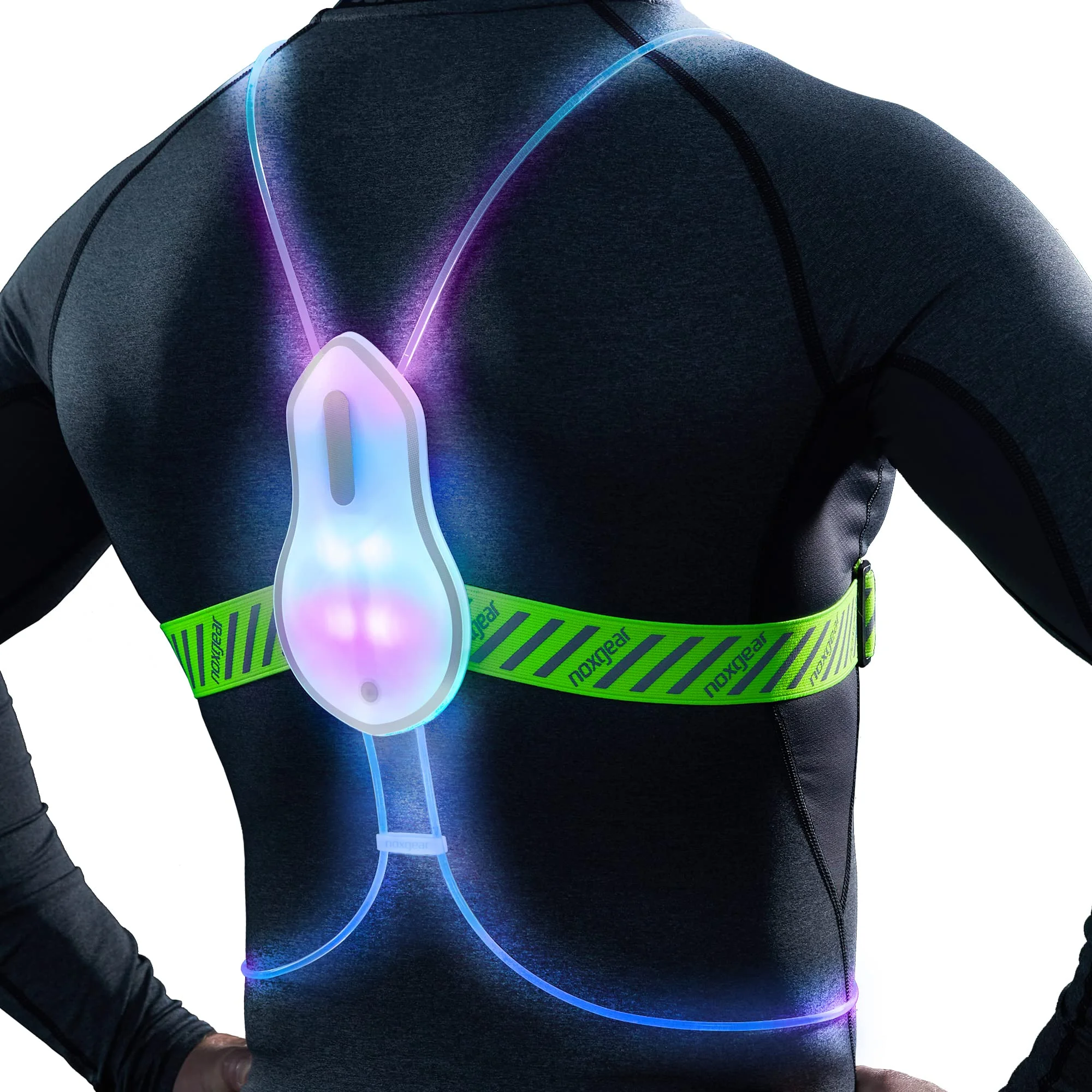
Noxgear Tracer2 Visibility Vest (Small)
Pros
- Light and comfortable
- Sits pretty dead in the center of the chest, minimizing bounce
- Bright all around

Cons
- No real flood

Key Specs
| Lumens | n/a |
| Weight | 6.5 oz |
| Beam Type | All-around visibility, no beam |
| Waterproof Rating | IP67 |
A standout for all-around safety, the Tracer 2 uses broad, wrap-around LED strips (16 modes) and a highly reflective waistband to make you visible from every angle. It secures well, provides clear battery info, and stays comfortable over layers. Full charging takes about 2.5 hours, but the multi-color options and sturdy build help justify the time investment.
Avanto Lifestyle Chest Light
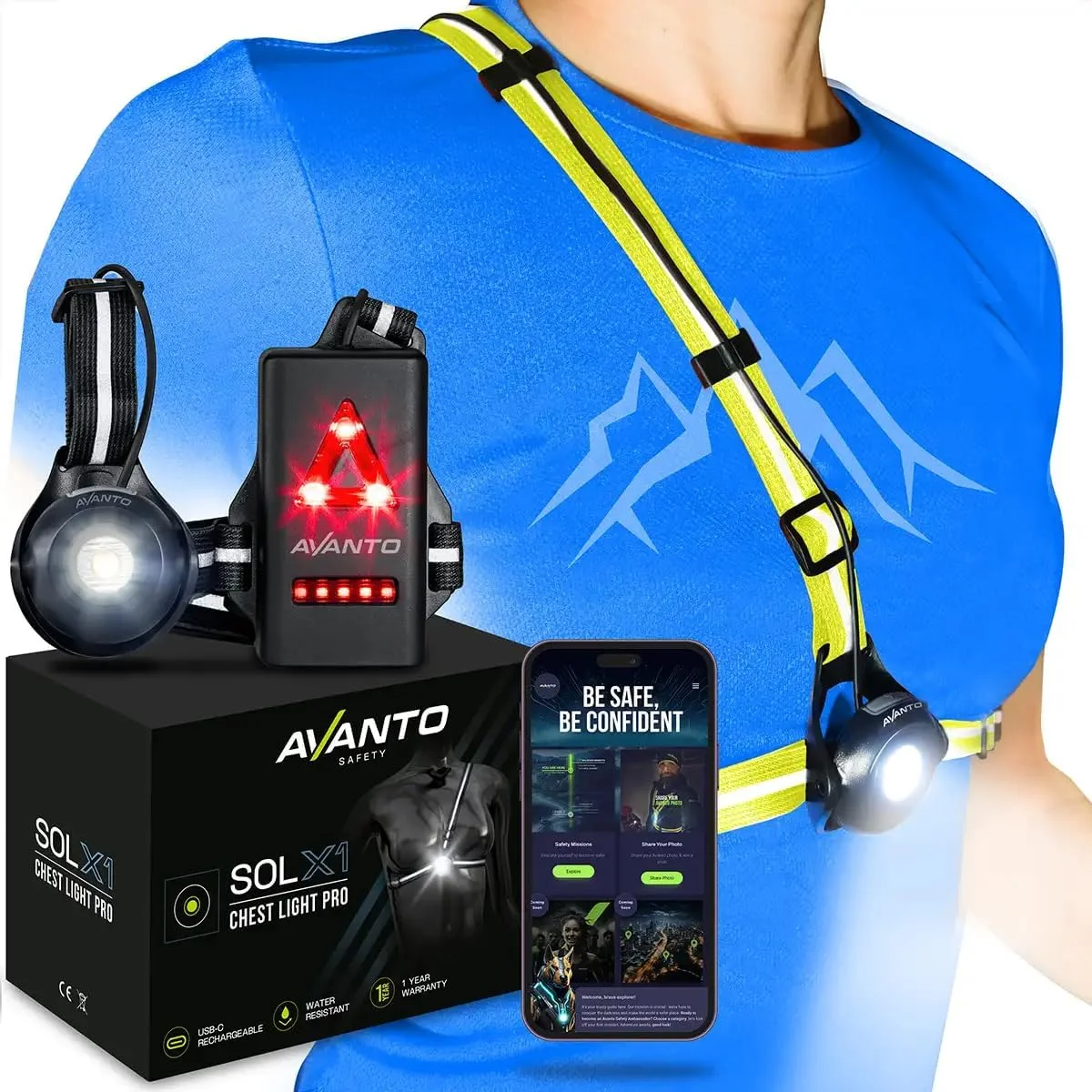
Avanto Lifestyle Chest Light
Pros
- Comfortable
- Adjustable beam style
- Front and rear light
Cons
- Can get a bit looe while running
Key Specs
| Lumens | 500 lumens |
| Weight | 5.6 oz |
| Beam Type | Adjustable |
| Waterproof Rating | IP44 |
The Avanto Pro uses a dual-light system—bright up front, red flashing safety light in the rear—mounted on a broad, stable chest harness. Power modes cycle easily, and the design offers security and mass-centered balance perfect for road runners who find headbands uncomfortable. Some may find the harness a bit bulky, but it excels in steady illumination and attention-getting.
Nebo CurvBeam 600 Flex Headlamp
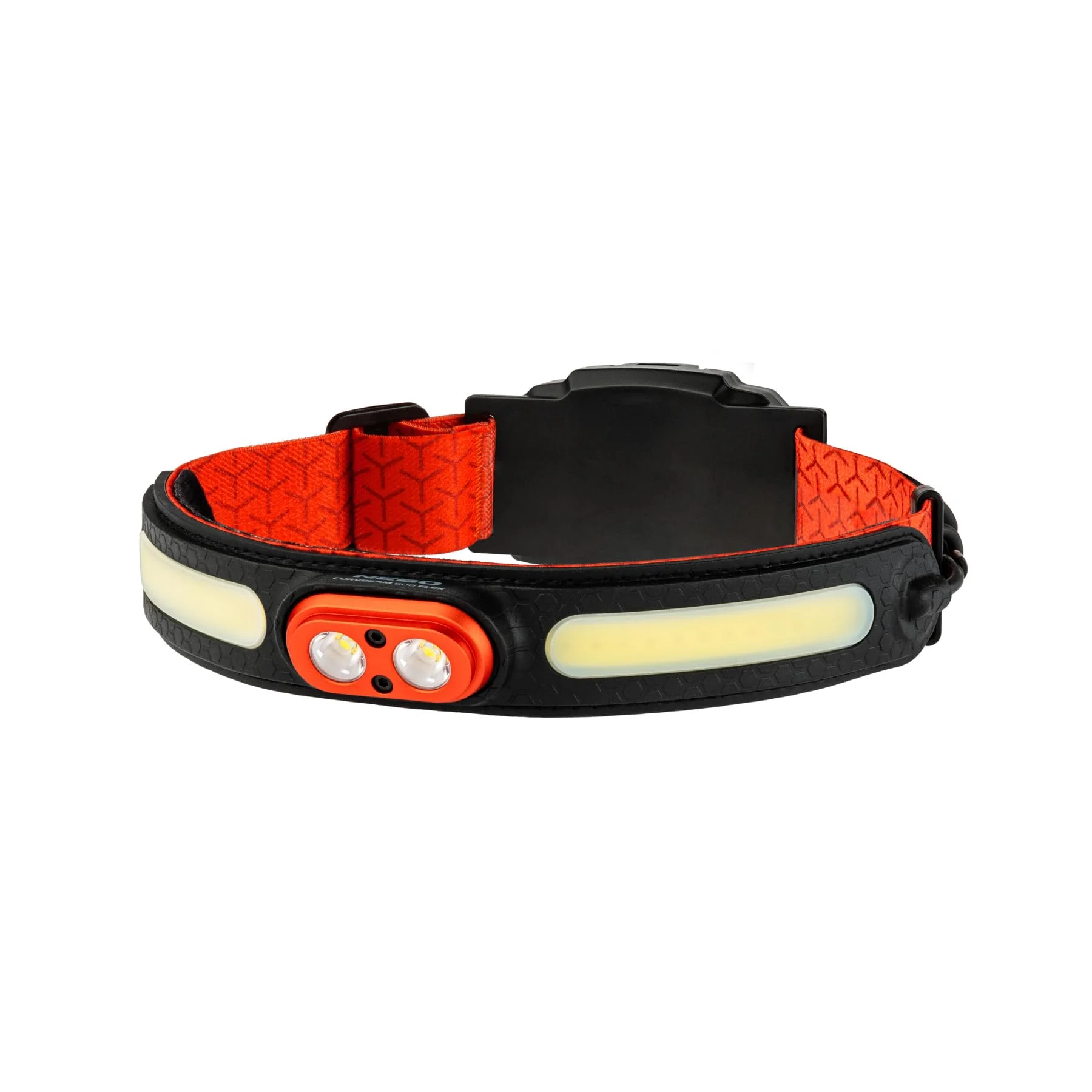
Nebo CurvBeam 600 Flex Headlamp
Pros
- Batteries and rechargeable
- Super comfy
- Adjustable beam
Cons
- No rear light
Key Specs
| Lumens | 600 lumens |
| Weight | 7.8 oz |
| Beam Type | Adjustable wide and focused with 180º of light |
| Waterproof Rating | Water resistant |
Not only does this have an adjustable beam pattern and plenty of lumens, it is also both battery-operated and rechargeable! And it’s under $40? Miracles do happen. I love how this one feels. It’s so light and easy to operate even when your hands are frozen. For ultra runners? You can charge it, bring some batteries, and you’re covered for about 60 miles.
Ultraspire Lumen Collection Waist Light Belt
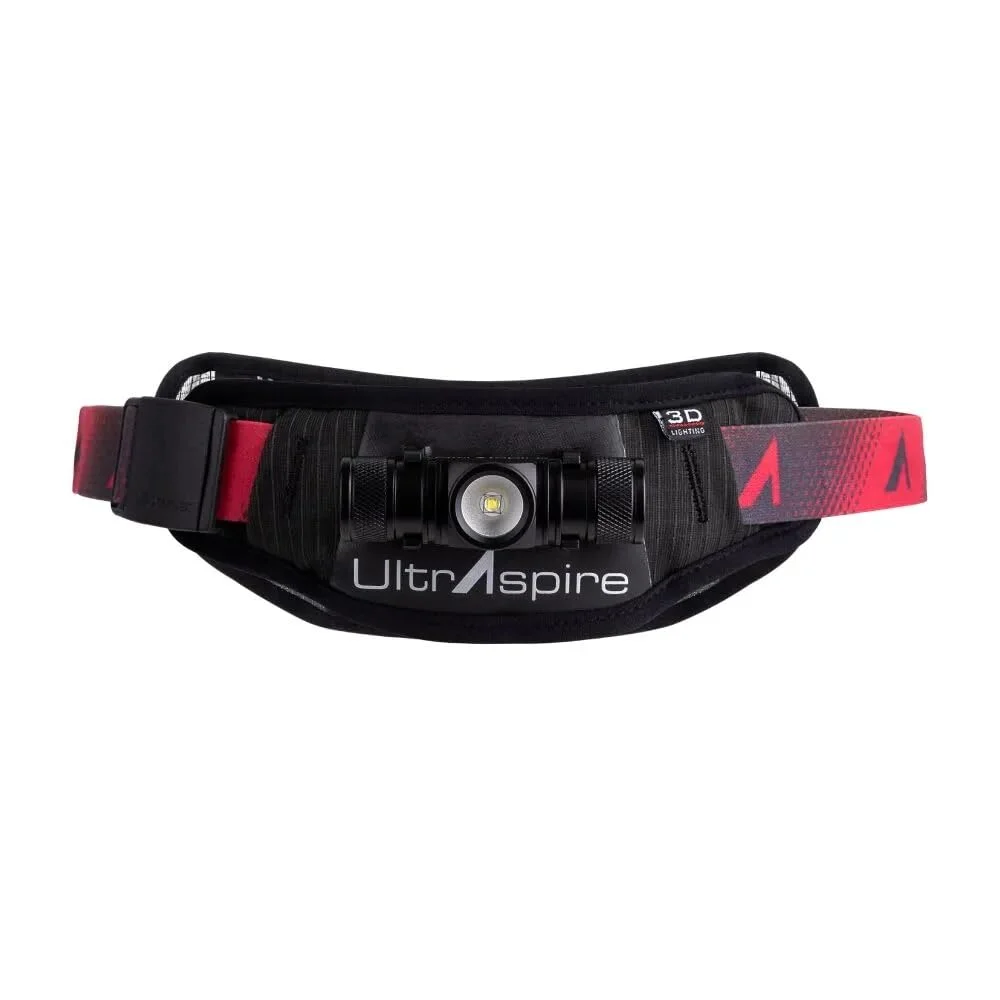
Ultraspire Lumen Collection Waist Light Belt
Pros
- Wide, adjustable beam
- Super bright
- Bounce free
Cons
- Getting it to the right position is a pain
Key Specs
| Lumens | 600 lumens |
| Weight | 6.7 ounces |
| Beam Type | Adjustable wide or focused |
| Waterproof Rating | Water resistant |
For hands-free lighting and extra kit storage, UltrAspire’s Lumen 600 wraps a powerful beam into a minimal waist pack. The ergonomic belt reduces chafing, while variable brightness and focus settings help you adapt to any conditions. Beyond brightness, battery life is strong (6 hours on max), and extra features like battery indicators and zip storage add everyday utility. It’s more expensive but if you hate a headlamp? It’s a win.
Esonstyle Pack of 6 LED Light Up Band Slap Bracelets
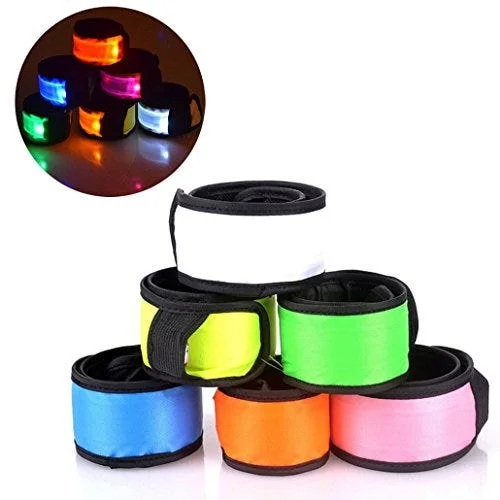
Pros
- Easy and cheap
- Darn bright
Cons
- They die after a few hours
Key Specs
| Lumens | n/a |
| Weight | 1.1 oz |
| Beam Type | n/a |
| Waterproof Rating | IPX14 |
You remember slap bracelets, right? Now they’re fun, reusable, LED-equipped accessories. They have simple modes like constant glow or flashing. They are lightweight, durable, and decently water resistant. Every millennial should be buying these just because. Heck, they're so affordable, they'd even be a great party favor for a XC team party.
Black Diamond Deploy 325 Headlamp
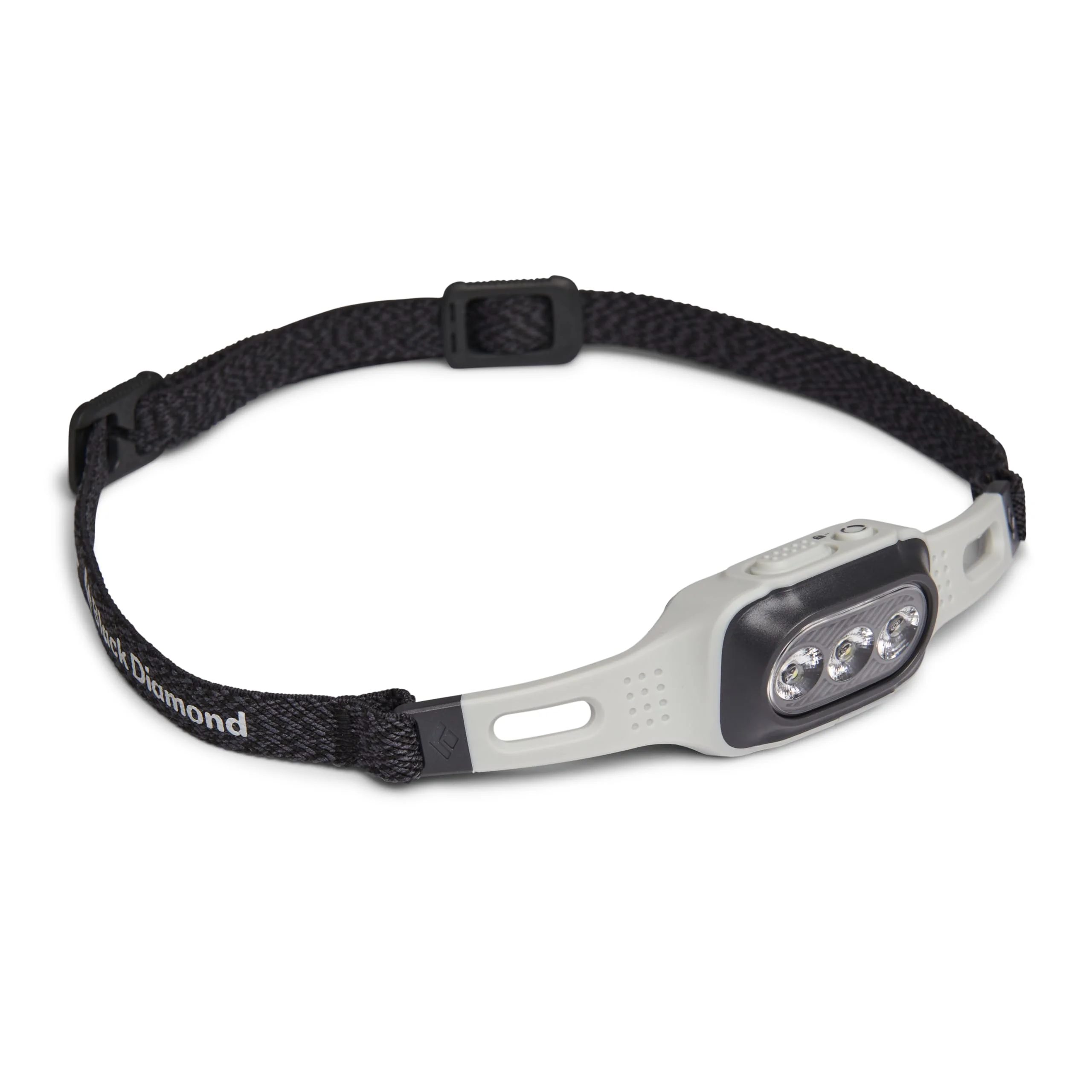
Black Diamond Deploy 325 Headlamp
Pros
- Very packable
- Easy to dim
- Comfortable
Cons
- Wish you could adjust strap on your head
Key Specs
| Lumens | 350 lumens |
| Weight | 1.34 oz |
| Beam Type | Adjustable beam angle, but mostly a wider spot |
| Waterproof Rating | IPX4 |
You can store this in your pocket, it packs up so small. The Black Diamond Deploy 325 is an ultralight, runner-focused headlamp designed to disappear on your head while still delivering up to 325 lumens for road or trail use. It uses a USB-C rechargeable lithium-ion battery, offers around 2.5 hours on high and up to 30 hours on low, and weighs about 38g. I am also just a big fan of how easy it is to operate and change modes.
Night Runner 270 Shoe Lights
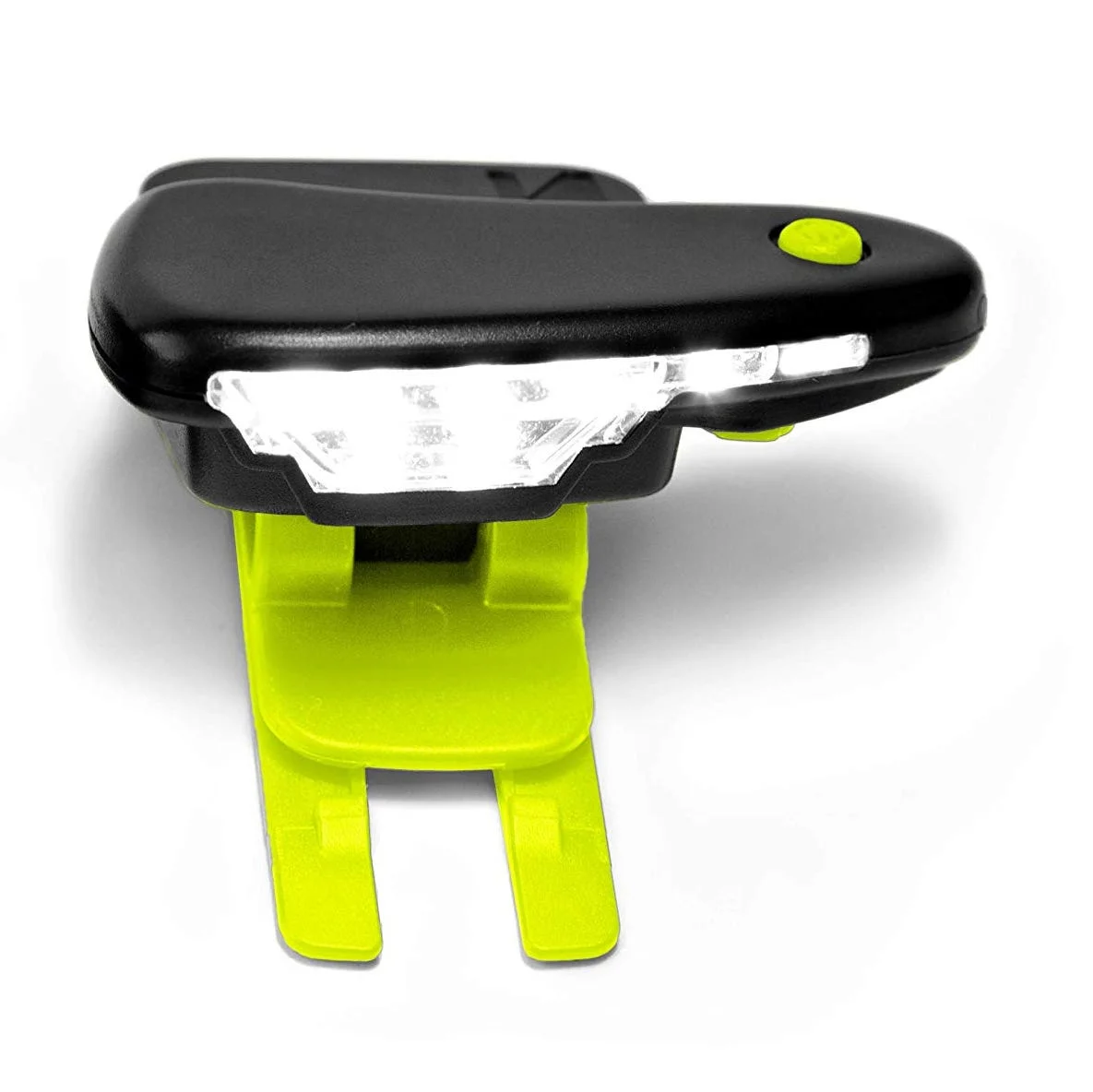
Night Runner 270 Shoe Lights
Pros
- Great extra light for tricky trails
- Good for twilight
- Easy to clip on
Cons
- They annoy some runners
Key Specs
| Lumens | 150 lumens |
| Weight | 1.5 oz each |
| Beam Type | Wide beam |
| Waterproof Rating | Water resistant |
Let your stride light the way. These lightweight, secure clip-on LEDs attach to your laces and keep the path ahead bright. They excel at ankle-level illumination, warning you of obstacles directly in your footpath. They’re not always consistent at full speed, so best used as a supplement rather than sole light source.
Apace Vision EverLightFX
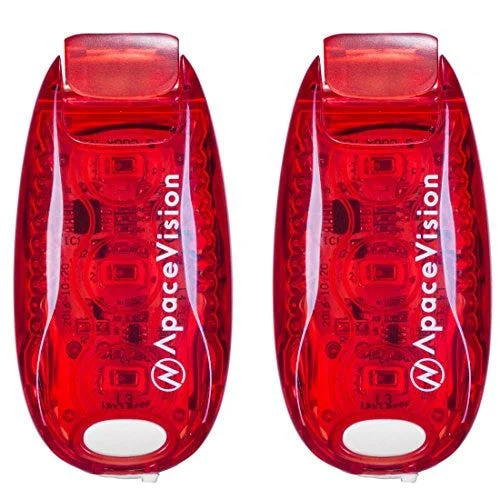
Apace Vision EverLightFX
Pros
- Clip anywhere
- Great if you are wearing a headlamp with no rear light
Cons
- Bouncy
Key Specs
| Lumens | n/a |
| Weight | 1.3 oz each |
| Beam Type | Six modes, all spot |
| Waterproof Rating | IPX4 |
These versatile lights clip easily to pockets, vests, bags, or any gear straps, adapting to what you need. If your clothes can’t comfortably support them, the EverLightFX includes adjustable hook-and-loop straps for secure attachment to arms or legs (but they’re not my fave). They come in several colors, allowing you to use different hues for front and back lights.
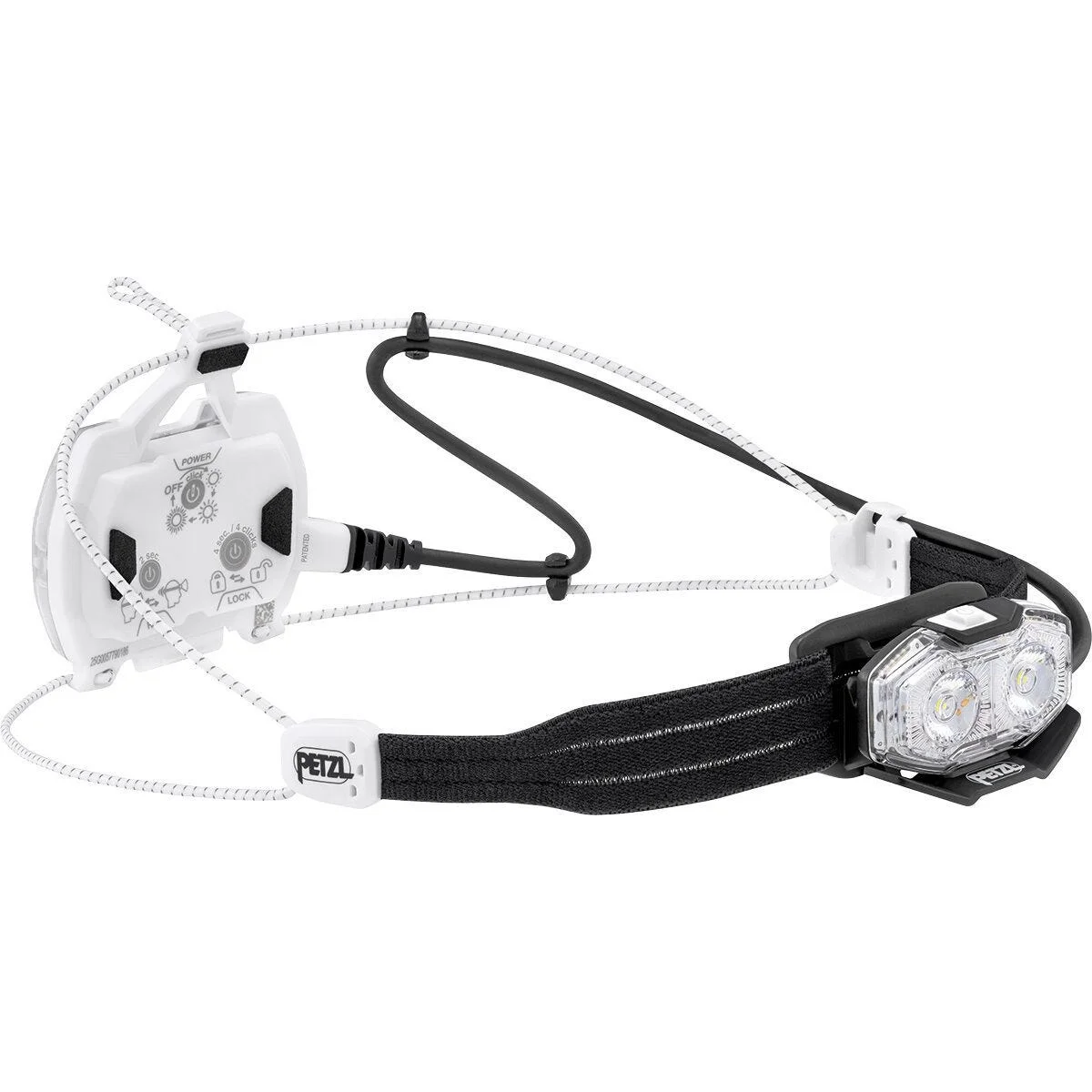
Pros
- Rear red strobe light
- Batteries and rechargeable
- Adjustable brightness
Cons
- Tricky band adjustment
Key Specs
| Lumens | 600 lumens |
| Weight | 3.17 oz |
| Beam Type | Wide, adjustable brightness |
| Waterproof Rating | IPX4 |
I love this running light for mixed bike/running trails and paths because it has that rear red strobe light. It’s also super convenient for any runner because it’s both rechargeable and battery powered. I don’t love adjusting the straps because they’re a bit finicky, but once it’s on, it gives a wide beam that’s easily dimmable. Bonus: If you travel with it, you can hold the power button for 4 seconds to lock it and prevent it from turning on in your bag.
How to Choose the Right Running Light
There are obviously a ton of different options on the market, and there’s a light for every scenario. However, no one light works for every use case. I want to dive in to which light works for which type of run and runner.
Who Should Buy a Headlamp?
This is perhaps the most straightforward of the bunch. If you are just looking to illuminate the road or trail ahead of you, this is the one you’re going to want to grab. It will light up potholes, obstacles, and unfamiliar running paths.
It’s also a fab option for women who don’t want to wear a chest light that will bounce because of their breasts, or because they feel restricted in the bustline.
Who Should Buy a Chest Light?
Many runners (often including myself) start to get light fatigue or headaches from headlamps, and a chest lamp is the obvious solution. There is one small problem with these, though. Even if they’re bright, your arms and the focus of the light can create shadows that obscure the landscape, so I would not use this as the primary light for more technical trails or your first run on a new path.
Who Should Skip Rechargeable Lights?
Traditional AA/AAA-powered lights are best for runners doing 100-milers where swappable batteries is easier. Keep extras in your drop bags, and you can run all 250 miles of Cocodona without worry. My husband the Boy Scout would also be disappointed in me if I didn’t mention that everyone should have a battery-operated headlamp in their emergency kit, too.
Is a Running Light Enough Without Reflective Gear?
No. A running light helps you see what’s on your path—and it can help drivers pick you out—but reflective gear works on a different level. Reflective materials bounce a car’s headlights back toward the driver, making you much more visible from a distance.
For the safest setup, wear both. Use a white light facing forward so you can see what’s around you, and combine it with your reflective gear. If you’re running on roads after dark, think about adding a rear-facing red light so that you’re visible from afar as well, (and not blinding oncoming traffic).
Can You Use a Hiking Headlamp?
Plenty of people will say yes, but as someone who’s run ultras in pitch black nights over hundreds of miles, I’m going to say no. They’re bulkier, they’re heavier, and while they’ve got plenty of lumens, they’re going to weigh you down. The motion of running and the motion of hiking are simply different, and that weight on the bounce will get you.
Do You Need Both a Front and Rear Light?
On a trail or path, not usually. But if you’re on the road, or if you’re on a path you share with bicycles, it’s the best and safest option. Some headlamps and chest lamps have both.
What About Alternative Lights?
Hand torches, foot lights, and wrist lights/armbands all have their place, but in our opinion, they’re simply additional lights for extra luminosity, or they’re for paths where the majority of the route is well lit, but you may encounter a dim section. They’re also good for twilight runs when you don’t quite need the full monty lit up, but find yourself wishing for a bit of light in shady areas.
Beam Pattern vs. Lumens: What Actually Matters?
The majority of us shop by the lumens, because we assume that brighter is always better. In reality, the shape and scope of the beam can be just as critical, if not more so for what you see—and how comfortable the light is to run with.
Why Beam Pattern Matters More Than Most Runners Think
A wide flood beam lights up your peripheral and lower vision, whereas, a spot beam shines light farther down the path or trail. Many of the better lights combine both.
Imagine running a gnarly trail. An 800-lumen spotlight could light up 100 feet ahead, but leave the ground around your feet in the dark. A 400-lumen flood beam may feel dimmer, but it would do a better job illuminating the obstacles in front of you.
| If you mostly run... | Look for... |
|---|---|
| City sidewalks | Wide flood beam |
| Neighborhood roads | Wide or mixed beam |
| Technical trails | Mixed flood + spot |
| Gravel roads | Mixed beam |
| Fast downhill trails | Longer throw with peripheral flood |
| Ultramarathons | Adjustable beam or dual-beam system |
Beam throw refers to how far a light projects usable illumination. Trail runners often require longer throw so they can see obstacles ahead of time, but road runners typically don't need to illuminate hundreds of feet ahead. (And it would shine in people’s windows, which would annoy.)
Guide to Lumens
| Running situation | Recommended lumens |
|---|---|
| Sidewalks with streetlights | 100–200 |
| Dark neighborhood roads | 200–400 |
| Gravel paths | 300–500 |
| Technical trails | 500–800 |
| Mountain ultras | 600+ plus spare battery |
Lots of brands advertise something like “600 lumens”...but that’s the maximum amount they can reach. Many lights dim after a few minutes to lower the heat or save on battery life.
Pay attention to runtime at your preferred setting, not simply the maximum lumen they provide.
How We Tested
Our team runs year-round, often in darkness or inclement weather. We’ve worn these lights during long trail outings, post-sunset city laps, and everything in between. We wore these on technical Catskills trails, dark New York City streets, predawn road runs, and rainy mornings to evaluate comfort, beam quality, battery life, bounce, and ease of use. Alongside hands-on testing—checking brightness, battery life, and comfort—we referenced user reviews for a broad performance perspective. All recommendations here have passed real-world scrutiny.

Cat Bowen, senior editor of commerce; reviews, is a seasoned runner with more than 20 years of distance running experience, including dozens of marathons, half marathons, and even a few ultra marathons. For over a decade, she has tested parenting, fitness, home, and running gear and written in-depth guides to help readers with their next purchase. Holding multiple advanced degrees and currently studying kinesiology, Cat Bowen brings research-backed insight to all of her guides. Passionate about women’s health and neurodivergent inclusion, she advocates for closing research gaps and helping others—especially AudHD people—find joy in running and fitness.