Unveiling Pitcher Game Cards
The recent launch of Pitcher Game Cards on FanGraphs underscores a pivotal shift in how fans, analysts, and fantasy players engage with pitcher performance data. Positioned within the redesigned Scores section, these cards prioritize not just what happened in games but delve into the nuances of how every pitch influences outcomes. This enhancement signals a growing trend in sports analytics, emphasizing the need for real-time, comprehensive insights rather than static summaries.
The Evolution of Pitch Analysis
Traditional box scores have served as the backbone of game analysis for decades, encapsulating a pitcher's performance through a handful of categorical outcomes. However, they often leave fans wanting more detail. It’s no longer sufficient to know that a pitcher struck out eight batters or allowed three earned runs; the mechanics behind those numbers are essential to grasp the full story. Enter Pitcher Game Cards, which provide a sophisticated overview of each pitcher's game-day performance.
What the Cards Reveal
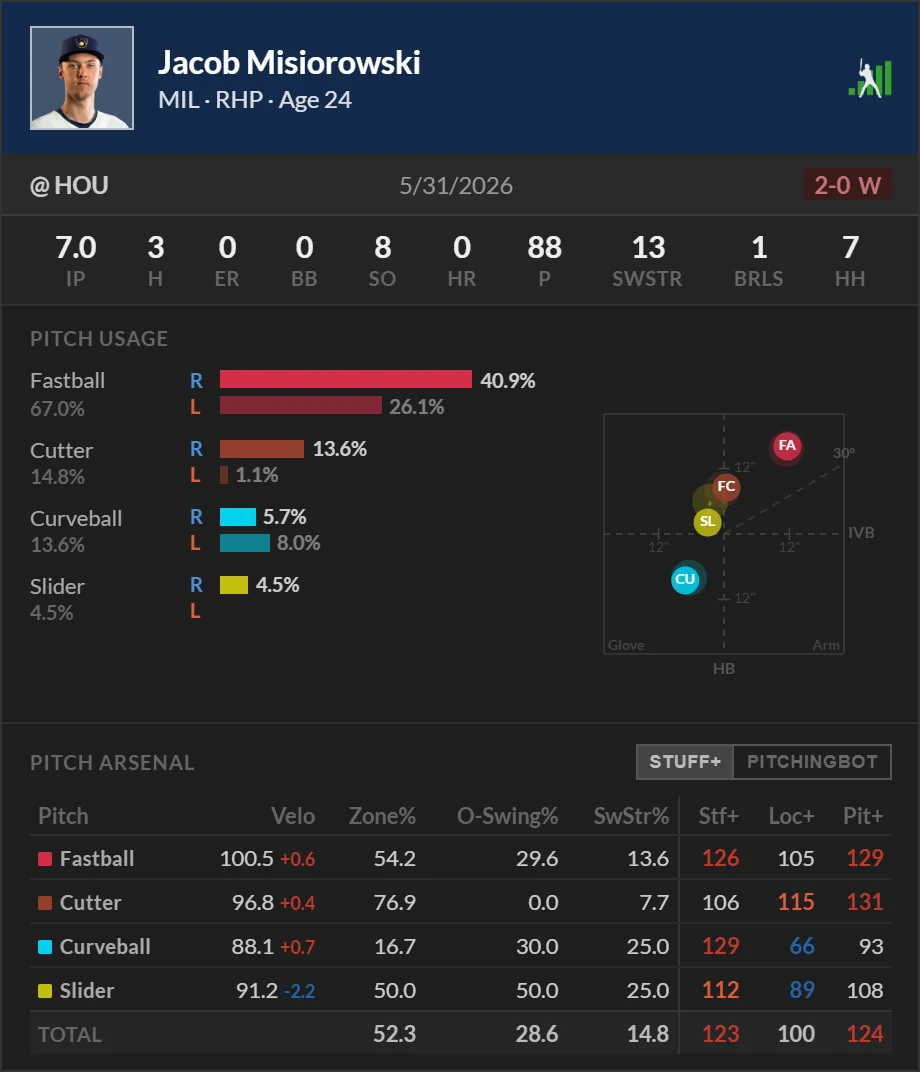
The core of the Pitcher Game Cards lies in their multifaceted approach to summarizing a pitcher's performance. Each card succinctly presents headlines like innings pitched, hits allowed, and earned runs, but dives deeper into the pitcher's arsenal. With a focus on pitch usage percentage and movement profiles, these cards allow users to visualize the pitch mix a pitcher employed against batters. This insight makes visible the game strategies at play—essential for anyone interested in the subtleties of in-game decision-making.
Understanding Pitch Dynamics
Incorporating movement charts into the analysis is a standout feature of the Pitcher Game Cards. These charts plot the horizontal and vertical movement of each pitch, contrasting in-game results with season averages. This capability makes it easier to identify anomalies in a pitch’s behavior—vital information that can shift perceptions of a pitcher’s effectiveness on a given day. An unexpected dip or spike in movement could explain fluctuations in performance that a box score alone cannot elucidate.
Beyond Basic Metrics
The Pitch Arsenal table within the cards elevates the analysis further by providing quantitative metrics like average velocity, strike zone rate, and chase rate for each pitch thrown. Highlighting comparisons to season averages allows for quick assessments of performance deviations. For instance, if a pitcher’s fastball velocity spikes beyond usual specifications, that could indicate either a peak performance day or potential health concerns worth monitoring.
Real-Time Data Delivery
Another compelling aspect is the integration of live metrics, drawing from FanGraphs’ PitchingBot and Stuff+ models. Users can toggle between different views of pitch quality, allowing for an instantaneous evaluation of how a pitcher’s stuff and command stack up during a game. This flexibility makes these insights actionable in real-time, something analysts and fans alike will appreciate. With such hands-on data at their fingertips, the ability to answer complex questions about a pitcher’s outing—like their efficiency in generating swings and misses—transforms analysis from static to dynamic.
Applications and Implications
The implications of the Pitcher Game Cards extend beyond mere statistics. For fantasy sports managers, these insights can pinpoint which pitchers are trending upward or downward, offering strategic advantages in player selection. Analysts can utilize this information not only for post-game breakdowns but also for predictive modeling, assessing which pitchers might experience future success based on current trends in pitch performance. Fans hoping to deepen their understanding of the game can also find a wealth of context that enhances their viewing experience.
A Tool for Continuous Improvement
FanGraphs openly acknowledges that the Pitcher Game Cards are a work in progress, with plans for ongoing refinement based on user feedback. This iterative approach hints at a commitment to adapting to a rapidly evolving sports analytics landscape. As the demand for detailed, actionable data grows, tools that can simplify and clarify complex pitcher performance metrics will become indispensable. The success of this feature could very well define future developments in sports data platforms.
Looking Ahead
As the analytics landscape becomes increasingly intertwined with fan engagement, the Pitcher Game Cards represent a significant leap forward. They not only satisfy the immediate need for accessible data but also cater to the sophisticated demands of users invested in the minutiae of baseball. The ability to unpack each pitch’s essence exemplifies a broader trend: making complex statistical data understandable and immediately relevant. Whether you're a hardcore analyst or a casual fan, being able to traverse these insights at a glance will enhance how you experience the game. As tools like these evolve, they will undoubtedly set the standard for performance analysis in sports, ultimately shaping how we perceive player effectiveness and gameplay strategy.
With this launch, FanGraphs not only enhances its offering but also challenges other platforms to keep pace with the demands of a more analytical audience. In this age of information, the clarity and depth of data play an increasingly critical role, blurring the lines between casual observation and in-depth analysis.