FanGraphs Weekly Mailbag: May 30, 2026
The most important thing to know about the initial proposals for baseball’s next collective bargaining agreement is that they were designed to be rejected. It’s the end of May, meaning we still have a little more than six months to go before the current CBA expires at 11:59 p.m. ET on December 1. That’s when the owners are expected to lock out the players and initiate the game’s second work stoppage of the 2020s, but if the last CBA negotiation is any indication of how this one will play out, it’ll take at least another month and a half from then for bargaining to begin in earnest.
The purpose of the initial proposals released this week, by the MLB Players Association on Wednesday and MLB on Thursday, was to set the starting line from where each will slowly, but inevitably, concede ground. We likely won’t see much movement for a while, but once the owners and players start inching toward one another, they’ll point to their proposals from this week as evidence of their efforts to make a deal. Theoretically, in a labor negotiation, you want to set your starting point far from where you want to end up, so that you can abandon some of what you were asking for and still end up with a favorable agreement. So just because, in the words of Ben Clemens, “opposing sides aren’t speaking the same language” right now doesn’t mean we’re any more or less likely to miss games next season. That said, it also doesn’t mean that there’s nothing for us to learn from the proposals. Rather, as Ben explains, “these early offers are revealing of what each side cares about most. The specific numbers quoted are unlikely to survive multiple rounds of bargaining, but the concepts and structures that each side favors at this stage could tell us a lot about what an eventual compromise looks like.” In his piece from Friday, which you can find here, Ben does a great job of laying out everything you need to know about the start of bargaining. You should definitely check that out.
That’s the last we’ll talk about baseball labor in this week’s mailbag. Instead, we’ll be answering your questions on overlooked MVP candidates, how different baseball would be without Tommy John surgery, and which pitchers actually benefit from throwing first-pitch strikes. Before we do, I’d like to remind you that this mailbag is exclusive to FanGraphs Members. If you aren’t yet a Member and would like to keep reading, you can sign up for a Membership here. It’s the best way to both experience the site and support our staff, and it comes with a bunch of other great benefits. Also, if you’d like to ask a question for an upcoming mailbag, send me an email at mailbag@fangraphs.com.
__
What would modern day baseball or the record books look like if Tommy John surgery were never a thing and a torn UCL were a career-ending injury? — Matt
Michael Baumann: I love a good counterfactual, and this here is a doozy. It’s a short list of inventions that have changed baseball more than Tommy John surgery, and I’m counting things like the glove.
I don’t think we appreciate how quickly the state of the art on Tommy John has changed. It gets treated like an inconvenience now; sure, you’ll be out for 12 to 18 months, but recovery rates are so high you can pick up where you left off. Position players get an internal brace over the offseason and barely miss any time.
And yet it was only about a decade ago that a torn UCL was still a career-altering injury. Recovery was not taken for granted. A janky UCL ruined Brady Aiken’s career before it started. Jeff Passan’s The Arm — the seminal work on the UCL crisis — came out in 2016.
Tommy John had his famous medical procedure in 1974 and pitched until 1989, which means his career overlapped with the first Hall of Fame pitcher to undergo Tommy John surgery: John Smoltz.
Smoltz pitched from 1988 until 2009, and it’s possible that his career overlapped with the last Hall of Fame pitcher (or at least, the last pitcher elected by the BBWAA) who didn’t undergo Tommy John surgery. Here are the retired pitchers who have their original UCL and a serious Hall of Fame case, as well as the active pitchers mentioned in Jay Jaffe’s most recent Cooperstown Notebook, from last August.
| Player | Debut Year | Final Year | HOF Eligibility | HOF Election |
|---|---|---|---|---|
| John Smoltz | 1988 | 2009 | 2015 | 2015 |
| Mark Buehrle | 2000 | 2015 | 2021 | TBD |
| Zack Greinke | 2004 | 2023 | 2029 | TBD |
| Félix Hernández | 2005 | 2019 | 2025 | TBD |
| Cole Hamels | 2006 | 2020 | 2026 | TBD |
| Clayton Kershaw | 2008 | 2025 | 2031 | TBD |
| Max Scherzer | 2008 | TBD | TBD | TBD |
| Aroldis Chapman | 2010 | TBD | TBD | TBD |
| Craig Kimbrel | 2010 | TBD | TBD | TBD |
| Kenley Jansen | 2010 | TBD | TBD | TBD |
| Blake Snell | 2016 | TBD | TBD | TBD |
If you’re looking for other active pitchers with even a remote chance to be Hall of Famers, good luck. Justin Verlander’s had it. Chris Sale’s had it. Jacob deGrom’s had it. Gerrit Cole, Zack Wheeler, Shohei Ohtani, Tarik Skubal, Yu Darvish: All had Tommy John surgery.
There are five active pitchers with 30 career WAR and all the UCLs they were born with: Scherzer, Kevin Gausman, Sonny Gray, Aaron Nola, and Jose Quintana.
Maybe Paul Skenes could do it, but he’s only 23, and is at least seven more seasons removed from Hall of Fame consideration. And the ligament fairy comes for everyone eventually. We thought Verlander and Cole were immune, but it got them in their mid-30s.
Back to the original question: Where would we be?
Obviously, pitching pedagogy would’ve taken an unrecognizably different course since the 1990s at the latest. If you look at all the competing incentives for a pitcher, we’ve basically found our Nash equilibrium: Go max-effort, throw all those sliders, and when you blow out, you go to the shop and spend a year on the bench. A pitcher who doesn’t pitch like this risks not only losing games, but his livelihood. Now, there’s a high-success surgery to fix a torn UCL and basically no stigma associated with undergoing it. You can blow out and still get paid.
If a torn UCL were a career-ender, pitchers would obviously not be so cavalier about their elbows.
We know what that world looks like, because it’s the world that inspired Tommy John to let Dr. Frank Jobe cut him open in the first place.
When I was a kid, I spent countless hours playing historical sim baseball games on my computer, and I loved the 1970s Reds. How could you not? At one time or another, the Big Red Machine had two players who are probably the best ever at their respective positions (Johnny Bench and Joe Morgan), plus Hall of Famer Tony Perez, plus MVPs Pete Rose and George Foster, plus multi-time All-Stars Lee May and Ken Griffey.
But I always wondered why their pitchers weren’t up to that level.
The truth is, the Big Red Machine had plenty of good pitchers. They (Gary Nolan, Don Gullett, Pat Zachry) just all blew out their elbows and/or shoulders and were done by age 30. Pitchers in the 1970s weren’t throwing 100 mph or chucking sweepers 30% of the time, but they were running up huge pitch counts and throwing on short rest and doing all sorts of other things that are bad for your arm. And while the occasional Nolan Ryan or Steve Carlton or Tom Seaver — who was traded to the Reds toward the end of the Big Red Machine years — poked through, the Gary Nolans, Denny McLains, and J.R. Richards outnumbered those guys five to one.
If that had continued through the ensuing 50 years, one of three things would’ve happened. First, absent some surgical breakthrough to repair a torn UCL, medical science almost certainly would’ve figured out a training technique or a pitching motion to throw hard without putting such strain on the elbow. If you’re old enough to remember Mike Marshall’s day in the sun, it might’ve looked something like that.
Second, the rules would’ve changed to protect players from themselves. Football and hockey changed their rules and their equipment because paying customers started to get antsy about watching their heroes suffer catastrophic head injuries every game. Maybe that means WBC-style pitch-count limits, or rosters with 30 pitchers, or a change to the mound or the baseball itself. In the non-Tommy John timeline, FanGraphs in 2026 is routinely posting articles about the days of 250-inning pitchers with a mixture of fascination and horror. Like how the Oakland Raiders used to have their linebackers wear concrete casts during games. Wow, weren’t we so barbaric then, and aren’t we so evolved now?
Option no. 3: Nothing changes, and we continue to let young pitchers blow out and get used up. In that case, a pitcher like Verlander would become a folk hero for just making it to his age-37 season before his arm finally gave out. Stephen Strasburg turns out to be a bust and puts a whole generation of GMs off college pitchers. The Hall of Fame standard for career wins drops to 100.
In any case, I don’t think pitchers take their foot off the gas in the interest of self-preservation. For all but the most talented few, anything short of max effort means getting shelled. Sure, maybe all those other guys burned out, but I’m built different.
Offense skyrockets as the most talented pitchers struggle to last through their 20s. And rather than juicing the ball to bring life into a three true outcome-dominated world, MLB is able to restore the game to balance by deadening the baseball. On a game-to-game basis, I don’t think a world without Tommy John surgery would be too different from our own. You’d just have to learn a new slate of pitchers every three to five years.
__
Hi mailbag gang from the U.K.,
I was reading the latest mailbag about MVP-level seasons, and came across an 8+ WAR season from the perennially underrated Bobby Grich. He wasn’t even an All-Star and got only a spattering of MVP votes despite leading the league in WAR. So the question is, who had the most overlooked MVP-level season? Was it because they were a surprise name, a victim of voter fatigue, or played for a bad team?
Cheerio,
Dr. Plantwrench
Jay Jaffe: For those not in the know, Grich was something of a proto-Chase Utley, except he batted right-handed, but he similarly combined on-base skill, power, and infield defense (primarily at second base) for some very good teams during a 17-year career with the Orioles (1970–76) and Angels (1977–86). A six-time All-Star and four-time Gold Glove winner, he went one-and-done with 2.6% of the vote on the 1992 Hall of Fame ballot and has never gotten another sniff from the Veterans or Era Committees. I know all of this almost off the top of my head because he was one of the 14 players I covered at length in The Cooperstown Casebook. Since its 2017 publication, 11 of those players have been elected (Dick Allen, Andruw Jones, Edgar Martinez, Minnie Miñoso, Mike Mussina, David Ortiz, Tim Raines, Mariano Rivera, Ted Simmons, Alan Trammell, and Larry Walker), and a 12th came close but blew up his own candidacy (Curt Schilling). A 13th at least finally landed on an Era Committee ballot and fared respectably after going one-and-done on the BBWAA ballot (Lou Whitaker). Grich is the only one who hasn’t come any closer to election since the book.
The season to which Dr. Plantwrench refers is Grich’s 1973 campaign, when, as the 24-year-old second baseman for the Orioles, he hit .251/.373/.387 (116 OPS+) with 12 home runs, 17 stolen bases, and 107 walks in 162 games. To that he added elite defense, leading all AL second basemen in putouts, assists, and double plays, and winning his first Gold Glove. Total Zone estimates his defense was a whopping 29 runs above average, boosting his WAR — the Baseball Reference version, which I’ll be using throughout this answer so I can more easily connect it with the site’s MVP voting logs — to an AL-best 8.3. Yet he finished 19th in the MVP voting, with a smattering of down-ballot mentions. Meanwhile, A’s slugger Reggie Jackson, who hit .293/.383/.531 while leading the league in slugging, homers (32), and RBI (117) while finishing second behind Grich with 7.8 WAR, won the award unanimously. It’s not hard to understand why: He was the lineup centerpiece on an A’s team in the midst of three straight championships, and put up big offensive numbers, particularly in two of the three Triple Crown categories. WAR hadn’t been invented yet, and Grich’s hitting stats were hardly eye-catching, so it’s unsurprising he didn’t win; that he didn’t even get a second look from most voters probably owed to his low batting average.
In unpacking your question, my assumption is that we’re not talking about “most overlooked MVP-level season” in the sense of simply not winning; Grich is hardly an analogue to Ted Williams in 1941, Mike Trout in 2012, or Cal Raleigh in 2025, guys who had historic seasons but finished second in the voting because another player did something pretty historic as well. We’re talking about guys whose seasons were seriously underestimated for one reason or another.
I wrote a whole spiel about MVP awards in a previous foray on the topic (least deserving MVP awards), but the short version is that in coming up with an answer, it’s sensible to begin with 1931, when the BBWAA took over MVP voting. Its predecessor, the AL’s League Award, was issued from 1923–28 but didn’t allow for a player to win multiple times and limited voters to considering one player per team, so you have absurdities like Babe Ruth not getting any votes for his 60-homer 1927 season because he won in 1923. An NL counterpart with different voting rules was issued 1924–29. Also, it makes sense only to consider full(ish) seasons as well, so the 1981 and ’94 strike years are out, as is the pandemic-shortened 2020; I think the 144-game 1995 season is reasonable enough to include. And, regrettably, this has to be limited to position players, since pitchers have only been sporadically considered in the voting. For example, Bob Gibson won the NL MVP and Cy Young in 1968, the year he put up a ridiculous 1.12 ERA and led the majors with 11.9 WAR (including offense), but when he led the majors again the next year with 11.3 WAR, he finished 30th in the NL MVP voting. This has become more of a problem since the Cy Young was established in 1956, as — to use a cutoff to which I’ll return — two of the four 10-WAR seasons by pitchers in the 1931–55 window were recognized with MVP awards (Lefty Grove in 1931 and Hal Newhouser in 1945). For the other two, Bob Feller finished sixth in the AL MVP voting in 1946, when he put up 10.0 WAR while going 26-15 with a 2.18 ERA and 348 strikeouts, and Grove finished 15th (!) in 1936, when he went a fairly pedestrian 17-12 but with a 2.81 ERA (189 ERA+). So let’s leave pitchers out of this.
I thought about answers along two lines. For the first one, I evaluated the MVP support for all the position players who produced 10-WAR seasons since 1931. There have been only 36 such seasons, producing 21 MVPs, seven second-place finishes, and one third. Among the remaining seven, one sticks out like a sore thumb:
| Player | Team | Season | HR | RBI | BA | OBP | SLG | OPS+ | WAR | MVP Finish |
|---|---|---|---|---|---|---|---|---|---|---|
| Cal Ripken Jr. | BAL | 1984 | 27 | 86 | .304 | .374 | .510 | 146 | 10.0 | 27 |
| Carl Yastrzemski | BOS | 1968 | 23 | 74 | .301 | .426 | .495 | 171 | 10.4 | 9 |
| Rico Petrocelli | BOS | 1969 | 40 | 97 | .297 | .403 | .589 | 168 | 10.0 | 7 |
| Willie Mays | SFG | 1964 | 47 | 111 | .296 | .383 | .607 | 172 | 11.0 | 6 |
| Babe Ruth | NYY | 1931 | 46 | 162 | .373 | .495 | .700 | 218 | 10.5 | 5 |
| Lou Gehrig | NYY | 1934 | 49 | 166 | .363 | .465 | .706 | 207 | 10.0 | 5 |
| Willie Mays | SFG | 1963 | 38 | 103 | .314 | .380 | .582 | 175 | 10.6 | 5 |
Holy cow! I think it’s fair to say that for all but Petrocelli’s season, voter fatigue or a lack of novelty was a factor. The 1931 season was Ruth’s age-36 season and the last of his 10 (!) with at least 10 WAR (including pitching). Gehrig had won the League Award in 1927 (instead of Ruth) and in the BBWAA version had finished second twice and fourth once from 1931–33 before slipping to fifth in 1934, when Tigers catcher-manager Mickey Cochrane won after leading Detroit – to which he’d been traded the previous December — to a pennant but putting up just 4.5 WAR. Mays averaged 9.5 WAR annually from 1954–66 while leading the NL 10 times and reaching 10 WAR six times, but won MVP awards only in 1954 (the year the Giants won the World Series) and 1965, when he set career highs with 52 homers and 11.2 WAR. He had five top-four finishes between those two wins, but was generally overshadowed by players from pennant-winning teams. Yastrzemski had won the AL Triple Crown and MVP in 1967, but the next year was “The Year of the Pitcher,” and the MVP went to 31-game winner Denny McLain. Petrocelli, a shortstop on a third-place team, got lost amid the game’s offensive resurgence in 1969. Harmon Killebrew, of the AL West-winning Twins, won on the strength of his league-best 49 home runs, while Frank Howard (48 homers) placed fourth, and Jackson (47 homers) fifth, with two players from the pennant-winning Orioles (Boog Powell and Frank Robinson) second and third, and McLain sixth.
Which brings us to Ripken, the AL Rookie of the Year in 1982, when the Orioles lost the AL East race to the Brewers on the final day of the season, and its MVP in 1983, when the O’s won the World Series. Ripken had better Triple Crown stats that year (.318-27-102) than in 1984, plus league bests in hits (211) and doubles (47). He reached the 10-WAR threshold for the first of two times in 1984 thanks to his defense, with 23 runs above average according to Total Zone (his first of five seasons with 20 or more fielding runs). But the perception of an offensive dip set against the backdrop of the 85-win Orioles slipping to a distant fifth behind the 104-win Tigers doomed his candidacy. It didn’t help that the voters seized upon Detroit reliever Willie Hernandez, who made 80 appearances with 32 saves and a 1.92 ERA, as worthy of both the Cy Young and MVP; the Royals’ Dan Quisenberry and his league-best 44 saves finished third. Ripken scored just one point in the voting, for a single 10th-place mention.
Ripken’s unjustly ignored season sets up another way to look at your question that also ties to Grich. There have been 13 times that a player led his league in WAR while putting up at least 3.0 dWAR, meaning his Total Zone or Defensive Runs Saved value plus the positional adjustment, converted from runs to wins; all of them are either shortstops, second basemen, third basemen, or center fielders, positions of greater defensive importance and hence with higher adjustments. Four of them won MVP, two more finished in the top five of the voting, and three others in the top 10:
| Player | Team | Season | HR | RBI | AVG | OBP | SLG | OPS+ | POS | Rfield | dWAR | WAR | MVP |
|---|---|---|---|---|---|---|---|---|---|---|---|---|---|
| Graig Nettles | CLE | 1971 | 28 | 86 | .261 | .350 | .435 | 114 | 3B | 30 | 3.9 | 7.5 | 28 |
| Cal Ripken Jr. | BAL | 1984 | 27 | 86 | .304 | .374 | .510 | 146 | SS | 23 | 3.6 | 10.0 | 27 |
| Bobby Grich | BAL | 1973 | 12 | 50 | .251 | .373 | .387 | 116 | 2B | 29 | 4.0 | 8.3 | 19 |
| Graig Nettles | NYY | 1976 | 32 | 93 | .254 | .327 | .475 | 135 | 3B | 27 | 3.6 | 8.0 | 16 |
| Lou Boudreau | CLE | 1943 | 3 | 67 | .286 | .388 | .388 | 134 | SS | 18 | 3.3 | 8.0 | 10 |
| John Valentin | BOS | 1995 | 27 | 102 | .298 | .399 | .533 | 138 | SS | 23 | 3.0 | 8.3 | 9 |
| Dickie Thon | HOU | 1983 | 20 | 79 | .286 | .341 | .457 | 127 | SS | 19 | 3.2 | 7.4 | 7 |
| Carlos Correa | HOU | 2021 | 26 | 92 | .279 | .366 | .485 | 131 | SS | 20 | 3.0 | 7.3 | 5 |
| Ken Griffey Jr. | SEA | 1996 | 49 | 140 | .303 | .392 | .628 | 154 | CF | 32 | 3.4 | 9.7 | 4 |
| Lou Boudreau | CLE | 1948 | 18 | 106 | .355 | .453 | .534 | 166 | SS | 20 | 3.0 | 10.3 | 1 |
| Ernie Banks | CHC | 1959 | 45 | 143 | .304 | .374 | .596 | 156 | SS | 23 | 3.5 | 10.2 | 1 |
| Zoilo Versalles | MIN | 1965 | 19 | 77 | .273 | .319 | .462 | 115 | SS | 17 | 3.0 | 7.1 | 1 |
| Cal Ripken Jr. | BAL | 1991 | 34 | 114 | .323 | .374 | .566 | 162 | SS | 23 | 3.5 | 11.5 | 1 |
dWAR = Rfield + positional adjustment. MVP = MVP vote ranking.
Ripken and Grich rank second and third in terms of lowest MVP finish, sandwiched by two seasons from Nettles, whose power hitting was often undervalued because of his modest batting averages, and whose spectacular defense often went under-recognized because Brooks Robinson took home 16 straight Gold Gloves from 1960–75. Nettles won only Gold Gloves in 1977 and ’78, but he’s eighth in fielding runs (140) and 12th in JAWS, the highest-ranked third baseman outside the Hall of Fame. Cleveland went 60-102 in 1971, which explains why Nettles wasn’t considered more strongly that year. In 1976, he helped the Yankees to their first pennant since 1964 while leading the AL in home runs, but it was teammate Thurman Munson — a catcher who hit .302/.337/.432 with 17 homers, 105 RBI, and 5.3 WAR — who won MVP.
I can point to some other injustices along these lines, but at the risk of going even longer, I’ll circle back to my Grich comparison. In 2008, Utley hit .292/.380/.535 (136 OPS+) with 33 homers, 104 RBI, and 9.0 WAR (second in the league behind Albert Pujols), including 3.5 dWAR. Yet he finished 14th in the MVP voting while Pujols won. That’s just maddening, as is the fact that Utley never won a Gold Glove, but perhaps if he’s elected to the Hall of Fame (he’s trending in that direction), it will prompt a closer look at Grich.
__
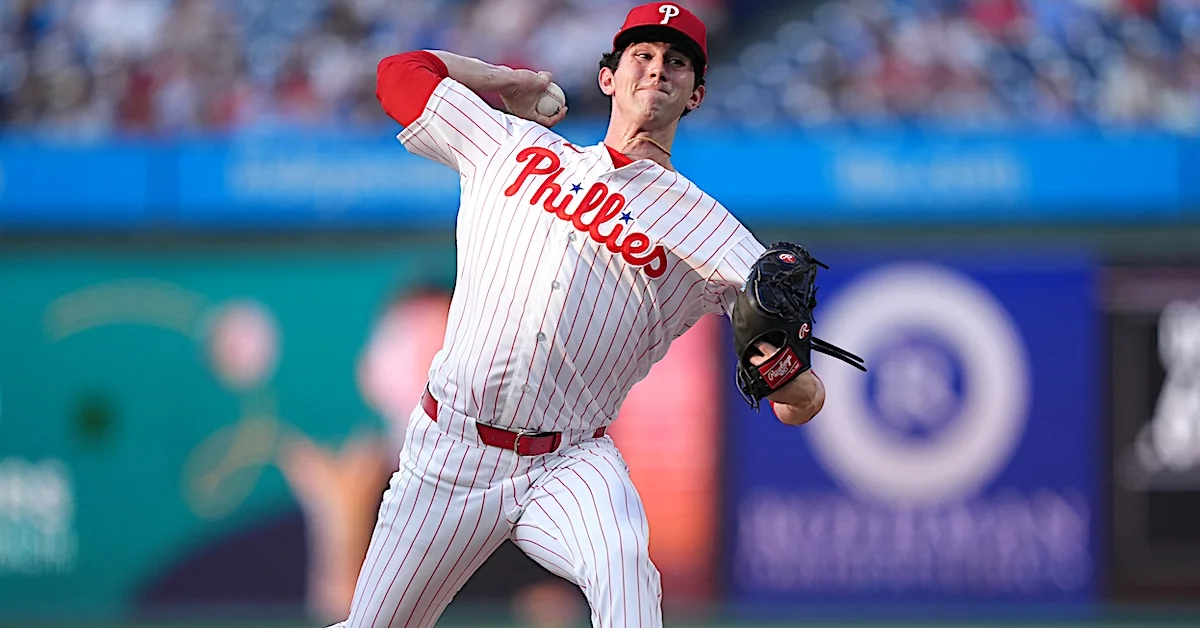
Phillies radio announcers today were talking about how important it is for Andrew Painter to throw first-pitch strikes so as to get ahead in the count. Obviously, every pitcher gets much better results when they’re ahead in the count. But are there some pitchers who benefit much more than others from getting ahead 0-1? — Jeremy
Davy Andrews: What a fun question, Jeremy. It also makes for a great Stathead query, because Stathead lets you look up splits not just for a specific count, but for any plate appearance that reaches a specific count. I started with 0-1, pulling the stats of any pitcher this century who’s thrown at least 250 innings worth of plate appearances that started out 0-1. Then I pulled the stats for those same pitchers during the plate appearances in which they fell behind 0-1.
It’s a sample of 548 pitchers, and as you’d expect, every single one of them pitched better when they got strike one. The average pitcher’s OPS swung 204 points depending on whether the first pitch was taken for a strike or a ball. That’s a colossal difference, and it’s universal. Only five pitchers in the whole sample had a gap below 100 points.
We’re leaving out an important factor, though. It’s not as simple as either getting ahead or falling behind on the first pitch. The first pitch can also be put into play, and when it does, it tends to get crushed. Since 2008, the league has run an overall wOBA of .317 and a .386 wOBA on the first pitch. For context, Albert Pujols had a career wOBA of .385. The average player, when they hit the first pitch, turns into a Hall of Famer. That makes throwing the first pitch in the zone way more dangerous than the numbers would lead you to believe.
To account for that, I combined the 0-0 and 0-1 results for each pitcher, then compared them to their 0-1 results. The average difference in OPS dropped from 204 points down to 149. It’s still definitely better to throw the ball in the zone in search of strike one, but the gap is a lot smaller than you might think.
A few fun facts from this new data. We now have two players on our list who actually pitch better when they fall behind 1-0, and both are pitching right now. Tanner Bibee allows a .681 OPS after he falls behind 1-0, but his OPS on the first pitch and when he gets ahead 0-1 is .704. It’s a difference of just 23 points, and Bibee doesn’t have the longest track record around, but it seems safe to say that he’s good working from behind. The other pitcher with a negative split is Sandy Alcantara, who has a meatier sample of more than 1,150 innings under his belt. Alcantara’s 1-0 OPS is three points better than his first-pitch/first-strike OPS.
Matt Martell asked Bibee’s old manager, Terry Francona, about this the other day, and Francona seemed to think pitching from behind is a skill. “I think some guys have a better ability to climb back into a count than some other people, maybe,” he said. Asked what skills might help those pitchers climb back into the count, Francona answered with one word: “Command.”
I also noticed several current Dodgers are at the other end of the list, the side with the biggest splits. Blake Snell, Tyler Glasnow, Blake Treinen, and Edwin Díaz are all down there with differences of over 220 points of OPS. If you’re looking for pitchers who really need to get ahead in the count, that’s the team to watch. Snell is a particularly interesting name, because his whole deal as a pitcher is that he’s not afraid to fall behind or issue a walk. He’ll just keep nibbling until somebody swings at the pitch he wants them to swing at. If anybody shouldn’t be bothered about falling behind 1-0, it’s Snell, right? Wrong! When he falls behind 1-0, his OPS shoots up a whopping 239 points – the 21st-highest mark on this list of 548 pitchers! – but that approach has won him two Cy Young awards anyway. So maybe we don’t know anything at all.
Are there players who are better or worse at pitching from behind? Maybe? A little bit? I think there are some really good pitchers who are good no matter the count, and I think some players really struggle once they’re behind, but the vast majority of pitchers are in the middle. They’re significantly worse once they fall behind 1-0, just not Blake Snell worse.
But here’s the most fun part of this whole exercise. The numbers will be different by the time this runs on Saturday, because Painter is pitching on Friday night, but as of Wednesday, he’s actually been better when he throws a ball on the first pitch than when he throws a strike. Painter, the guy who started this whole conversation! It’s close, but he’s got a .786 OPS after falling behind 1-0 and a .793 OPS after he gets ahead 0-1. To be clear, the difference is negligible, and the sample size here is so small as to be completely meaningless, but as of right now, there’s no actual evidence that points to singling him out as someone who really needs to avoid ball one.