Boston Red Sox Top 48 Prospects
May 22, 2026 869 views
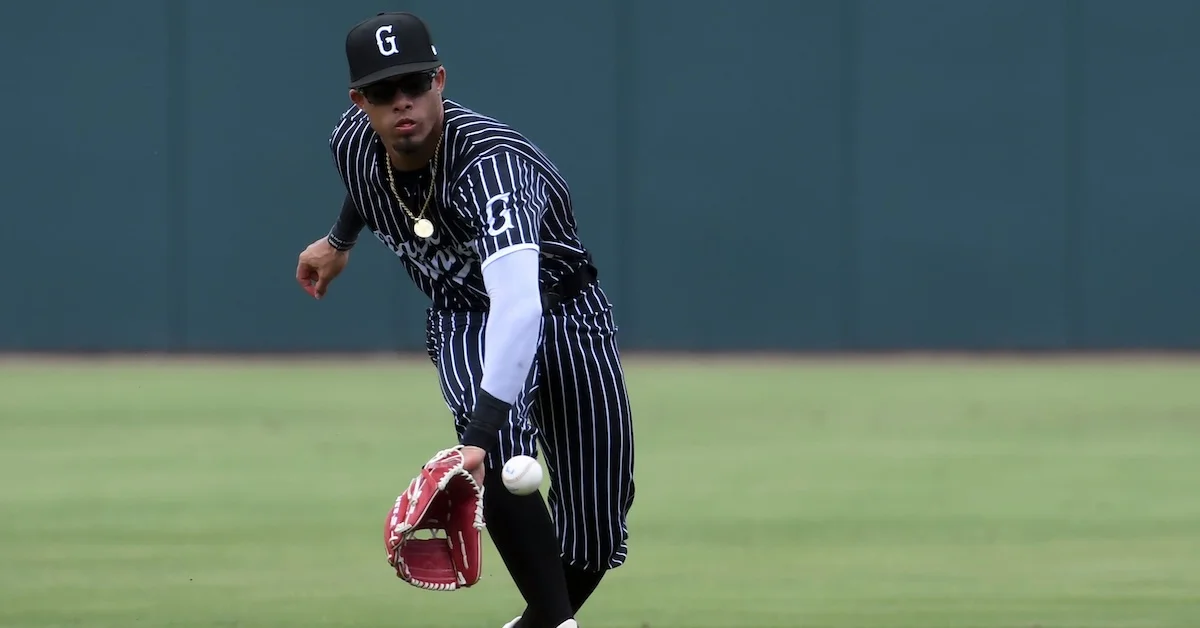
Franklin Arias Photo: Alex Martin/Greenville News/ USA Today Network via Imagn Images

Below is an analysis of the prospects in the farm system of the Boston Red Sox. Scouting reports were compiled with information provided by industry sources as well as our own observations. This is the sixth year we’re delineating between two anticipated relief roles, the abbreviations for which you’ll see in the “position” column below: MIRP for multi-inning relief pitchers, and SIRP for single-inning relief pitchers. The ETAs listed generally correspond to the year a player has to be added to the 40-man roster to avoid being made eligible for the Rule 5 draft. Manual adjustments are made where they seem appropriate, but we use that as a rule of thumb.

A quick overview of what FV (Future Value) means can be found here. A much deeper overview can be found here.

All of the ranked prospects below also appear on The Board, a resource the site offers featuring sortable scouting information for every organization. It has more details (and updated TrackMan data from various sources) than this article and integrates every team’s list so readers can compare prospects across farm systems. It can be found here.

Red Sox Top Prospects
Rk Name Age Highest Level Position ETA FV
1 Franklin Arias 20.5 AA SS 2028 60
2 Payton Tolle 23.6 MLB SP 2026 55
3 Anthony Eyanson 21.6 AA SP 2027 55
4 Connelly Early 24.1 MLB SP 2026 50
5 Dorian Soto 18.3 R SS 2031 50
6 Juan Valera 20.0 A+ SP 2028 50
7 Enddy Azocar 19.2 A CF 2029 45+
8 Henry Godbout 22.5 A+ SS 2029 45
9 Jake Bennett 25.5 MLB SP 2026 45
10 Kyson Witherspoon 21.8 A+ MIRP 2028 45
11 Justin Gonzales 19.4 A+ RF 2028 45
12 Marcus Phillips 21.8 A+ SP 2028 40+
13 Harold Rivas 18.0 R CF 2031 40+
14 Hector Ramos 18.7 R 2B 2031 40+
15 John Holobetz 23.8 AA SP 2028 40+
16 Sadbiel Delzine 18.4 R SP 2031 40+
17 Miguel Bleis 22.2 AA CF 2027 40+
18 Mikey Romero 22.4 AAA 3B 2028 40
19 Hayden Mullins 25.7 AA SIRP 2027 40
20 Jedixson Paez 22.3 MLB SP 2026 40
21 Tyler Uberstine 27.0 MLB MIRP 2026 40
22 Tyler Samaniego 27.3 MLB SIRP 2023 40
23 Angel Bastardo 23.9 AAA SIRP 2026 40
24 Yoeilin Cespedes 20.7 A+ 2B 2029 40
25 Jhorman Bravo 18.0 R SS 2031 40
26 Eduardo Rivera 22.9 MLB SIRP 2026 40
27 Alec Gamboa 29.3 MLB SP 2026 40
28 Gage Ziehl 23.0 AA SP 2028 40
29 Brooks Brannon 22.0 AA 1B 2027 40
30 Yordanny Monegro 23.6 AA SIRP 2027 40
31 Allan Castro 23.0 AAA RF 2026 35+
32 Yophery Rodriguez 20.5 A+ CF 2028 35+
33 Marvin Alcantara 21.6 AA SS 2027 35+
34 Mason White 22.7 A+ SS 2029 35+
35 Leighton Finley 22.2 A SIRP 2029 35+
36 Nelly Taylor 23.3 AA CF 2028 35+
37 Blake Wehunt 25.5 AA MIRP 2026 35+
38 Ryan Watson 28.5 MLB SIRP 2026 35+
39 Starlyn Nunez 20.6 A SS 2029 35+
40 Conrad Cason 19.8 R SP 2029 35+
41 Jakson Gamboa 19.3 R SP 2031 35+
42 Berny Ortiz 20.8 R SP 2031 35+
43 Gerardo Rodriguez 20.5 A+ C 2029 35+
44 Dalton Rogers 24.3 AA MIRP 2026 35+
45 Jojo Ingrassia 23.8 A+ SIRP 2027 35+
46 Jose Bello 21.0 A SP 2029 35+
47 Louis Andujar 18.7 R 3B 2031 35+
48 Garielvin Silverio 17.6 R LF 2032 35+
Reading Options
Detail Level
Data Only
Full
Position Filter
All

60 FV Prospects

Signed: International Signing Period, 2023 from Dominican Republic (BOS)
Age 20.5 Height 5′ 11″ Weight 170 Bat / Thr R / R FV 60
Tool Grades (Present/Future)
Hit Raw Power Game Power Run Fielding Throw
50/60 45/50 40/50 50/50 55/60 55

Arias thrust himself onto the elite prospect map with a big 2024 season, when he hit .309 with nine homers split between the complex and Low-A. He arguably topped that performance last year, climbing three levels as a 19-year-old while hitting .278/.335/.388 and finishing at Double-A. He entered the season as our 14th overall prospect graded as a 55 FV, and has improved to such an excellent degree at Double-A Portland (his OPS is hovering around 1.000 as of publication and his measureable power is up) that he demands an elevation in his grade. Indeed, at this rate, Arias has a non-zero shot of being the top overall prospect in baseball at some point during the next 12 months.

Arias is a line drive shooter with a gorgeous, well-connected swing, and he’s among the toughest minor leaguers to strike out. He does so many things well at the plate. He makes elite rates of contact (88% overall, 93% in zone), tends to hit the ball hard when he connects (39% hard-hit rate), and has some of the easiest hitting mechanics you’ll see. He gets the foot down on time, lets pitches travel deep, manipulates the bat path, keeps his head still, and tracks pitches exceptionally well; you practically have to go frame by frame to find a flaw in this guy’s swing. Analysts and scouts are aligned here: This is a mature hitter with a good approach. Similar to Royals star Maikel Garcia at the same age, Arias has baseball skills in spades and simply needs to grow into his body to add power, which has started to happen.

Arias is also a plus defender. Eric dove deep on his glove last fall — the piece offers a lot of detail, and there’s accompanying video too — but the nuts and bolts are that he’s a polished and well-rounded shortstop. He ranges well to both sides, he’s a good bender who can get the ball out quickly and accurately from all angles, and he’s got a well-calibrated internal clock that keeps his operation under control unless he really needs to hurry. You’d like to see better glovework on scorchers, but that’s the kind of thing that can improve with time. Even if it doesn’t, he’s still quite good there.

This is among the highest-floored prospects in baseball. Arias’ defense at short and his feel for contact should enable him to be an average everyday shortstop at minimum, and any additional strength or maturation in his approach could well push him into dynamic, top-of-the-order All-Star territory.

55 FV Prospects

2. Payton Tolle, SP

Drafted: 2nd Round, 2024 from TCU (BOS)
Age 23.6 Height 6′ 6″ Weight 250 Bat / Thr L / L FV 55
Tool Grades (Present/Future)
Fastball Curveball Changeup Cutter Command Sits/Tops
80/80 45/45 50/55 50/50 50/55 93-97 / 101

Tolle is an XL southpaw whose fastball had the 2024 draft’s most deceptive secondary traits, enough that he was generating plus-plus miss at TCU even though he was only sitting 91. Now Tolle is pumping 95-96 mph as a starter, and his fastball has developed into one of the most dominant pitches in pro baseball. It put him in the express lane to Boston, where he debuted toward the end of his first pro season.

The miss rate on Tolle’s fastball in 2025 was nearly twice the big league average at just north of 40%, the result of both the added velocity and a refined style of attack, as he now elevates his heater more than he did in college. His size (he’s a long-armed 6-foot-6) and his ability to power way down he mound (he generates over seven-and-a-half feet of extension) help to cloak his fastball, and its uphill angle is incredibly difficult for hitters to match. Though aspects of his mechanics aren’t pretty, Tolle’s head is quite still throughout his delivery, he clearly has the size and build of a durable starter, and he’s thrown consistent strikes with his fastball for the better part of the last four years.

Tolle’s secondary pitches are still a work in progress. His cutter looks better this year. It’s harder now, and though it lacks nasty bite, his feel for running it onto the arm-side corner is advanced. He creates fair action on a tailing changeup and mixes in a curve that flashes average. There may yet be growth ahead, as these are mostly new pitches; he barely threw his changeup in college, and his cutter is now several ticks ahead of the slider he had at TCU.

Tolle’s early-season success has all but eliminated talk of moving him to the bullpen. He’s pitching like a good no. 2 thus far in 2026, and while we’re not quite ready to say that he’s definitely going to be that kind of pitcher, it’s a realistic ceiling. If he’s able to maintain this form over a full season, he’ll exceed this FV comfortably on his way to a few All-Star appearances.

Drafted: 3rd Round, 2025 from LSU (BOS)
Age 21.6 Height 6′ 2″ Weight 208 Bat / Thr R / R FV 55
Tool Grades (Present/Future)
Fastball Slider Curveball Changeup Command Sits/Tops
55/55 55/60 55/60 50/60 40/55 94-96 / 100

After two strong seasons at UCSD, Eyanson transferred to LSU for his draft season. He was dominant as the Tigers’ Saturday starter and was the winning pitcher in the CWS finale last summer. The Red Sox selected Eyanson in the third round and signed him for an overslot $1.75 million.

Eyanson is one of the breakout arms of the 2026 season, thanks in part to a velo spike. In college, he’d touch 97 but often sat 92-94; at Boston’s Spring Breakout Game, the righty was living in the 97-99 mph range and hitting triple digits. He’s not sitting there in starts, but he’s averaging 95 mph on the heater, and his velo on everything is up three ticks year over year. That’s made his package of secondaries, which were already quite good, downright hellacious. He’s a high-slot pitcher with an abnormally high release point and distinct movement on the curve, slider, and split (the latter of which he barely used in college and now looks quite promising). All three of those at least flash plus now, and everything plays up because of Eyanson’s control and command. He’s only walked seven hitters in 29.1 professional innings at this point (he’s struck out 42), and he’s able to live in the zone and entice chase beneath it. It took all of five starts for him to demonstrate that he was clearly too advanced for High-A, and it wouldn’t shock us a bit if he overwhelms Double-A hitters to a similar degree.

There’s an obvious comp to Trey Yesavage here. Both are high-slot righties with vertical attacks, outlier release points, and a couple of swing-and-miss secondaries. They aren’t identical, as Yesavage’s release point and extension are a little more extreme and Eyanson is still getting the hang of his splitter, but minor league hitters have found them similarly unhittable. Eyanson looks like a quick-moving no. 3 starter at least, with realistic no. 2 upside. While a 2026 debut isn’t likely, particularly given Boston’s current record, it isn’t out of the question either. He moves into the Top 100 with this update.

50 FV Prospects

Drafted: 5th Round, 2023 from Virginia (BOS)
Age 24.1 Height 6′ 3″ Weight 190 Bat / Thr L / L FV 50
Tool Grades (Present/Future)
Fastball Slider Curveball Changeup Command Sits/Tops
50/50 45/50 55/55 55/60 45/55 92-95 / 97

A deceptive lefty whose moniker will have a certain musicality to it in the local dialect, Early transferred from Army to UVA for his draft year in 2023 and then had a tremendous full-season debut in 2024, during which he K’d nearly 12 per nine across 103.2 innings and reached Double-A. In 2025, the unpredictable lefty completed a meteoric rise to the big leagues, posting a sub-3.00 ERA across 100.1 combined innings at Double- and Triple-A, and ending with four excellent big league starts. This season, he’s matriculated into the rotation, where he’s been effective, if wobbly at times.

Early will throw any pitch in basically any count and change his overall strategy game by game. For instance, last year he made back-to-back big league starts against the A’s, and was elevating fastballs like a power pitcher in one, while using a ton of secondary stuff in the other. His ability to mix pitches is seasoned by deception, as Early has a very quick arm stroke that hitters seem to struggle to parse, and he generates about six-and-a-half feet of extension. He throws two kinds of sliders, one more curt and cutter-ish with gyro spin, the other more of a sweeper. These are his two least dynamic offerings, but they give Early a means of attacking laterally, while his fastball and curveball provide a vertical look. His changeup is his best pitch on pure stuff and projects to plus at peak thanks to his arm speed. The rate at which Early has developed is amazing, and speaks to both his coachability and what the Red Sox have done to nurture his growth. He’s a mid-rotation starter.

Signed: International Signing Period, 2025 from Dominican Republic (BOS)
Age 18.3 Height 6′ 3″ Weight 185 Bat / Thr S / R FV 50
Tool Grades (Present/Future)
Hit Raw Power Game Power Run Fielding Throw
20/45 50/60 20/60 55/50 45/55 60

Soto is a talented and electric middle infield prospect with big power potential from both sides of the dish. A physical switch-hitting shortstop (though he might be a second or third baseman long-term), Soto got stronger during the commitment window that led up to signing with Boston for $1.4 million in January of 2025. He was the 11th-ranked player on the International Board, essentially graded as the sort of prospect who’d be drafted in the comp or early-second round, but his look early in pro ball is even more sensational and has already caused him to be elevated into the area associated with a pick in the middle of the first. He slashed .307/.362/.428 during his DSL debut and entered the season as the only unanimous Pick to Click among the three of us who contribute to prospect analysis here at FanGraphs.

Soto was promoted to Boston’s domestic complex roster in Fort Myers, where he’s striking out a good bit more during the first few weeks of the 2026 season than he was last year. Soto is incredibly physical for his age, and even on a roster full of athletic projection types, he stands apart as the biggest and strongest guy. He has some bad mechanical habits (he’s a bucket strider as a left-handed hitter), but his hand speed from both sides of the plate is pretty wild. His right-handed swing is more comfortable-looking than his left-handed swing right now, which is part of where the Ketel Marte comp one of our sources put on him is coming from. Some of that is also due to Soto’s size, which by the time he’s reached physical maturity in his mid-20s could force him off of shortstop. Emphasis on “could,” though. Soto is very twitchy and athletic, he’s incredibly agile for his size, he has plenty of arm strength, and he plays defense with the flair and charisma of a dynamite shortstop. He’s really talented, and he should keep developing there just in case he can mature in the Goldilocks Zone, where he gets stronger but remains lithe enough to stick.

There is definitely hit tool risk here, both because of what Soto’s left-handed swing is doing to his plate coverage right now, and because his chase data (35% last year, a more palatable 28% so far this season) is a little spooky. But he is also a potential superstar who hits with power from both sides and plays impact shortstop defense. We value his ceiling enough to sneak him onto the Top 100, with the caveat that there might be an offseason re-evaluation if he K’s at a 25% clip all summer.

Signed: International Signing Period, 2023 from Dominican Republic (BOS)
Age 20.0 Height 6′ 3″ Weight 210 Bat / Thr R / R FV 50
Tool Grades (Present/Future)
Fastball Slider Changeup Command Sits/Tops
60/70 50/60 45/60 30/50 95-99 / 100

Valera was arguably a popup guy both in 2024, when he reached Low-A for seven starts as an 18-year-old, and then again last year, when he showed up to spring training bumping triple digits. Elbow soreness knocked him out for most of the summer, but in 10 High-A starts on either side of that extended absence, the righty more than held his own, notching a 27.5% strikeout rate and allowing a meager 6% walk rate. It appeared that Valera had possibly leveled up again following a dominant outing against Hub City this April, but unfortunately he re-injured his elbow in his next start. He’s out for the year recovering from Tommy John surgery.

When healthy, Valera had the look of a starting pitching prospect with top-of-the-rotation potential. He channels his elite arm strength into two different fastballs and has some feel for working the four-seamer up and the sinker down. He doesn’t always execute his slider, but his best ones are easily plus with tight and firm break. The most pleasant development this spring was how good his change looked, a low-90s bowling ball with late dip and surprisingly good locations at or beneath the bottom of the zone.

Valera’s command is a work in progress, and his powerful delivery has a few moving parts that complicate the youngster’s timing. He has a moderate-to-high-effort motion — with a noticeable extra tick of exertion on the fastball — with a long arm path and a recoiled finish. It’s not violent or out of control, though, and given time and reps, we see a path to average command.

The injury, the multi-grade leap we need to see in his command, and unpolished slider feel make the gap between where Valera is now and where he could wind up pretty large. If everything comes together, though, the ceiling is extremely high here. This is an athletic and large-framed lad with the build to eat innings, 70-grade arm strength, and a path to three plus pitches. There aren’t many guys who check all those boxes. He projects as a no. 2 or 3 starter and is one of the handful of arms in the minors with ace upside. It’s enough to justify elevating him into the 50 FV tier, even though we’re not going to see him on the field until next summer at the earliest.

45+ FV Prospects

7. Enddy Azocar, CF

Signed: International Signing Period, 2024 from Venezuela (BOS)
Age 19.2 Height 6′ 2″ Weight 170 Bat / Thr R / R FV 45+
Tool Grades (Present/Future)
Hit Raw Power Game Power Run Fielding Throw
30/50 45/60 30/50 55/55 40/50 55

Azocar signed for $40,000 in the 2024 international class, a deal that looks like a massive bargain right now. The Venezuelan outfielder is hitting .312/.363/.552 in his second spin through Low-A, but it’s the way he looks, and the projection left, that makes him such an enticing prospect.

Physically, Azocar brings to mind all of the descriptors you like to read about in a prospect: He’s high-waisted with broad hips and shoulders, sinewy with wiry strength already and a chance to fill out and develop plus power at maturity without sacrificing much speed. Excitingly, some of this development is happening already. He’s swinging the bat with noticeably more verve this season — his measurable power and bat speed are up — and he’s already equaled his home run total from 2025. He swings hard but under control, and while there’s some length to his bat path, he has enough bat speed to compensate. Like just about any 19-year-old, there’s room for improvement in his swing decisions, but his pitch recognition looks okay. He’s able to adjust to spin and can catch elite velocity at and above the top rail.

Defensively, Azocar projects as an average defender in center. He’s an above-average runner with enough speed for the job, if not enough to be special there. His reads and routes look fine on tape, particularly for a teenager. The variance is pretty wide here, given Azocar’s age and how much physical development could be ahead; a corner outcome wouldn’t be shocking. Even if that happens, he could still be a solid everyday player, as there’s a chance for both an average hit tool and average game power. The arrow is up considerably here.

45 FV Prospects

8. Henry Godbout, SS

Drafted: 2nd Round, 2025 from Virginia (BOS)
Age 22.5 Height 6′ 2″ Weight 190 Bat / Thr R / R FV 45
Tool Grades (Present/Future)
Hit Raw Power Game Power Run Fielding Throw
35/50 40/50 30/45 45/45 40/50 55

Godbout was one of several Red Sox draftees last summer who were selected later than where Eric had them valued in his draft preview. He was ultimately taken 75th overall and signed for a little over $1 million on the strength of his hit tool and glove at second base. This is the odd duck where, in ways good and bad, the player Brendan saw on tape looks a little bit different than he expected based on his reputation.

Let’s start with the hit tool. While Godbout raked at Virginia, the way he goes about his business is unusual. This is a case where nearly unassailable data runs into a more complex visual evaluation. Statistically, he’s performed everywhere, and is again hitting well in High-A, where he has a 123 wRC+ with a 13.1% walk rate and a 19% strikeout rate. He’s good at catching the ball out front — he’s almost exclusively a pull hitter — and efficiently delivering the barrel to the zone, particularly in the lower half. The way Godbout gets to all of that is atypical, though. He has a funky setup where he barely bends his knees, arches his neck forward, has very little hand load and a bit of a bat wrap, and then drifts forward with an elevated front leg. The operation looks stiff, and we have enough concerns about elevated fastballs eating into the elite contact rates he’s posted thus far to round down on the hit tool.

While Godbout was widely seen as a second base-only prospect, the Red Sox have rolled him out at shortstop at High-A. So far, so good. Godbout doesn’t have elite athleticism or a howitzer on his right shoulder, but he fields what he reaches, makes plays at the edge of his range, and tends to get the ball where it needs to be on time. His arm looks solid average on tape. The defensive valuation here is aggressive given his history, but we see enough to project him as an average defender at short. If he’s both a shortstop and a pretty good hitter, he’s not just going to be an everyday guy but a very solid one. We’ll take the under, slightly. For now, he projects as a second-division starter or quality utility guy with a path to more.

Drafted: 2nd Round, 2022 from Oklahoma (WSN)
Age 25.5 Height 6′ 6″ Weight 234 Bat / Thr L / L FV 45
Tool Grades (Present/Future)
Fastball Slider Curveball Changeup Command Sits/Tops
45/45 45/50 45/45 60/60 50/60 91-94 / 95

The Red Sox acquired Bennett from the Nationals this past offseason in a rare one-for-one prospect swap, with Luis Perales heading the other way. The southpaw began the year with five dominant starts in Triple-A and then debuted at the beginning of May amidst Boston’s recent rash of pitching injuries; he’s since been optioned back to Worcester.

Bennett is a plug-and-play lefty starter with plus command and a good changeup. He repeats his relatively simple motion very well, and even though he doesn’t have much of a crossfire, he does a great job of hiding the ball until the last instant. Between that and more than seven feet of extension on average, Bennett has a couple of deceptive elements in his delivery that help his mostly average stuff play up. He’ll touch 95 with his fastballs but sits lower. The primary utility of the heater is to set up his change, a fader with tailing movement that emulates his sinker. He’ll use it against both lefties and righties, and while the visual movement isn’t exceptional, minor league and big league hitters alike don’t see it well. Bennett also mixes in a cutter and a curve, but both are fringy. Notably, when he got into trouble in his debut, he almost exclusively leaned on the change, even without the platoon advantage.

Bennett missed all of the 2024 season recovering from Tommy John surgery, but he’s again averaging more than five innings per start this year. Built like a horse and reasonably stretched out, he projects as a backend starter, with a little bit of upside if he can find a better breaking ball.

10. Kyson Witherspoon, MIRP

Drafted: 1st Round, 2025 from Oklahoma (BOS)
Age 21.8 Height 6′ 2″ Weight 205 Bat / Thr R / R FV 45
Tool Grades (Present/Future)
Fastball Slider Curveball Changeup Cutter Command Sits/Tops
50/50 50/50 60/60 45/55 50/55 30/45 94-98 / 99

Witherspoon spent his freshman season at Northwest Florida State before transferring to Oklahoma, where he was walk-prone in 80 innings during his sophomore year. His delivery while with Team USA during the summer of 2024 was much more controlled and starter-like than it was during his underclass seasons, and that carried over into 2025, as Witherspoon walked just 5.9% of opponents. He was drafted 15th overall and signed for $5 million. He has been struggling a High-A Greenville, both to throw strikes and to miss bats, especially with his fastball.

Witherspoon is a tightly wound athlete with a short, deceptive, vertical arm stroke that appears out of nowhere from behind his head on release; he bears some mechanical similarities to Dylan Cease or a shorter-levered Mark Melancon. He has a downhill mid-90s fastball with enough carry to play at the top of the zone when located, though it’s more vulnerable the lower it lands because of its angle. This is the issue he’s been running into during his debut season, as his fastball has just a 6% swinging strike rate as of publication. He works a cutter and slider off of that to different levels of his glove side; both have roughly the same shape, but the cutter is 88-91 mph, while the slider is 84-88 and has a little more time to break. Witherspoon locates both of those pitches consistently, and his feel for landing them is the lynchpin of his starter projection here, but he needs to spot his heater better.

Witherspoon’s changeup and curveball aren’t as consistent, but they’re arguably the nastiest of his pitches when they’re executed properly. His power low-80s vertical curveball has identifiable pop out of his hand when he tries to dump it into the zone, but huge, hitter-pantsing finish when it’s buried in the dirt. A power upper-80s changeup has bat-missing ability when located. These are chief among the things Witherspoon has to polish. It’s troubling that his fastball’s miss rate has dipped by 33% compared to last year, and this issue is severe enough for us to have nerfed Eric’s pre-draft grade a bit. We still think Witherspoon is going to be an important part of a pitching staff, but if he’s going to throw strikes with his fastball less than 60% of the time, that’s going to be in relief.

11. Justin Gonzales, RF

Signed: International Signing Period, 2024 from Dominican Republic (BOS)
Age 19.4 Height 6′ 4″ Weight 230 Bat / Thr R / R FV 45
Tool Grades (Present/Future)
Hit Raw Power Game Power Run Fielding Throw
30/45 60/60 40/50 40/40 35/40 60

Gonzales is arguably the most divisive prospect in this deep system. Statistically, he’s a standout, a teenager with measurably plus power and excellent performance at three levels now. He’s performing as well as ever at High-A, where he has a 137 wRC+ with six homers and solid walk and strikeout rates in 34 games thus far. Though he’s started to swing and miss a little more this year, the contact and chase data under the hood is generally positive as well. And while a lot of young players, even successful ones, are performing in spite of an immature approach, Gonzales’ isn’t bad. He’s appropriately aggressive and has some feel for the zone and adjusting off the fastball.

The visual evaluation is less rosy, though. He’s a stiff athlete and mover, and his power is more the product of early physical maturation than a twitchy frame or lightning-quick hands. His swing is awkward, long, and at times inside-out, grooved in a way that lets him do damage on balls low in the zone but raises questions about his ability to handle good heat upstairs. He has barrel feel and a powerful lofted finish, but it takes a beat for him to get going; he’s the kind of player where scouts might be inclined to write something like “strength over bat speed” to express that point. This is not what middle-of-the-order sluggers generally look like.

Defensively, Gonzales generally tracks fly balls just fine in right field. He has a plus arm and has put a couple nice plays at the edge of his range on tape. Still, a lack of speed is limiting here, and he’s not getting any faster. All of his value is tied up in the bat, and there’s enough power and contact feel for him to be a useful player in some capacity. This is a player whom the analysts are probably going to like more than the scouts, and we can certainly understand the perspective of those who want to go all in here. The swing is scary enough for us to round him down into a reserve/platoon forecast, though not in a full-throated sort of way. Were we scouting for a team that asked us to place bets on his ultimate role, we’d give at least 20% to the everyday bucket.

40+ FV Prospects

12. Marcus Phillips, SP

Drafted: 1st Round, 2025 from Tennessee (BOS)
Age 21.8 Height 6′ 4″ Weight 250 Bat / Thr R / R FV 40+
Tool Grades (Present/Future)
Fastball Slider Changeup Command Sits/Tops
55/60 60/60 30/45 30/40 94-97 / 100

Phillips went 33rd overall last year and signed with the Red Sox for $2.5 million. While his dad was once a minor leaguer in the Yankees organization, Phillips otherwise took a circuitous route to the first round. He attended high school in South Dakota, was a two-way player at an Iowa community college for a season, and then pitched mostly in relief as a sophomore at Tennessee. It was only as a junior, when he notched a 3.90 ERA and struck out 10.63 per nine out of the rotation, that his prospect stock soared.

Phillips is a pitcher with obvious strengths and weaknesses. He throws hard, up to 98 at the team’s Breakout Game this spring, with a fairly low release point. His mid-to-upper-80s slider is already plus, with wicked two-plane break and a knack for running it off the plate to his glove side. But as the numbers suggest — 8.44 ERA, 20 walks and HBPs, four homers allowed in 21.2 innings — other parts of Phillips’ game are less refined. His change lags considerably behind the slider and fastball, he’s been wild for most of his career, and the slider in particular tends to wind up in the same region. There are a couple markers in his delivery — long arm stroke, heel grind, left knee flexion at landing — that suggest he’s got an uphill battle to average control.

While the relief risk here is substantial, it’s too early to throw in the towel on developing Phillips as a starter. He spent most of his amateur career in the bullpen, and deserves time and reps to see if he can find a third pitch and better control. It’s common for scouts to ultimately project a player to the bullpen but still write in the report some version of “would exhaust as a starter first” and that applies here. Phillips has obvious late-inning upside in relief if his career winds up going that direction.

13. Harold Rivas, CF

Signed: International Signing Period, 2025 from Venezuela (BOS)
Age 18.0 Height 6′ 2″ Weight 170 Bat / Thr R / R FV 40+
Tool Grades (Present/Future)
Hit Raw Power Game Power Run Fielding Throw
20/40 40/55 20/50 60/60 45/60 60

Rivas is a speedy center field prospect who signed for $950,000, the second-highest bonus in Boston’s international amateur class last year. He slashed .258/.393/.384 during his pro debut and was promoted to Fort Myers this season, where he’s already hit a ball two ticks harder (108 mph) than any he struck in 2025. Rivas is a long-levered speedster whose defensive ceiling is meaningful because of his wheels and arm strength. The sinewy outfielder also has an aggressive swing that generates precocious bat speed for such a young, projectable hitter. Rivas’ swing is quite long and bottom-hand dominant, which had us on guard when projecting his hit tool last list cycle, and his 74% contact rate in last year’s DSL wasn’t great. But he has already squared up some big velocity this season and there’s precedent for a swing like his working in a profound way, as Rivas’ cut is a dead ringer for Jackson Chourio’s in its style, but not yet its explosiveness. Here we continue to value Rivas as a potential everyday center fielder with speed, power, and good defense.

14. Hector Ramos, 2B

Signed: International Signing Period, 2025 from Dominican Republic (BOS)
Age 18.7 Height 6′ 1″ Weight 168 Bat / Thr S / R FV 40+
Tool Grades (Present/Future)
Hit Raw Power Game Power Run Fielding Throw
25/50 35/50 25/50 45/40 30/40 45

Ramos, who signed for $500,000, is a well-rounded switch-hitting middle infielder who tracks pitches well from both sides of the dish. His swing is balanced and controlled but also fairly explosive, and he has natural feel for airborne contact. Ramos is a bit stiffer and less athletic than the other infielders on Boston’s FCL roster, and he has mostly played second base so far in 2026 while the others get more reps a shortstop. He also dealt with a hip injury last season, which caused him to be shut down twice and miss about a month in total. Though there’s a less favorable defensive projection for Ramos than some of the other exciting young hitters in this system, he’s a more stable hitter than the others and should immediately get to whatever power he grows into because his swing is already geared for loft. He’s a potential everyday second baseman if he keeps making this much contact.

15. John Holobetz, SP

Drafted: 5th Round, 2024 from Old Dominion (MIL)
Age 23.8 Height 6′ 3″ Weight 190 Bat / Thr R / R FV 40+
Tool Grades (Present/Future)
Fastball Slider Curveball Changeup Cutter Command Sits/Tops
50/55 45/50 45/45 45/50 45/50 50/60 91-95 / 97

Holobetz was a Yankees fan growing up and wore pinstripes at Old Dominion, which must have made for awkward phone calls back home when Milwaukee dealt him to the Sawx in the Quinn Priester trade. After working in a mid-to-high-leverage multi-inning role in school, Boston has developed him as a more traditional starter. His stuff has jumped a tick as well, thanks in part to a slightly lower slot in pro ball.

Holobetz is a great strike-thrower with a clean, up-tempo delivery and a short arm action. He runs the heat up to 97 mph and is built up enough to reach back for it late in outings. While he has three different breaking balls, there isn’t as much differentiation between them as you’d like, and the hard ones in particular seem to break early because hitters don’t chase them much, even when he locates just off the edge of the plate (which happens pretty often; he has good command).

Holobetz is either great at reading swings or can really follow a scouting report (score another for the command), because he takes lunch money from flawed hitters with in-zone vulnerabilities. Less clear is how the stuff will play against hitters he needs to fool rather than overwhelm. He has the arm strength, command, and stamina to start, but in their current form, the secondaries look light for an extended role. It’s worth continuing to play around with different sliders and changeups in the hopes of unlocking something, because he has the other attributes of a good starting pitching prospect. As is, he’s tracking like a backend starter. Even though it seems like a waste of some of his best attributes, you can also see how shorter stints could help everything play up in a sixth- or seventh-inning type role.

16. Sadbiel Delzine, SP

Signed: International Signing Period, 2025 from Venezuela (BOS)
Age 18.4 Height 6′ 5″ Weight 235 Bat / Thr R / R FV 40+
Tool Grades (Present/Future)
Fastball Slider Curveball Changeup Command Sits/Tops
55/60 50/55 50/60 30/45 20/40 94-97 / 100

An enormous teenage righty with upper-90s arm strength and two good breaking balls, Delzine signed for $500,000 in January of 2025 (a big bonus for a pitcher in that market) and very quickly developed plus velocity, as he came to camp touching 94 mph, then was sitting 94-96 and touching 97 by the middle of the year. He only made three starts due to a flexor strain, but despite that, Boston has promoted him to their Fort Myers complex group for his second pro season and, as of this writing, he’s already pitched in as many games as he did all of last year.

Delzine has had yet another little uptick in arm strength and is now scraping 100. His arm slot is a little higher, giving him a 6-foot-8 release height, which creates big downhill angle on his stuff. This helps add depth to each of his breaking pitches, which range from 76-81 mph curveballs to 83-86 mph sliders, with the occasional harder cutter thrown in. A mid-80s changeup is an afterthought right now, but Delzine has one. He has a starter’s size and the foundation of a starter’s pitch mix, but not necessarily a starter’s delivery or athleticism. How Delzine’s conditioning progresses might have a big impact on whether that changes. He’s filled out quite a bit already, to the point where he has “reverse projection,” a nicer way of saying that he might benefit from getting in better shape, which at his age should be pretty easy. His current visage, both bodily and mechanically, is reliever-y. Though the middle range of Delzine’s outcomes look more like a setup man, he has mid-rotation ceiling if his changeup and command progress.

17. Miguel Bleis, CF

Signed: International Signing Period, 2021 from Dominican Republic (BOS)
Age 22.2 Height 6′ 0″ Weight 170 Bat / Thr R / R FV 40+
Tool Grades (Present/Future)
Hit Raw Power Game Power Run Fielding Throw
20/30 55/60 35/50 60/60 45/55 60

Signed for $1.5 million out of the Dominican Republic in 2021, Bleis is a plus athlete with a big leaguer’s wiry strength and a fast bat. He’s been on a roller coaster throughout his career, often struggling mightily at his first exposure to a new level before slowly figuring it out and starting anew a rung up the chain. Such is the case at Double-A right now, where he’s hitting .204/.281/.311 with nearly a 30% strikeout rate a year after posting a 114 wRC+ in High-A Greenville.

Right now, Bleis’ big problem is front door spin, as he’s getting undressed by all manner of right-handed breaking balls. He’s neither on time nor balanced, and is flinching on front door sliders and flailing at breakers in the dirt. It’s not a pure spin recognition issue, as he’s actually doing fine with southpaws, and even took Carlos Rodón deep on a pretty well-located backfoot slider. Bleis is young enough for this to improve, and statistically, he wasn’t nearly so overmatched against spin last year, but this needs to get substantially better for him to profile. There’s otherwise a lot to like about what Bleis does in the box. He has good bat speed, he doesn’t leak much, he can manipulate his bat path, and there’s projectable power as he continues to fill out. Sometimes a guy does a lot right and just can’t really hit; hopefully, that’s not our situation here.

Defensively, Bleis’ plus speed gives him a high floor in center. Reads and routes can be tricky to suss out fully on video; to our eye, he can look tentative at times, but he’s usually directionally correct and his closing speed will buy his way out of small mistakes. An above-average glove at maturity looks realistic.

Overall, this is a tricky projection, as is often the case when big tools intersect with big flaws. Bleis is a player with a wide range of outcomes ahead of him. Teams often ask scouts to place their bets, so to speak, and our distribution would feature everything from an up-down guy to a regular. The median outcome is something like a flawed fourth outfielder. Eric comped him to Jose Siri last year, and a slightly less extreme version of his career seems like a reasonable and realistic projection.

40 FV Prospects

18. Mikey Romero, 3B

Drafted: 1st Round, 2022 from Orange Lutheran HS (CA) (BOS)
Age 22.4 Height 5′ 11″ Weight 175 Bat / Thr L / R FV 40
Tool Grades (Present/Future)
Hit Raw Power Game Power Run Fielding Throw
30/30 60/60 40/55 40/40 40/40 50

Romero ranked 37th on the 2022 Draft Board and was selected 24th overall, where he got a $2.3 million bonus to forego his commitment to LSU. At the time, scouts viewed him as one of the draft’s more polished prep hitters, a sweet-swinging middle infielder who might not stick at shortstop. Lower back stiffness sidelined him for most of 2023 and those issues persisted into 2024. He played well at High- and Double-A after returning to the field and reached Triple-A last season. He struggled there, hitting for some power but also striking out 30.2% of the time. So far this year, the strikeouts are under control but the power has vanished.

Let’s start with the positives. Romero has big raw power and generated plus measurable exit velocities as a 21-year-old last year. He does so with limited obvious effort, just a small hand loop for a load. Evaluators of all stripes love to see this kind of power in a controlled, fairly short-levered swing. Statistically and visually, though, there are a few red flags lurking here. Romero’s trouble with secondaries jumps off the page immediately, as he whiffed on spin more than 40% of the time last season. Swing-and-miss in general was a problem, as his contact rate was below 70% (the big league average is 75%). He’s also prone to chasing, particularly with two strikes. Visually, he doesn’t seem to get the A-swing off all that often. He lets it fly on pitches at the belt and lower middle in, but he otherwise tends to look off balance or use a gentler, sometimes inside-out cut on pitches on the outer half.

At third base, Romero’s hands are pretty good but the rest of the package looks light. At his speed, he isn’t especially rangy, and both his throwing accuracy and the time it takes him to get rid of the ball are below average. He’s also playing some second base, which redistributes some of the pressure from the latter issue onto the former.

Ultimately, Romero is going to go as far as his power takes him. It’s a potential carrying tool, and can play like one even if he’s an otherwise flawed hitter. That would require a big change in his approach, though, as he’s more of an aggressive hitter than a guy who militantly hunts his pitch. At 22, he’s young enough to take a step forward here, and perhaps positive walk and strikeout rates in Worcester are an early sign that he’s trending that way. He projects as a power-first utility player, with unusual thump for a guy who can cover second base.

19. Hayden Mullins, SIRP

Drafted: 12th Round, 2022 from Auburn (BOS)
Age 25.7 Height 6′ 0″ Weight 194 Bat / Thr L / L FV 40
Tool Grades (Present/Future)
Fastball Slider Changeup Command Sits/Tops
45/50 55/60 40/50 35/40 91-94 / 95

After an injury-plagued career at Auburn, Mullins has taken the ball pretty reliably as a starter in Boston’s system. He spins the ball well and his mix is difficult to classify. He’ll throw a breaker anywhere from 75 to 85 mph, and it isn’t clear how many different pitches he’s working with, and to what degree he’s just adding and subtracting length and movement. Whatever you want to call it, his breaking stuff is effective right at the very top of that band, and also a few ticks lower, where lefties in particular seem bamboozled by the pitch’s late dip. The rest of the package is vanilla, as he gets above-average, but hardly special, tail on his low-90s fastball. He’ll flash an average change, though not very often this year, as he isn’t throwing it much these days. With his control and command, Mullins looks like a better fit in relief at the end of the day, and he projects as a second lefty out of the ‘pen.

20. Jedixson Paez, SP

Signed: International Signing Period, 2021 from Venezuela (BOS)
Age 22.3 Height 6′ 1″ Weight 170 Bat / Thr R / R FV 40
Tool Grades (Present/Future)
Fastball Slider Curveball Changeup Cutter Command Sits/Tops
30/40 45/50 50/50 50/55 50/50 55/70 89-92 / 93

Paez has been a notable prospect for several years now and graced our Top 100 list last season. He battled injuries throughout 2025, and after the Red Sox opted not to put him on the 40-man roster last fall, the White Sox selected him second overall in the Rule 5 Draft. He broke camp with the big league club and made three appearances before Chicago threw in the towel and shipped him back to Boston. He’s been dinger-prone at Double-A thus far.

Paez has the body control and grace of an Olympic ice skater and just about the cleanest arm swing you’ll see. He’s one of a few guys in this system with 80 control (he’s surrendered 53 walks in 318.1 professional innings), and one of the few guys in all the minor leagues with a shot to grow into 80 command one day. And he’ll need to, because his arm strength is well below average: He’s sat either side of 90 with the fastball in some outings this season, down from previous years. No matter how good your command, no matter how enticing your secondaries, it’s tough to survive as a righty with Paez’s blend of fastball velocity and shape; any uptick in arm strength would be useful here.

The aforementioned secondaries are good, if perhaps a tad more visually appealing than they are effective. His change darts and dives like a screwball, his curve has lovely 11-5 snap, and even his slider and cutter have an aesthetically pleasing arc to them. None project as big bat-missers, but the variety pack gives him paths to attack hitters from both sides, and his feel for location and execution helps them play up. Modern baseball is often unkind to guys with this skill set. It’s tricky to forecast Paez, with his slight build, limited history of working deep into games, and recent vulnerability on contact (he’s allowed eight homers in the 30 innings he’s thrown since the start of 2025) as a traditional starter. We’re leaving the no. 5 projection on him for now, but without a velo bounce back, he’ll probably be more like a strike-throwing depth arm.

21. Tyler Uberstine, MIRP

Drafted: 19th Round, 2021 from Northwestern (BOS)
Age 27.0 Height 6′ 1″ Weight 200 Bat / Thr R / R FV 40
Tool Grades (Present/Future)
Fastball Slider Changeup Command Sits/Tops
40/40 50/50 55/55 50/55 92-93 / 95

Uberstine was a late bloomer in college and an unheralded 19th-rounder out of Northwestern. He’s had to prove himself as a starter at each minor league level, and after a strong campaign at Triple-A last year (3.56 ERA, 10.09 SO/9, 3.66 BB/9 in about five innings per outing), he debuted with the Red Sox in long relief this April.

Uberstine’s mechanics are simple. He works on the first base side of the rubber, strides nearly straight down the mound, lands cleanly, and manages to throw with moderate-high effort without any excess head movement. He hides the ball well and has a short arm path to his low-three-quarters release. It’s a delivery that facilitates both command and deception, and it helps him get away with a mix of fringy and average stuff. Uberstine can touch 95 but lives 92-93 and tends to pitch backwards. The slider/cutter (it looks like the former, but Synergy classifies it as the latter) and change are sharper, in the upper 80s, and play well together but aren’t big swing-and-miss pitches on their own. His sweeper is slow, without big movement, and works best as a change of pace.

Uberstine is nearly 27, and while you can never rule out further development in this day and age, the paint looks fairly dry here. He’s on the IL with shoulder soreness at the moment, but provided that he returns without any lingering complications, he looks like a ready-made depth starter or multi-inning relief option.

22. Tyler Samaniego, SIRP

Drafted: 15th Round, 2021 from South Alabama (PIT)
Age 27.3 Height 6′ 4″ Weight 206 Bat / Thr R / L FV 40
Tool Grades (Present/Future)
Fastball Slider Changeup Command Sits/Tops
55/55 50/50 40/50 55/60 92-94 / 95

Originally drafted by the Pirates, Samaniego quickly experienced a velo bump in pro ball and reached Double-A in his first full season. Often injured, he spent parts of four consecutive years in Altoona, seemingly stuck on the roller coaster that lies just beyond the stadium’s right field fence. The Red Sox pried him away in the Johan Oviedo trade this past winter, and after just four Triple-A appearances, summoned him to Boston. He started his big league career on the right foot with 15 scoreless innings out of the chute.

Samaniego works with three low-to-mid-90s fastballs, which he’s thrown about 70% of the time this far. Neither the sweeper nor the change is special in a vacuum, but they’re effective in part because hitters can’t really sit on them. There’s an old school feel to Samaniego’s success thus far: He adds and subtracts velo and movement on all his pitches, uses both sides of the plate, changes the eye level, works the edges, and maintains his release point and arm speed across his arsenal. It’s not the kind of repertoire that catches your eye, but it might be enough to keep him employed as a contender’s second or third lefty for several years.

23. Angel Bastardo, SIRP

Signed: July 2nd Period, 2018 from Venezuela (BOS)
Age 23.9 Height 6′ 1″ Weight 175 Bat / Thr R / R FV 40
Tool Grades (Present/Future)
Fastball Slider Curveball Changeup Command Sits/Tops
50/55 50/55 50/50 60/60 30/45 93-97 / 98

Bastardo had Tommy John in late June of 2024 and then was selected by Toronto in the Rule 5 Draft that December. The following spring, he was put on the 60-day IL, where he remained all year. At one point, he was scheduled to pitch in the Arizona Fall League, but the Blue Jays decided not to do the start-stop-start ramping cycle that would’ve entailed. Instead, he competed for a big league job this March, and was returned to Boston when Toronto decided not to put him on the Opening Day roster.

The Red Sox have finally started developing Bastardo as a reliever, as has long seemed his destiny due to below-average control and a fastball that plays beneath its velocity. His best pitch is his changeup, a plus 84-88 mph offering that dies as it approaches the plate as if an invisible parachute has popped out of the back of it. He can manipulate his breaking ball’s shape, but he doesn’t land his slider regularly, and his high arm slot is the sort that imparts hittable shape and angle on his heater. His velo hasn’t jumped in short stints yet, which gives him the look of a middle relief prospect. Bastardo is off to a strong, if slightly wild, start at Triple-A and has a shot to debut later this year.

Signed: International Signing Period, 2023 from Dominican Republic (BOS)
Age 20.7 Height 5′ 8″ Weight 185 Bat / Thr R / R FV 40
Tool Grades (Present/Future)
Hit Raw Power Game Power Run Fielding Throw
20/30 45/50 35/50 40/40 30/45 40

Despite some normative similarities, Cespedes is unrelated to former Red Sox legend Yoenis Cespedes. This Cespedes was signed out of the Dominican Republic for $1.4 million in 2023, when he was the 18th-ranked prospect in that year’s class entirely because of his bat. He broke camp with Salem last year, and had a better season under the hood in terms of his measurable power and contact rates than he did on the surface. Thus far in 2026, the numbers have caught up, as he’s hitting .308/.360/.551 with eight homers at High-A.

Cespedes can punish a heater. He’s strong with fast hands, and he both times and gears his swing in a way that lets him yank fastballs hard in the air. The trouble comes on everything else, as both his pitch recognition and swing mechanics leave him vulnerable to soft stuff. Cespedes has a big leg kick, loads his hands high, and leaks the hip early. His approach is immature in other ways — he chases often, particularly with two strikes, and doesn’t have much feel for the zone — which exacerbates the issue.

Cespedes is playing a mix of second base and shortstop, and projects to the former. His speed is stretched at short, and while his arm is strong enough, he isn’t especially accurate. In time, it may be worth exploring third base and perhaps the corner outfield to build versatility, as Cespedes will likely be too flawed a hitter to play every day. He projects as a useful depth infielder with power.

25. Jhorman Bravo, SS

Signed: International Signing Period, 2025 from Venezuela (BOS)
Age 18.0 Height 6′ 1″ Weight 170 Bat / Thr L / R FV 40
Tool Grades (Present/Future)
Hit Raw Power Game Power Run Fielding Throw
20/40 30/50 20/50 55/55 40/50 55

Bravo popped onto the radar because of his 2025 data (he posted an 88% contact rate during his debut season), and would have based on his visual scouting look in Florida this year, albeit for entirely different reasons. On paper, Bravo looks like a slappy contact hitter with special feel for the barrel but no power (16% hard-hit rate). In person, he has a bloodthirsty low-ball swing with an epic finish in the dirt behind him. He also looks like a prospect with strikeout risk, as his front foot is often bailing down the first base line when he swings, and his scoopy bat path leaves Bravo vulnerable to elevated fastballs away from him. When he gets a ball in his wheelhouse on the inner third of the dish, his swing looks like that of a baby Darryl Strawberry. Because the BoSox FCL roster is chock full of shortstops, Bravo’s reps there have been limited, but he’s looked competent on the opportunities he’s gotten. The incongruity between Bravo’s scouting look as a hitter versus his DSL data from last season is fascinating, but not deleterious. Most of what’s happening here is positive and exciting, giving the Red Sox yet another fun young infielder to monitor.

26. Eduardo Rivera, SIRP

Drafted: 11th Round, 2021 from Colegio CADEST (PR) (OAK)
Age 22.9 Height 6′ 7″ Weight 237 Bat / Thr L / L FV 40
Tool Grades (Present/Future)
Fastball Slider Changeup Command Sits/Tops
55/55 55/55 50/55 35/40 93-94 / 97

Rivera started a WBC contest on home soil in March and then made his big league debut a month later. That’s a heck of a run for anyone, much less a 23-year-old who was released by the A’s less than two years ago.

Rivera works from an over-the-top slot with a high release point and above-average extension. His delivery isn’t pretty, especially at finish, as a head whack, spinal tilt, and heel grind spin him off the mound toward first. It’s not a delivery you associate with a starter, but he’s mostly worked in that role as a Red Sox farmhand, including a couple of starts in Portland this season.

Rivera sits 93-94 with both fastballs and can touch the upper 90s. His best weapon is an above-average two-plane slider, and he has a change that flashes 55 as well. He maintains his arm speed well, but his execution comes and goes. He doesn’t command the ball precisely, but he tends to keep his four-seamer up in the zone and his sinker and change down, and he’s near the box enough to project viable control. He has the look of a middle reliever, and the length he can provide gives managers flexibility in how they deploy him.

27. Alec Gamboa, SP

Drafted: 9th Round, 2019 from Fresno CC (LAD)
Age 29.3 Height 6′ 1″ Weight 205 Bat / Thr B / L FV 40
Tool Grades (Present/Future)
Fastball Slider Curveball Changeup Command Sits/Tops
50/50 50/55 50/50 50/50 40/40 93-95 / 98

At 29, Gamboa is one of the oldest players we’ll rank this list cycle. He’s had a full baseball life already. He originally went to Fresno State out of high school, but blew out and was an elder statesman at Fresno City College when the Dodgers plucked him in the 2019 draft. He slowly climbed the ranks with L.A. and sort of developed into the pitching equivalent of Ryan Ward: talented enough for the big leagues, but stuck in Oklahoma City in an org overflowing with pitching depth. He spent most of 2025 dealing for Lotte in the KBO, a stint he parlayed into a minor league contract with Boston this past winter. He made his long overdue big league debut earlier this season, firing a scoreless inning and striking out two.

Gamboa’s rock-and-fire delivery feeds into a high overhand release. He sits in the low-to-mid-90s throughout his starts with good, if unexceptional, carry. The curve is a shapely steal-a-strike offering, while the slider is a tight and hard breaker that flashes above average. It looks like he takes something off on his secondaries, particularly his changeup, though the pitch is playing just fine in Triple-A this year. Gamboa is peppering the zone this season, which is unusual, as he’s been more of a nibbler and fringy control pitcher throughout his career.

There aren’t a ton of stretched lefties with average arm strength and a starter’s repertoire toiling in the minors. Crazy as it is to say about a 29-year-old with very little major league experience, this looks like a no. 5 starter, or at the very least a perfectly fine one-time-through guy. Gamboa’s below-average command and lack of a bat-misser may ultimately get exposed at the highest level, but there are a half-dozen clubs around the league who could justify giving him a look in their rotation tomorrow. For his sake, hopefully Gamboa can find his way into one of those organizations in short order.

28. Gage Ziehl, SP

Drafted: 4th Round, 2024 from Miami (NYY)
Age 23.0 Height 6′ 0″ Weight 223 Bat / Thr R / R FV 40
Tool Grades (Present/Future)
Fastball Slider Curveball Changeup Cutter Command Sits/Tops
40/40 45/50 40/45 45/50 45/50 70/70 90-94 / 96

Even though Ziehl was drafted less than two years ago, he’s already on his third organization, and he switched his socks from white to red in the Jordan Hicks trade over the offseason. Eighty control has presumably been one reason he’s enticed so many clubs, and between that and his ability to spin the ball and locate a sinking change, he has the look of a starting pitching prospect. He’s lowered his arm slot a bit this year, which on paper looks like a good match for his drop-and-drive delivery.

Ziehl’s delivery is clean and easy, and he repeats it well. His fastball lives in the low 90s, which undersells his arm strength: There isn’t a ton of separation between that and his cutter (either side of 90) or slider (mid-to-upper 80s), and even his curve gets in the low 80s. Those three offerings have distinct shapes, while the change contributes to a well-rounded movement profile. At the risk of sounding like a picky little jerk: Is there a chance Ziehl throws too many strikes? He’s only walked 22 hitters in 135.2 professional innings and has been hit hard (42 hits, five homers in 28.9 innings) this year at Double-A. There’s an old school solution to dealing with hitters getting a little too comfortable in the box, and if there’s anyone you’d trust to wield that power responsibly, it’s Ziehl. He projects as a no. 5 starter.

29. Brooks Brannon, 1B

Drafted: 9th Round, 2022 from Randleman HS (NC) (BOS)
Age 22.0 Height 5′ 11″ Weight 210 Bat / Thr R / R FV 40
Tool Grades (Present/Future)
Hit Raw Power Game Power Run Fielding Throw
35/40 70/70 45/55 30/30 35/40 55

Brannon is a power goof with a short, rock solid build. He’s been developed as a catcher throughout his career, though most scouts expected him to wind up at first base, which has finally come to pass this season. Perhaps not coincidentally, he’s flourished with the bat in 2026, and is hitting .317/.429/.762 (190 wRC+) with seven dingers and a career high 15.6% walk rate. He’s still striking out more than you’d like, but his swing-and-miss numbers are better overall, and down considerably against fastballs. He’s made a slight adjustment to his swing and setup this year as well. He used to step in the bucket toward third, but has now fully spread out and doesn’t have a stride at all, which seems to be helping him stay in and cover the plate. He gets low and lets it fly in a way that reminds us of Tyler White, though Brannon is primarily a middle-of-the-field shooter. Like White, he could have a productive, bat-only prime.

Signed: July 2nd Period, 2019 from Dominican Republic (BOS)
Age 23.6 Height 6′ 4″ Weight 200 Bat / Thr R / R FV 40
Tool Grades (Present/Future)
Fastball Slider Curveball Changeup Command Sits/Tops
50/55 45/55 50/50 40/50 30/45 92-95 / 96

Monegro was sidelined with Tommy John right before we published last year’s Red Sox list. His blurb from last year has otherwise been reproduced here: Monegro was a little slow to leave rookie ball, but once he seemed ready to do so, the Red Sox accelerated his promotion pace and he pitched across three levels in 2023. In 2024, he had something of a bat-missing breakout, fanning 11 per nine at High-A Greenville while working a career-high 76 total innings.

Monegro has a starter’s frame at a high-waisted 6-foot-4, but his delivery is erratic and inconsistent, featuring trunk tilt to get him to a high arm slot. He mixes and matches many different pitches with late, nasty movement. He peppers the top of the zone with 94-mph fastballs and upper-80s sliders, then buries overhand curveballs and tail/sink changeups toward the bottom. It’s a well-developed pitch mix that at times suffers from imprecise execution. Monegro looks like a useful multi-inning reliever or swingman.

35+ FV Prospects

31. Allan Castro, RF

Signed: July 2nd Period, 2019 from Dominican Republic (BOS)
Age 23.0 Height 6′ 0″ Weight 170 Bat / Thr S / R FV 35+
Tool Grades (Present/Future)
Hit Raw Power Game Power Run Fielding Throw
30/40 50/55 35/50 45/45 45/50 55

Castro is a switch-hitting outfielder with a tweener skill set. He’s a better hitter from the left side, where he’s got a pretty and connected swing, and is capable of making contact throughout the zone even though the path is grooved. Castro’s bat isn’t especially quick, and good velocity will likely pose a real challenge for him. There’s less verve to his righty swing, and although it isn’t the case this season, historically his numbers against southpaws are light enough to suggest that he’s probably going to wind up playing mostly against right-handed pitchers. Defensively, Castro plays hard but doesn’t have the speed to cover center in more than an emergency capacity. He projects as a fifth outfielder with a little upside if the game power grade in particular proves to be light.

Signed: International Signing Period, 2023 from Dominican Republic (MIL)
Age 20.5 Height 6′ 1″ Weight 185 Bat / Thr L / L FV 35+
Tool Grades (Present/Future)
Hit Raw Power Game Power Run Fielding Throw
30/40 45/50 30/45 60/60 30/45 55

Rodriguez was part of the return in last season’s Quinn Priester trade (John Holobetz was the other player). Back for a second tour of High-A, Rodriguez is hitting for considerably more power this year. He had five homers in 104 games last season but already has 10 in about a third of that so far, with an uptick in measurable power to go alongside. Like most 20-year-olds, he’s stronger year over year, but this seems more like a case of different swing intentions than a physical transformation. Rodriguez has added a leg kick and a bat wrap to his lengthened cut, and is swinging with more effort. He’s getting to more power, but it’s also coming with more swing-and-miss and less discernment. He doesn’t have a particularly fast bat and even though he’s young, his isn’t a body to project on much.

While Rodriguez can really run, his feel for center field isn’t good. He takes a lot of jittery routes, his hands aren’t great, and he’s started to play a lot of corner outfield this year as he’s fallen behind in the defensive pecking order. A good arm gives him a shot to play right and versatility across the outfield. In a variety of ways on both sides of the ball, Rodriguez is a tweener. He has paths to a reliable reserve role, but absent an obvious carrying tool, he looks like more of an optional depth outfielder.

Signed: International Signing Period, 2022 from Venezuela (BOS)
Age 21.6 Height 5′ 10″ Weight 157 Bat / Thr R / R FV 35+
Tool Grades (Present/Future)
Hit Raw Power Game Power Run Fielding Throw
20/30 30/40 20/35 60/60 50/60 60

While Alcantara is still quite young for Double-A, he has the look of a low-variance glove-first utility player. He’s a plus runner with plenty of range in all directions and a strong enough arm to make plays from the six hole. You’d perhaps like your gloveman to show a little more polish — his hands are good but unexceptional, and he fumbles the transfer often enough that you start to notice — though there’s runway for time and reps to work their magic here.

At the plate, Alcantara is an aggressive hitter who could develop fringy power. He hasn’t brought much juice into games yet, as the combination of a deep load, long swing, and fair bat speed means he’s often hitting it deep and on the ground, and the moving parts in his swing sacrifice barrel accuracy. He’s been a meager Double-A hitter thus far — .218/.281/.313 in 122 games now — and while he should get better in time, the bat will likely always be light.

34. Mason White, SS

Drafted: 4th Round, 2025 from Arizona (BOS)
Age 22.7 Height 5′ 11″ Weight 176 Bat / Thr L / R FV 35+
Tool Grades (Present/Future)
Hit Raw Power Game Power Run Fielding Throw
30/35 45/50 40/45 50/50 40/45 50

White was Boston’s fourth-rounder in last year’s draft, signing for a little more than $640,000. He’s a second baseman with power and a swing to reach it in games. He has a high leg kick, large stride, high hands and a steep swing that lets him golf down-and-in pitches out of the ballpark. There are obvious challenges coming against pitchers with better fastball velocity and command, and we’re concerned that the way he strides and lands will leave him vulnerable against quality spin as well.

White is a smooth defender. Though not especially rangy, he fields what he reaches, and he’s able to get the ball out quickly and accurately from all sorts of angles and contorted body positions. Second base is the better fit overall, but he can handle short as well, and the versatility will be appealing if he can hit for even fringy power at the highest level. He has a puncher’s chance to do so.

35. Leighton Finley, SIRP

Drafted: 6th Round, 2025 from Georgia (BOS)
Age 22.2 Height 6′ 5″ Weight 225 Bat / Thr R / R FV 35+
Tool Grades (Present/Future)
Fastball Slider Changeup Command Sits/Tops
50/55 45/55 35/40 30/40 93-96 / 97

A former Savannah Banana (though they were in the Coastal Plain League at the time), Finley was Boston’s sixth-round pick last year. As a stretched out SEC arm with decent numbers, mid-90s velo, and a smattering of potentially average secondaries, it was perhaps a little surprising he lasted so long. In an effort to take advantage of his considerable stature, and perhaps to cure the dingeritis he battled at Georgia, the Red Sox have had him raise his slot this year, as he’s now coming over the top in lieu of the more traditional three-quarters release he had in 2025. Boston’s done a nice job with all sorts of dev tweaks, but this particular one hasn’t taken just yet. Finley has been uncharacteristically wild, isn’t missing bats — he’s having trouble executing his slider in particular — and the operation now has a bit of a stiff look to it. Whether he needs more time to acclimate or returns to his old motion, the arm strength and some of his best breaking balls are intriguing. He looks like a potential reliever.

36. Nelly Taylor, CF

Drafted: 11th Round, 2023 from Polk State CC (FL) (BOS)
Age 23.3 Height 6′ 0″ Weight 180 Bat / Thr L / L FV 35+
Tool Grades (Present/Future)
Hit Raw Power Game Power Run Fielding Throw
30/40 50/55 35/45 60/60 40/50 30

Taylor was a priority 11th-rounder ($300,000) out of Polk State and has a chance of becoming the school’s first big league alum since Alec Asher. He’s a tool shed with power and speed, but Double-A pitchers have exposed his raw feel to hit, and have struck him out about a third of the time thus far in 2026. Some swing and miss is inevitable with the way he swings: Taylor has a big leg kick, a pronounced front side leak, and a daddy hack, all of which looks great when he times a pitch up and demolishes it to the pull side. The soft stuff tends to get him off balance, though, and lefties in particular can make him flinch on front door spin.

Defensively, Taylor has the speed for center and may bloom into a decent defender there eventually. He’s still pretty raw there now, as a crowded outfield in Boston’s system has limited his ability to get reps up the middle. Even though the bust risk here is pretty high, Taylor’s still young and only has a couple of years of high-level baseball under his belt. Center fielders with power and speed don’t grow on trees, and we’re keeping him alive on the list for now in the hopes that his hit tool matures to the point where he can at least be a danger bat against righties.

37. Blake Wehunt, MIRP

Drafted: 9th Round, 2023 from Kennesaw State (BOS)
Age 25.5 Height 6′ 7″ Weight 240 Bat / Thr R / R FV 35+
Tool Grades (Present/Future)
Fastball Slider Changeup Cutter Command Sits/Tops
45/50 50/55 40/45 55/55 50/50 92-96 / 98

Wehunt was a late Day 2 pick in the 2023 draft and signed for just $100,000. While always a big guy, Boston’s strength and conditioning program has built Wehunt into a powerful on-mound athlete and helped him find a couple ticks of velo on everything. He can touch the upper 90s with his fastball and mixes it with a deep arsenal, headlined by his long and flat cutter and a slider with a little more depth. Wehunt has optimized his delivery to throw hard and managed to do so without losing all feel for the zone. He doesn’t look like a strike-thrower, as he’s gigantic, not particularly smooth, and has a head whack so violent it looks like he’s trying to read the numbers on the back of his jersey as he follows through. But he hits the glove plenty with his fastball, and he can get his bread-and-butter cutter to both sides of the plate. He doesn’t have the same feel for his change, but few pitchers do. While he’s being developed as a starter, the stuff/control blend looks a shade light for the job, and he projects as more of a swingman or hybrid arm.

38. Ryan Watson, SIRP

Undrafted Free Agent, 2020 (BAL)
Age 28.5 Height 6′ 5″ Weight 225 Bat / Thr R / R FV 35+
Tool Grades (Present/Future)
Fastball Slider Curveball Changeup Command Sits/Tops
50/50 55/55 50/50 45/45 40/45 92-94 / 95

The A’s selected Watson from San Francisco in the Rule 5 Draft and then quickly dealt the righty to Boston in exchange for Justin Riemer. He made the club out of spring training and has been dinger-prone, though not disastrous, in 17 appearances thus far. The outlier trait here is plus-plus extension, as Watson gets more than seven feet of it. He otherwise has average arm strength and, like a great many pitchers in this system, chucks everything but the kitchen sink. The sweeper/deathball is his best pitch, a low-spin breaker with late movement that almost seems to fool hitters like a changeup does. Everything else is on the fringy-average line. The overall package is that of an optionable reliever, though Boston won’t have that luxury until 2027.

39. Starlyn Nunez, SS

Signed: International Signing Period, 2023 from Dominican Republic (BOS)
Age 20.6 Height 6′ 0″ Weight 155 Bat / Thr S / R FV 35+
Tool Grades (Present/Future)
Hit Raw Power Game Power Run Fielding Throw
20/30 40/50 20/40 60/60 40/55 60

Nunez is a plus athlete with tools on both sides of the ball, but raw feel for the game. Perhaps in a nod to that, the Red Sox are having him repeat Low-A, even though he was a league average hitter there as a 19-year-old in 2025. He’s performing at a similar clip to last year, though his strikeout rate has ballooned from 20.5% to 30.5% amidst what looks like a concerted effort to get him to swing a little less often.

The reason for that adjustment is pretty clear, as Nunez’s swing data was off the charts in a couple concerning ways last year. He swung at 60% of pitches overall and chased 43% of pitches off the plate. His chase rate surged to nearly two-thirds with two strikes, which is one of the most profound statistical outliers we’ve encountered this list cycle. Even though his pitch recognition is also lousy (he’s whiffing on 40% of sliders this year, which is actually an improvement), he’s getting away with this approach because he has bat speed and enough bat-to-ball skill on fastballs to get to some power, and he can bend himself in a way that lets him get underneath and drive pitches down in the zone. But while we almost always want to give young players, particularly guys from Latin America, a lot of leeway on their approach and swing decisions early in their career, Nunez’s are too raw to overlook and seem like a real problem.

Still, Nunez’s defensive ability could get him on a roster even if he winds up being a very flawed hitter. He has a plus arm and a knack for making plays at the edge of his range at short, and the way he’s able to get rid of the ball quickly from a variety of angles and body positions stands out. Some of the nuts and bolts are still a work in progress — he’s a little error-prone, and his throwing accuracy in particular requires refinement — but he looks like he’ll grow into being a good defender there. He’s also seeing time in center. On-the-job training at that spot can be a bear, and he’s battling through some of the things newcomers often struggle with — line drives at him are tough reads, he can get alligator arms near the wall — but for the most part, the tape looks promising. Ultimately, Nunez looks like a slow burning utility prospect, perhaps more of a good watch than a great player.

40. Conrad Cason, SP

Drafted: 8th Round, 2024 from Greater Atlanta Christian HS (GA) (BOS)
Age 19.8 Height 6′ 1″ Weight 220 Bat / Thr R / R FV 35+
Tool Grades (Present/Future)
Fastball Slider Curveball Changeup Cutter Command Sits/Tops
55/60 40/45 40/45 30/40 40/50 20/55 93-96 / 97

Cason was drafted as a two-way player in 2024 and has played all of seven games since. A plus athlete, he’s a more intriguing prospect on the mound, where he has flashed upper-90s heat and a projectable change. The two innings and five strikeouts he registered last May are all that he’ll have on the page until 2027, though, as he blew out last summer and will spend this year recovering from Tommy John surgery. Eric saw him at the Combine prior to the draft and had him evaluated as a pitcher only, but due to the injury, he’ll spend 2026 hitting. For those inclined to dream, he has homered twice on the complex so far, but visual evaluation of his feel to hit does not support long term development on that side of the ball.

41. Jakson Gamboa, SP

Signed: International Signing Period, 2024 from Venezuela (BOS)
Age 19.3 Height 6′ 3″ Weight 215 Bat / Thr R / R FV 35+
Tool Grades (Present/Future)
Fastball Slider Changeup Cutter Command Sits/Tops
50/55 40/55 30/40 45/55 20/45 93-96 / 97

Gamboa is a sturdily-built young starter prospect with an exciting combination of present velocity and mechanical ease and fluidity. He’s throwing three ticks harder out the gate in the FCL than he was last year, sitting in the 93-96 mph range after living in the 90-93 mph range in 2025. He works with sink and tail, and off of that bends in hard low-90s cutters and mid-80s sliders. These don’t consistently turn the corner yet, but they either flash nasty late movement (the cutter) or excellent depth for their velocity (the slider). He’s thrown just a couple of changeups, a distant fourth pitch right now.

Gamboa’s size — he isn’t super projectable for his age, but he’s big and built like a college quarterback — and graceful delivery are both starter-y. He has a powerful, balanced lower body and a buttery delivery even though he’s throwing way harder than he was last season. He needs to hone his command and show he can sustain this velo across many more innings, but the pilot light of a long-term starter prospect is on.

42. Berny Ortiz, SP

Signed: International Signing Period, 2024 from Dominican Republic (BOS)
Age 20.8 Height 6′ 2″ Weight 170 Bat / Thr R / R FV 35+
Tool Grades (Present/Future)
Fastball Slider Command Sits/Tops
55/60 45/60 30/50 94-96 / 97

Of the pitchers who Boston has aggressively promoted to the domestic complex after just one DSL season, Ortiz is one of the older, more seasoned arms, as he’s 20 years old and threw 40.1 innings last year, tied for second on the roster. He’s a skinny and projectable 6-foot-2, and has already come into more velocity this year, as he’s sitting 94-97 mph in his first couple of FCL outings. Ortiz has a short, consistent arm action and regularly peppers the arm-side edge of the plate with rise/run heaters and firm backdoor sliders, which is enough to carve up rookie-level hitters. He needs a third pitch and to expand the locations he’s comfortable attacking. There’s enough raw material here — big arm strength and room for more — to rank Ortiz even though he’s raw as a craftsman.

Signed: International Signing Period, 2023 from Venezuela (BOS)
Age 20.5 Height 5′ 10″ Weight 177 Bat / Thr R / R FV 35+
Tool Grades (Present/Future)
Hit Raw Power Game Power Run Fielding Throw
30/50 40/45 20/35 30/20 45/55 55

Rodriguez is a solid defensive catcher with bat-to-ball skills. Even though he’s running a 12.1% strikeout rate with similarly strong contact numbers under the hood, we aren’t inclined to project much on the bat. He isn’t very projectable, and the way he pulls off the plate is going to limit the damage he can do on contact on pitches on the outer half. Behind the plate, Rodriguez is a quiet receiver with an above-average arm, and he reliably posts pop times in the low-1.90 range. While his throws are sometimes low, they’re often online, and he’s caught nearly a third of prospective baserunners in his minor league career.

44. Dalton Rogers, MIRP

Drafted: 3rd Round, 2022 from Southern Mississippi (BOS)
Age 24.3 Height 5′ 11″ Weight 185 Bat / Thr L / L FV 35+
Tool Grades (Present/Future)
Fastball Slider Curveball Changeup Command Sits/Tops
50/50 45/50 50/50 45/50 35/40 91-94 / 96

Rogers is a relatively short southpaw who nonetheless generates above-average extension because he’s a good athlete and can get way down the mound. That and a low release have helped his fastball generate big swing and miss rates in the mid-minors, even with fringy velo and otherwise unremarkable shape. His change and slider are both on the fringy/average line. His hand speed isn’t great on the former and the break isn’t consistent on the latter, though it flashes above average at its best. Rogers isn’t a great strike-thrower — there are a lot of moving parts in his delivery — and so even though he has the arsenal depth and durability of a length guy, he projects as a reliever. He looks like an optionable lefty who can flex in and out of multi-inning stints, with perhaps a glimmer of upside if his stuff ticks up in shorter outings.

45. Jojo Ingrassia, SIRP

Drafted: 14th Round, 2023 from Cal State Fullerton (BOS)
Age 23.8 Height 6′ 1″ Weight 170 Bat / Thr L / L FV 35+
Tool Grades (Present/Future)
Fastball Slider Changeup Command Sits/Tops
45/50 50/55 50/55 35/40 91-93 / 95

Ingrassia is an athletic lefty of average build. He has some deception in his delivery from both a crossfire and a low release point. That deception gives him an average fastball, and he flashes an above-average slider and change as well.

Lefties with this kind of stuff normally find themselves higher on the list, but two issues keep him down here. The first is injuries. Over the last few years, Ingrassia has torn his rotator cuff, missed time with a swollen shoulder after returning to the field, battled elbow inflammation, dealt with a shoulder problem again, and is now on the shelf with another bout of elbow inflammation. The other, possibly related, problem is control. There have been times in his career when Ingrassia has thrown strikes, and despite a long arm stroke and some moving parts in the delivery, his motion isn’t one where you’d expect him to be wild beyond measure. But he’s also had plenty of stretches where he can’t find the plate, including last year’s Fall League and his brief stint in Greenville earlier this season, and that inconsistency is its own problem. He projects as a solid mid-leverage lefty, but between his health and control there’s enough variance in the profile to value him more like a depth reliever.

46. Jose Bello, SP

Signed: International Signing Period, 2023 from Dominican Republic (SFG)
Age 21.0 Height 6′ 1″ Weight 180 Bat / Thr R / R FV 35+
Tool Grades (Present/Future)
Fastball Slider Changeup Command Sits/Tops
40/45 50/55 40/50 35/45 91-93 / 96

Still on the complex at the time, Bello was the “other guy” to come from San Francisco in the Rafael Devers trade last year. He’s a large, already physically-mature righty who can spin the ball and hit 96 on the gun. He has a big frame and a loose arm (though a long stroke that contributes to scatter when he’s not aligned), but he isn’t especially limber or projectable; perhaps he can turn some of that size into strength and add a little mustard on the ball that way. He’ll likely need to do so to start, as he’s mostly sitting in the low 90s in a length role right now, and his shapely breaking ball is playing like more of a barrel-misser than a chase pitch in that role. Bello’s change is currently fringy, and his arm path is a minor impediment to developing a better one. You can see why the Red Sox were interested, and there’s enough going on here to keep him on the main section. Overall, though, Bello looks more like a moldable arm than a guy tracking for any particular kind of defined, impact role.

47. Louis Andujar, 3B

Signed: International Signing Period, 2025 from Dominican Republic (BOS)
Age 18.7 Height 6′ 0″ Weight 185 Bat / Thr R / R FV 35+
Tool Grades (Present/Future)
Hit Raw Power Game Power Run Fielding Throw
25/50 30/40 25/45 40/40 30/40 40

For the nerds who love pull-and-lift profiles we introduce Andujar, a medium-framed third baseman with an athletic swing, favorable early-career contact profile (80% last year and so far in 2026), and uncanny pull-side timing that allows him to get the most out of limited physicality and tools. The absolute best version of this profile is Isaac Paredes, while other guys flagged for similar early-career indicators (like Dameury Pena and Yassel Soler) are scuffling in the mid-minors. Andujar is playing a mix of second and third base, and it’s unclear if he has the arm for the former. He’s wholly lacks the projectability and physicality of most third basemen, let alone first base or the corner outfield were he to have to slide. We do like Andujar’s swing and the verve he creates with his relatively small body, so we consider him worth surfacing to this degree even though he isn’t the typical rookie ball prospect.

Signed: International Signing Period, 2026 from Dominican Republic (BOS)
Age 17.6 Height 6′ 0″ Weight 204 Bat / Thr L / R FV 35+
Tool Grades (Present/Future)
Hit Raw Power Game Power Run Fielding Throw
25/50 40/50 20/45 40/40 30/40 40

Silverio is a well-rounded lefty stick with mature physicality and a likely left field-only fit on defense. He ranked 32nd on the International section of The Board in January, signed for $1.4 million, and is slated to begin his career in the DSL. The corner-only relegation on defense and lack of physical projection are why he’s currently considered a lower FV prospect than his bonus would otherwise indicate.

Other Prospects of Note

Grouped by type and listed in order of preference within each category.

Bench Bats
Isaiah Jackson, OF
Braiden Ward, OF
Freili Encarnacion, INF
Tsung-Che Cheng, INF
Josue Brito, 1B
Jhoan Peguero, OF
Tavano Baker, LF

Jackson was the Angels’ eighth-rounder last year and came to Boston in exchange for Vaughn Grissom. He has big league physicality but lacks a carrying tool. His 70% contact rate at High-A thus far is manageable but concerning for a corner bat without big power. Ward is among the very fastest players in pro baseball, and his game-changing speed gives him a chance to impact a contender’s roster à la Terrence Gore. Encarnacion is a twitchy athlete with a big swing and at least plus raw. It’s a long, sweeping swing, though, and he has an immature approach. Defensively, he has a plus arm but is starting to see a lot of time at first base. This isn’t a high-probability prospect, but the tools make him a guy you can’t push off the radar entirely.

Cheng is a Taiwanese middle infielder, one of several signees from Pittsburgh’s robust East Asian scouting group to reach the majors. He has very little pop and the bat looks light for regular utility work, but he can fill in at three spots on the infield and put a competitive at-bat together in a pinch. Brito had an incredible second DSL season, during which he slugged .606 and posted a 49% hard-hit rate. He’s a squat first baseman whose game is about contact consistency rather than actual high-end power. Peguero is a super skinny, toolsy, long-levered FCL outfield prospect who K’d at a 37% clip last year, but that has come way down (18.8%) as he repeats the level. Baker, 19, is a hard-swinging Bahamian outfielder (and eventually maybe a first baseman) who has struggled to manifest his raw power in games.

Reliever Monster
Barrett Morgan, RHP
Christian Foutch, RHP
Cooper Adams, RHP
Matt McShane, RHP
Jacob Mayers, RHP
Madinson Frias, RHP
Brady Tygart, RHP
Jeremy Wu-Yelland, LHP
Cole Tolbert, RHP

Morgan was a priority 11th-rounder ($500,000 bonus) out of a Kansas community college. He’s an enormous, slow-twitch athlete with a vertical attack. He’s been sitting in the 93-95 mph range in starts this year, and has a couple paths to a mid-leverage relief role. At his best in college, Foutch touched the upper 90s with spotty command of a plus fastball/split mix. His stuff is down five ticks with Salem right now, and he also isn’t throwing strikes, so we’re tucking him down here for now until we learn more about what’s going on. Adams is up to 98 with a flat angle and good spin on a sweeping slider. His feel for location isn’t good, thanks in part to a big head whack. McShane has an above-average fastball thanks to his extension and high release; he has just a fair breaking ball to go with it.

Mayers was the club’s ninth-rounder out of LSU last year. He’s tall with an overhand slot, and he can run his heater to the upper 90s. He isn’t a great athlete, however, and his power slider is surviving on velo rather than break. It’s worth monitoring the arm strength and control as he eventually transitions into a relief role. Frias is an athletic righty with arm speed and a projectable slider. His velo is down a little this year at Low-A, where he’s been hit hard. Tygart, a 2024 12th-rounder out of Arkansas, is an oft-injured righty. He got hurt again (shoulder) in his first 2025 start. He was up to 96 in that outing and bending in two distinct breakers with 2,700-2,800 rpm, but he’s barely thrown since. Wu-Yelland is a low-slot lefty with a chance for a couple of above-average pitches. The Sox have had to manage his workload carefully and he hasn’t thrown yet this season. Tolbert is a deep sleeper, a former late-rounder just back from Tommy John. He has big league size and could be a 95-and-a-slider guy in short stints.

Spot Starters
Dylan Brown, LHP
Dalvinson Reyes, RHP
Jack Anderson, RHP
Myles Patton, LHP
Yermain Ruiz, RHP

Brown was Boston’s eighth-rounder last year. He’s well built, with good control and command of fringy stuff. He looks like a spot starter. Reyes is a good athlete with size, a gorgeous arm action, and the outline of a starter’s pitch mix. He’s mostly sitting in the low 90s now, and is a candidate for the main section if he can build arm strength. Anderson debuted with the big club earlier this year. He’s an athletic righty with an overhand slot, a loose and clean arm swing, and a couple optimized breaking ball shapes. He sits either side of 90, and a lack of arm strength likely limits him to a depth role. Patton is a soft-tossing lefty who throws strikes with mostly fringy secondaries. You can often find stuff like this in a Triple-A rotation. Ruiz is a complex-level starter with advanced pitchability. He only sits 91-93, but he commands it to locations where it stays out of trouble, and he mixes in sliders/cutters and changeups that diverge horizontally just before they reach the plate, crossing the eyes of the young hitters who struggle to cover both of them. He’s small (5-foot-11) and lacks projection, but he’s a good athlete and looks like a potential starter, albeit a very backend type.

Catchers
Luke Heyman, C
Ronny Hernandez, C
Adonys Guzman, C
Johanfran Garcia, C
Franklin Primera, C
Kleyver Salazar, C
Andruw Musett, C

Heyman has power and an idea at the plate. He has a steep swing, and he crouches low looking to get under a pitch and launch it. Fringy pitch recognition and plate coverage threatens the whole enterprise, and while he has a strong arm, he’s otherwise a below-average defensive catcher. Hernandez does a few things very well: He makes a ton of contact, he tracks pitches beautifully, and he has a great approach. He also has soft hands and blocks well. Still, the things he doesn’t do well (hit for power and, especially, throw) are problematic enough to keep him down here for now. Guzman has a little pop but also a long, steep swing and corresponding vulnerability upstairs. His arm strength is playing down due to a long release and scattered throws.

Garcia, younger brother of Jhostynxon, is a catcher with power and arm strength. A steep swing lets him bring that pop into games, but it comes with a ton of swing and miss. His receiving, throwing accuracy, and approach are all well below par, but he’s young and has a chance to grow into a backup role on tools. Primera is a husky rookie ball catcher who has posted single digit strikeout rates so far as a pro. He has well below-average bat speed. Salazar is a good defensive prospect with no bat. Musett is a 20-year-old Venezuelan catcher with a great-looking swing that hasn’t produced in-game power for a few years now. He allows too many steals to be considered a lock to catch.

Short, High-Octane Complex Arms
Williams Montero, RHP
Jeison Payano, RHP
Juanyerlin Duran, RHP
Angelo Ladera, RHP
Yoandys Veraza, RHP
Christopher Cordero, RHP

Montero, 18, leads off this group because he’s the most athletic of the bunch, and even though he’s a little guy with a high-effort delivery, he’s thrown strikes so far as a pro. His high-spin sinker sits 93-96 with uphill angle thanks to his lack of size and lower arm slot. He can also create big action on a changeup and has a fringy low-spin slider. Payano is a 20-year-old righty whose low-90s fastball has big vertical life. His downer slider lacks spin but tunnels well off the heater. Duran and Ladera are smaller teenage relief prospects in Fort Myers whose fastballs are sitting 93-96 in early FCL play. They’re both deep relief prospects. Veraza, 19, is even more volatile and has 47 walks in 50.2 career innings. He made his first FCL appearance days before publication and sat 95-98, but he also didn’t record an out. Cordero is the youngest pitcher on Boston’s FCL roster and won’t turn 18 until July. He’s a low-release dev project sitting about 90.

System Overview

Wasn’t that fun? Needless to say, Boston has assembled one of the best farm systems in the game. Offseason Top 100 prospects Connelly Early and Payton Tolle have graduated and been backfilled by Anthony Eyanson, Juan Valera, and Dorian Soto, and we had serious discussions about elevating Enddy Azocar into similar territory. Reasonable people could argue that Justin Gonzales, Kyson Witherspoon, and Marcus Phillips belong in that space as well, or at least that they will soon.

We need to start treating the Red Sox as one of the premier pitching development groups in the sport. The work they’ve done with Tolle and Early needs no further explanation, and the breakouts from Eyanson and Valera further solidify the impression that this org knows what it’s doing. This isn’t a one trick pony system just drafting arm strength or trying to give everyone a sweeper. They’re succeeding with different flavors of pitchers and are able to help guys implement a variety of tweaks. Late-round picks (Tyler Uberstine, Jojo Ingrassia, Hayden Mullins, etc.) and small-dollar signees (Azocar, Angel Bastardo, etc.) are all over this list, a reliable sign of a healthy system.

All layers of the pipeline are humming. The amateur groups are finding athletes, strike-throwers, breaking ball specialists, and guys who throw hard. The pro staff has a knack for targeting interesting traits, and seems to have a particular fondness for extension and unusual release points. All of these arms are then fed into a development program that has started to accumulate quite a few feathers in its collective cap. This is a group that can coax more velo out of Eyanson, help Tolle find a better cutter, get Blake Wehunt meaningfully stronger, and adjust Gage Ziehl’s slot. It’s impressive.

Another thing that stands out with this pitching group is that the coaches seem capable of helping guys improve their stuff or deception without sacrificing (and in some cases augmenting) their feel for the strike zone. There are some systems that can’t develop pitching at all, and plenty of others that can goose a guy’s Stuff+, but at the considerable expense of a max-effort style that increases injury risk and treats the strike zone as an inconvenience of tertiary importance. That’s not the situation here. Sometimes the arms Boston acquires are already elite strike-throwers (Jake Bennett, Ziehl, John Holobetz) and sometimes they aren’t, but the org seems to value control and command and can help pitchers develop it. It’s the kind of thing that makes us think twice about dismissing, say, Alec Gamboa’s unusually low walk rate as an early-season coincidence.

The hitting side is doing pretty well for itself too. Franklin Arias’ development into one of the game’s premier prospects has been a pleasant surprise, as we both thought he was more of a high-floor player than a potential star. Sometimes it’s nice to be wrong. Boston has a mix of great athletes, toolsheds, and spreadsheet standouts sprinkled throughout the farm. Their run of international signings from late 2024 to early 2025 looks great, as there’s a raft of talent in Fort Myers right now. Even some of the guys with skill sets that don’t generally light us up — this system is well-stocked with statistical performers who have questionable swings and/or limited physical projection — are good versions of the type.

We are a little skeptical of some of these power breakouts, though. The lower levels of the minors are in the midst of a (seemingly ball-driven) power surge, and several of the leagues Boston’s farmhands play in have seen their home run rates increase nearly 100% year over year. Keep that in mind when Yophery Rodriguez blasts his 25th homer later this summer, and don’t forget to extend a little grace to pitchers who see their ERAs spike following a visit to Asheville or Hartford.

The vibe around Boston’s thriving system feels entirely different than the two-year soap opera the big league club has endured. Rafael Devers’ tenure ended in ugly fashion and the situation was made worse by later trading James Tibbs III for a rental. Kyle Harrison got better elsewhere. We suppose it’s possible that the players’ discontent, which surfaced after Alex Cora’s dismissal, and the communication shortcoming from leadership that seem to have caused it, could extend beyond just the big league roster. Things haven’t gone perfectly, but the parts of the organizational machinery we’re focused on here appear well-lubricated. From a talent perspective, help is on the way.

Source

Source: Brendan Gawlowski and Eric Longenhagen · https://blogs.fangraphs.com/boston-red-sox-top-48-prospects/

Comments

Sign in to comment.
No comments yet. Be the first to comment.

Related Articles

Boston Red Sox Top 48 Prospects