Forget Aid Stations: This Denver 50K Fuels Runners Exclusively on Chalupas and Diablo Sauce
Most 50Ks ask runners to think about gels, electrolytes, and whether they packed enough anti-chafe. At the International Taco Bell 50K, runners also have to figure out how much fast food their stomachs can handle before mile 31.
The unsanctioned Denver ultramarathon returned Oct. 3 for its ninth edition, and completing it requires considerably more than covering the distance. Runners have to visit 11 Taco Bell stops (this year upped the ante by one location), eat at least one menu item at 10 of them, finish under 11 hours, and keep their wrappers and receipts as proof. A Chalupa Supreme or Crunchwrap Supreme has to be consumed by stop four, followed by a Burrito Supreme or Nachos BellGrande by stop eight. Pepto Bismol, Alka-Seltzer, Pepcid AC, and Mylanta are banned on course, and for anyone who reads all of that and thinks not difficult enough, there are optional Diablo Sauce and two-liter Baja Blast challenges.
Organizers Dan Zolnikov and Mike Oliva dreamed up the idea while running with Achilles Denver, a running group that supports athletes with disabilities by providing volunteer guides. They initially joked about setting off from Oliva’s house and hitting as many Taco Bells as possible over roughly 30 miles, with ongoing talks for about two years, until fellow runner Jason Romero finally pushed them to turn the hypothetical bad decision into a real one.
Course design, at least initially, was less about runner convenience than making his friends suffer a little. Zolnikov told Runner’s World that his main concern was finding a Taco Bell that opened early enough for a 7 a.m. start, with things like bathroom access and the distance between restaurants barely entering the equation.
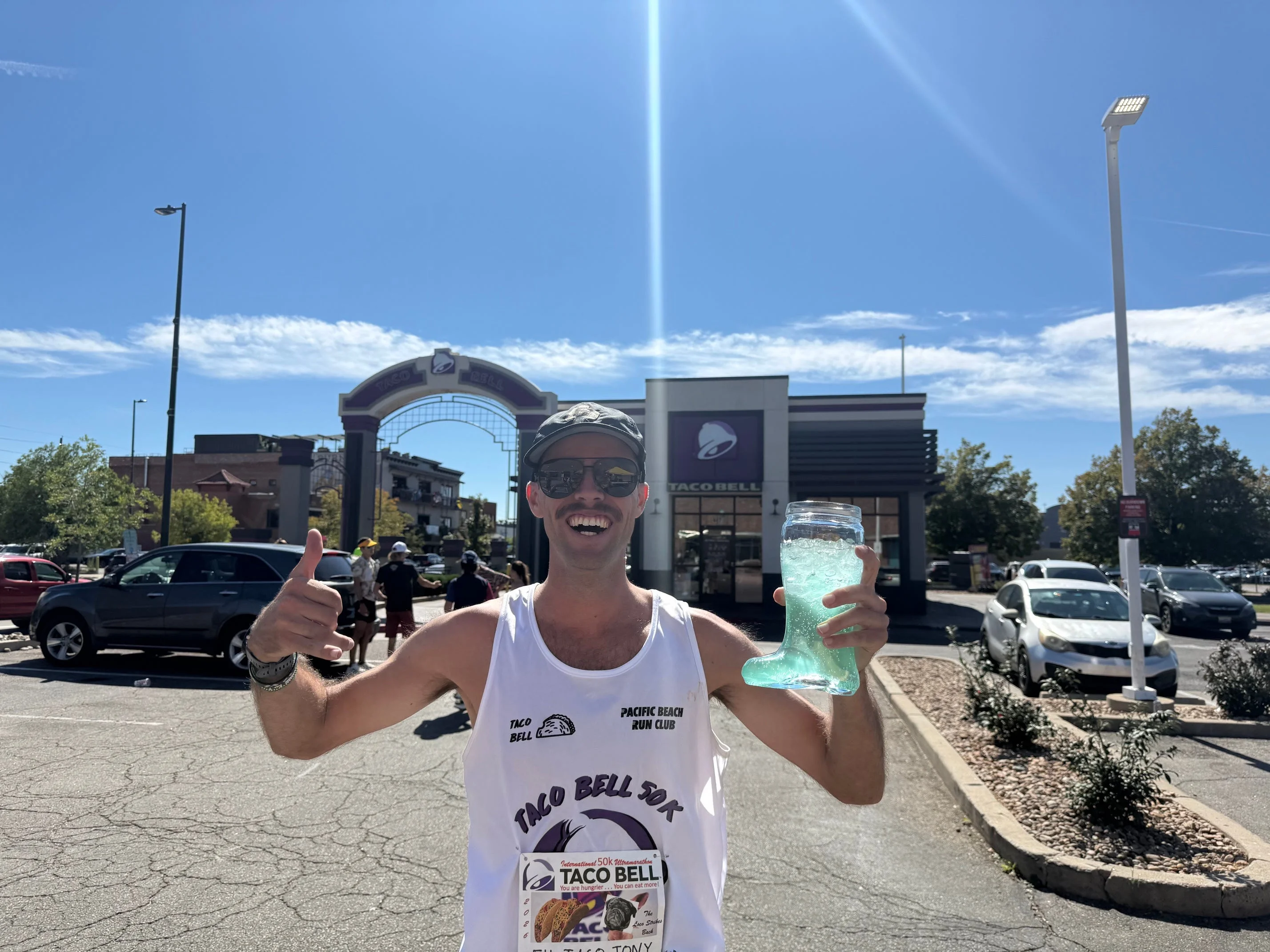
The first two editions started at 7 a.m. from a location serving breakfast. The race reversed direction each year—clockwise in 2018, counterclockwise in 2019—as one of its homages to what Zolnikov calls “more serious and reputable ultramarathons.” That tradition eventually became a casualty of success. With hundreds of runners now involved, organizers decided changing directions each year created more opportunity for confusion than it was worth.
The rulebook, meanwhile, has stayed almost completely intact.
“The rules that you see today are the rules from the race in 2018 and the only difference between 2018 and now is there aren’t any cuss words in the rules,” Zolnikov told Runner’s World.
Those first races were organized through Facebook invites to a small circle of runners. Last year, more than 700 people showed up. That has required an increasingly large volunteer operation to handle everything from intersections and the Taco Bell stops to signs, course sweeping, and the finish.
“Our values are Safety, Community, Fun, and Free,” Zolnikov told Runner’s World. And while the first of those has required considerably more manpower, he’s protective of the other three—especially the free part. There’s no registration fee, which also means there’s no sunk-cost argument waiting for you when your legs hurt and another Taco Bell order sounds physically impossible, which Zolnikov sees as part of the appeal.
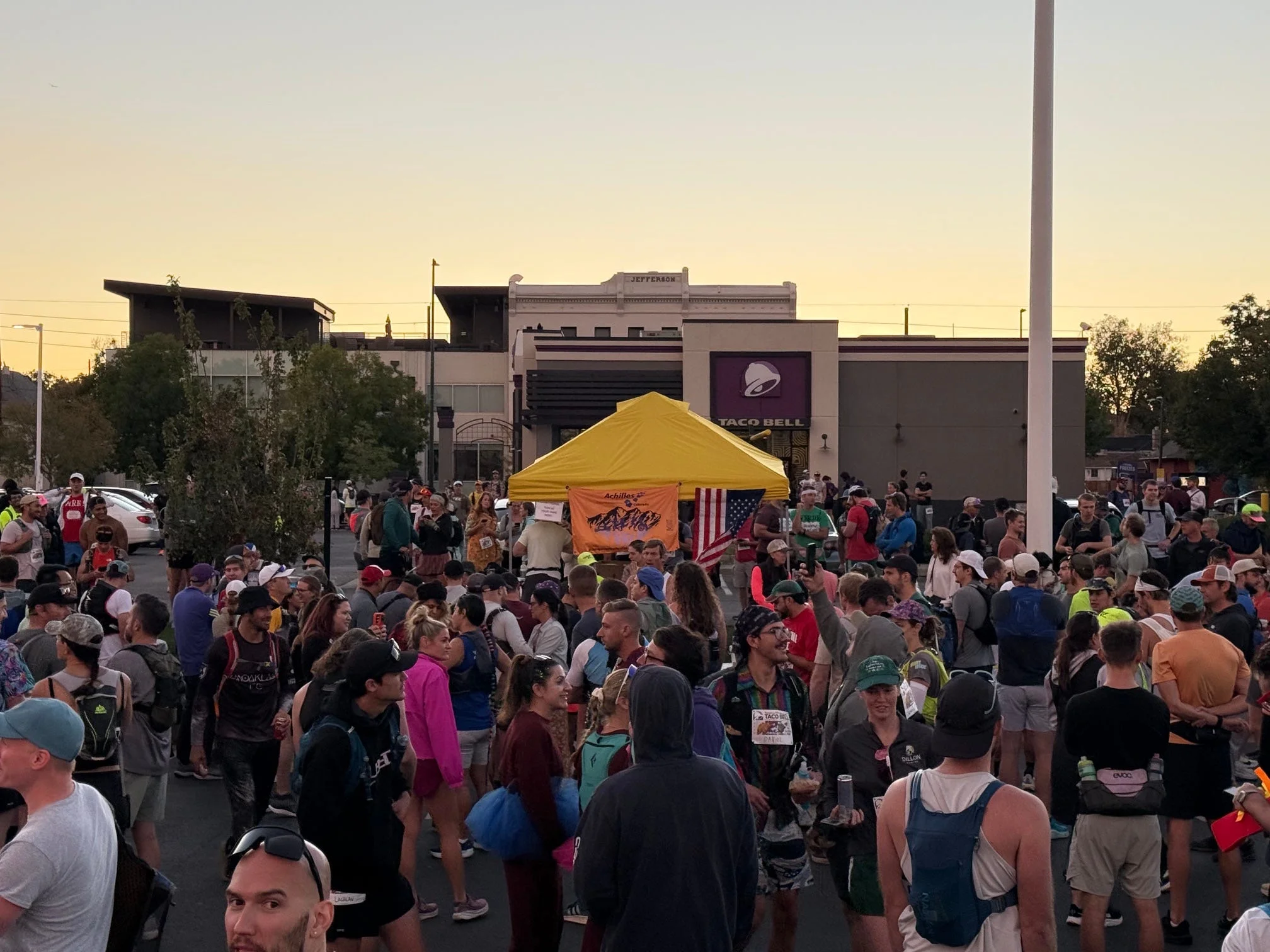
“It's free so there is no monetary commitment, only the commitment you make to yourself to do it; you have to eat Taco Bell 10 times in one day, something you should never find yourself doing; you have to run 31 miles in an age where we have motorcycles,” he told Runner’s World. “To me, I love the sheer senselessness of it all, and I love that all that senselessness can have such an impact on runners.”
That thought stuck with him after this year’s race. Zolnikov said he found himself thinking about people who had traveled from other states and countries, first-time ultrarunners, and Achilles athletes taking their own shot at the distance. He wondered whether the fact that the whole event refuses to take itself too seriously is exactly what makes so many people want in.
Zolnikov regularly tells people that if they can survive this, they can handle just about anything. The Taco Bell part may be funny, but it doesn’t make 31 miles of pavement any shorter. Denver weather can swing from hot to cold in October, and repeatedly eating with little time to digest adds another problem most runners don't encounter in a conventional 50K.
As with the race, the restaurants have also had to evolve. Once participation began taking off, Romero started visiting managers several times before race day to warn them what was coming. More recently, locations have increased staffing and opened early to help runners pre-order and keep the first few stops moving.
Zolnikov checked in with all the on-course stores during this year’s race, and he says “employee reaction has always been positive.”
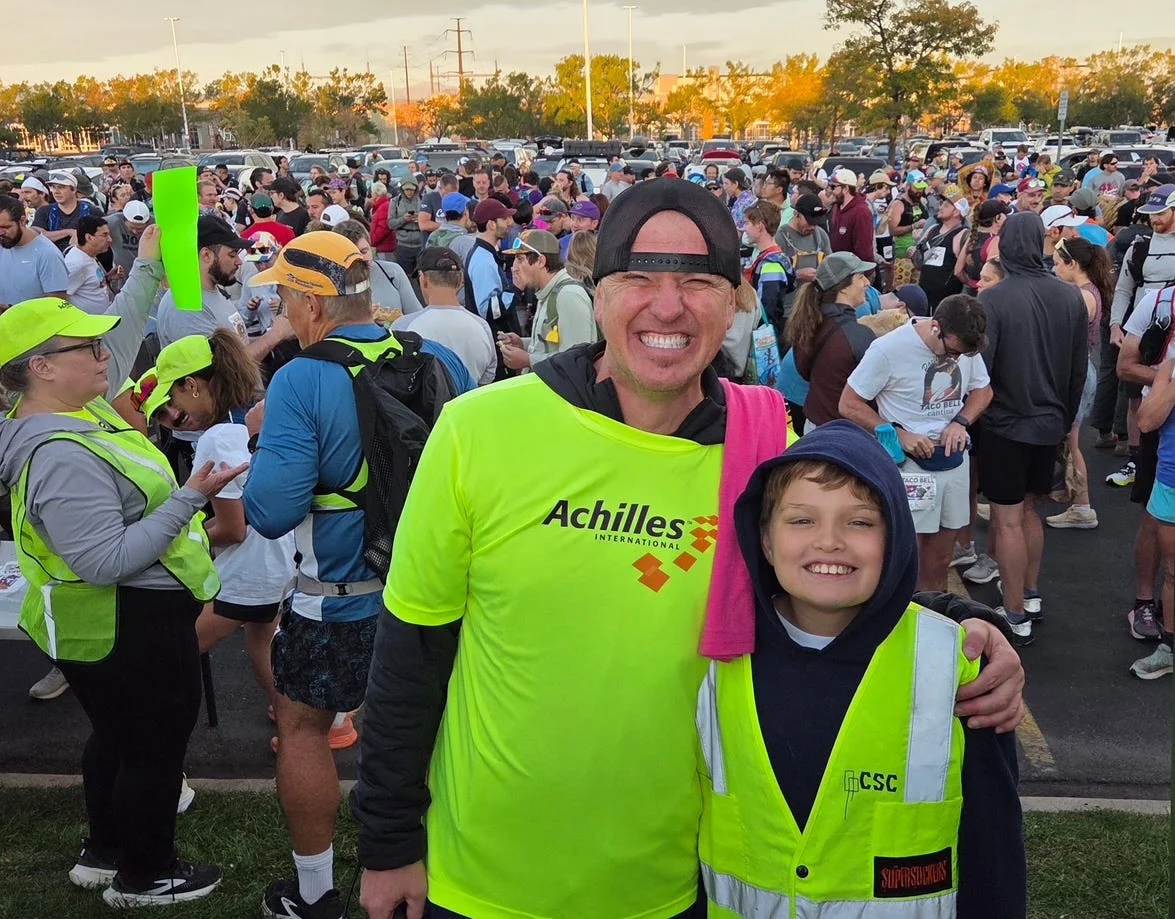
“During the run this year I went to each store to talk to employees and managers to find out if there were any issues with runners or problems, and all 11 of the stores said runners were respectful, kind, and having a good time, and the employees were too,” he told Runner’s World. At the final Taco Bell, employees even came outside to take a photo with runners.
(The idea has expanded beyond Colorado, too. A similarly named event held last year in Alexandria, Va., credits the Denver event as its inspiration.)
Despite all that growth, the race remains unsanctioned and unaffiliated with Taco Bell—and Zolnikov would like it to stay that way. He told Runner’s World that turning it into a conventional sponsored event would strip away some of what people seem to like about it in the first place.
“Keeping it close knit and smallish is the fun of it,” he said. “We’re all runners and we all get to meet and mingle, we get to meet the employees at the stores, and we get to meet people coming out and setting up sidewalk decor. How can you beat that?”
That sense of community has been baked into the race from the beginning, largely because of its roots in Achilles Denver. Romero, who is legally blind, finished the inaugural race, while four Achilles guides started and two completed it. More recently, Achilles athletes whose previous longest distance was a half marathon have made it through the 50K.
“The love of the sport and community that’s been fostered in the Achilles Denver group has spilled over into the Taco Bell 50k DNA, and I feel like that is what makes it so special,” Zolnikov told Runner’s World.
These days, the same field can include accomplished ultrarunner Sage Canaday and someone attempting an ultra for the first time—with a Crunchwrap somewhere in their digestive tract.
“We are runners for the running community,” Zolnikov said. “The first survivor is just as important as the last, and runners can make of it what they want.”
The last survivor even gets something the winner doesn’t: the race’s coveted DFL award, a Taco Bell hot sauce packet from Europe. By then, though, not having to sprint for a bathroom might feel like the bigger victory.
Sean Abrams was the Senior Editor, Growth and Engagement at Men’s Health. He’s a former hip hop dancer who likes long walks on the beach and large glasses of tequila. You can find his previous work at Maxim, Elite Daily, and AskMen.